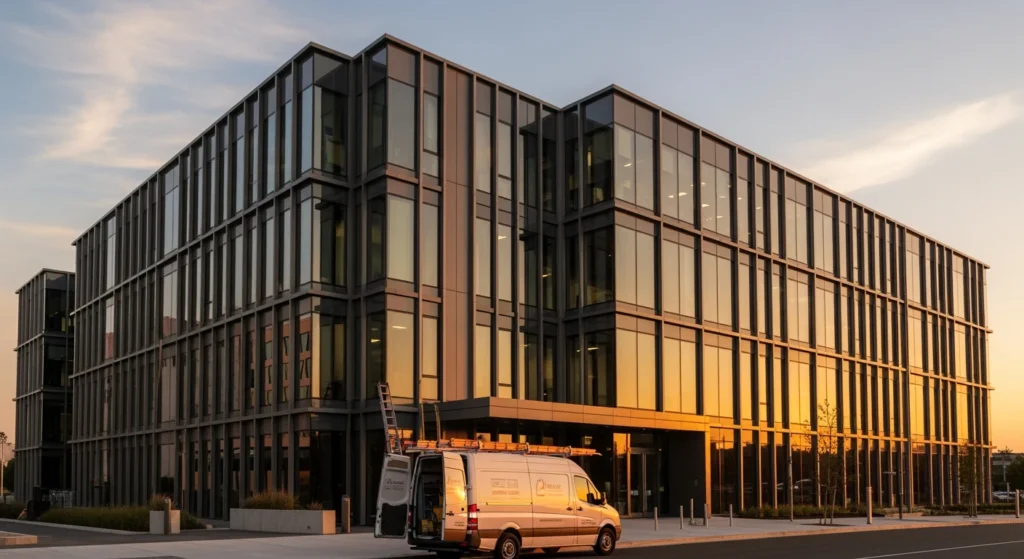
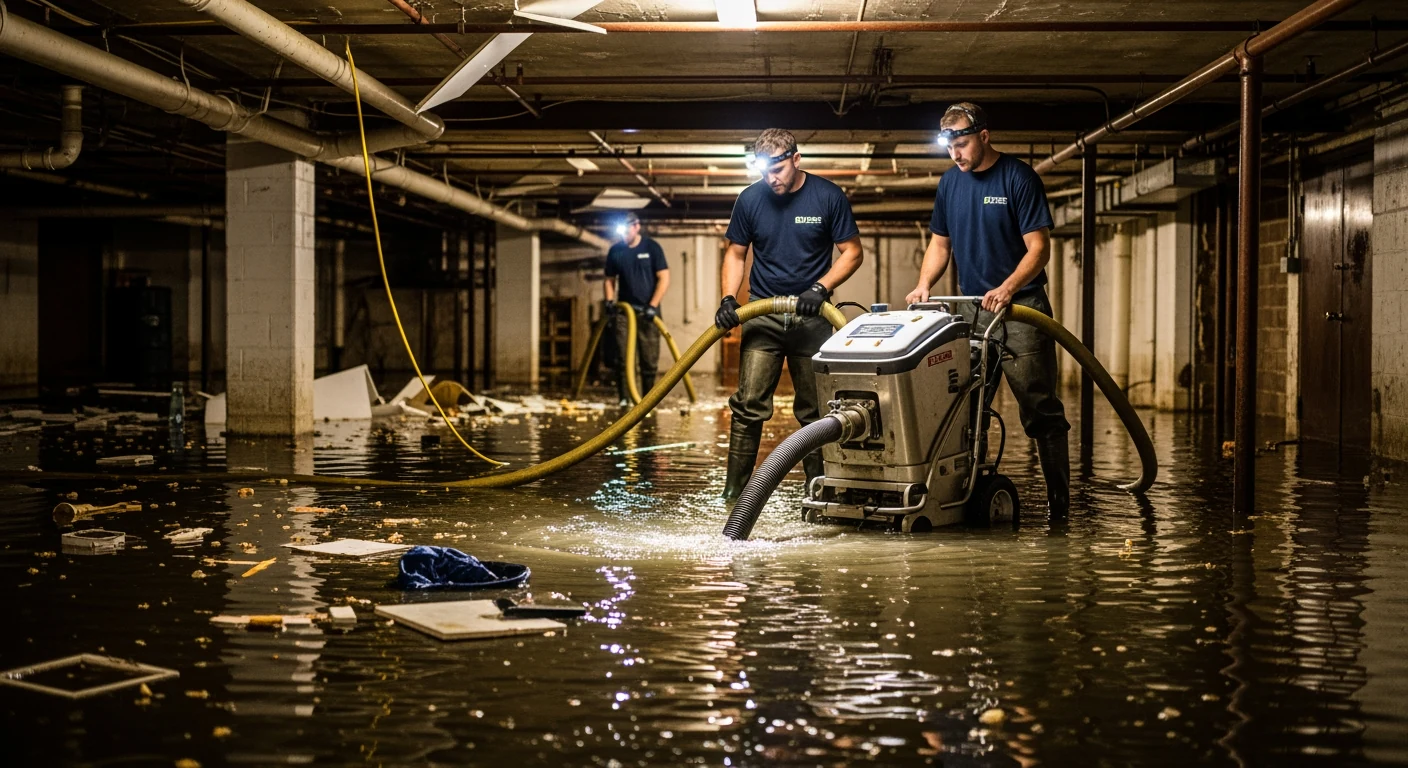
For a commercial property manager or business owner on Long Island, a disaster—whether it be a pipe burst in a high-rise office building, a flash flood in a retail complex, or a fire in a manufacturing facility—is not just a physical crisis. It is a financial race against time. In the commercial sector, the clock is the enemy. Every hour that doors remain closed and operations remain suspended represents a compounding loss of revenue, market share, and tenant trust.
As a Commercial Loss Project Manager, I have seen firsthand the difference between businesses that succumb to these disasters and those that emerge stronger. The differentiator is rarely the extent of the damage itself, but rather the speed and strategy of the response. Minimizing downtime requires moving beyond reactive cleanup and adopting a comprehensive business interruption restoration plan. This article outlines the strategic framework necessary to protect your bottom line when the unexpected occurs.
The True Cost of Downtime
To manage a crisis effectively, one must first quantify the stakes. In the B2B and commercial property world, the cost of a disaster is bifurcated into direct and indirect losses. Direct costs include the physical reconstruction of the structure and the replacement of equipment. However, for many enterprises, the indirect costs of business interruption are far more devastating.
Consider the fixed costs that do not disappear when your operations cease: property taxes, insurance premiums, debt service, and, perhaps most importantly, key employee payroll. If a facility is offline for three weeks, these expenses continue to drain capital reserves while the revenue stream has vanished. Furthermore, there is the “churn” factor. In a competitive market like New York, clients and tenants are rarely patient. If a professional suite is unusable, a law firm may seek a temporary lease elsewhere—and they may never return.
The statistics are sobering. According to data from FEMA and the Small Business Administration, approximately 40% to 60% of small-to-mid-sized businesses never reopen their doors following a major disaster. Of those that do manage to reopen, another 25% fail within the first year. These failures are rarely due to the inability to patch a roof or dry a floor; they are due to the inability to manage the duration of the interruption. Strategic commercial restoration services are designed to break this cycle by prioritizing operational continuity above all else.
How the Emergency Ready Plan (ERP) Works
The most effective way to minimize downtime is to make the most critical decisions before the disaster happens. This is the philosophy behind our Emergency Ready Plan (ERP). In a standard restoration scenario, the process often stalls at the outset: Who is authorized to sign the work order? Where is the main water shut-off? Which areas of the building are the highest priority for the business to function? Does the restoration company have the necessary security clearances to enter the building at 3:00 AM?
An ERP eliminates these bureaucratic bottlenecks. By pre-signing an ERP, a property manager establishes a “pre-authorized” status for mitigation services. This can cut the initial response and mobilization time by as much as 50%. When our crews arrive on-site, they already have a digital profile of your facility, including floor plans, utility shut-off locations, and a list of your “priority zones.”
The Anatomy of a Business Interruption Restoration Plan
- Pre-Authorized Mitigation: We are empowered to begin immediate water extraction or emergency board-up without waiting for a corporate officer to arrive on-site.
- Resource Allocation: In the event of a regional disaster (such as a hurricane), businesses with an ERP are moved to the top of the priority list for equipment and manpower.
- Communication Protocols: The plan identifies exactly who needs to be informed at every stage, ensuring that stakeholders, from tenants to stakeholders, receive accurate updates.
Phased Construction Strategies
A common misconception in commercial restoration is that a building must be 100% repaired before it can be 100% occupied. From a strategic standpoint, this is a fallacy. We utilize a “Phased Zoning” approach to keep as much of the business operational as possible during the restoration process.
By using professional-grade containment barriers and HEPA-filtered negative air machines, we can isolate the “hot zones” (areas under repair) from the “clean zones” (areas where business can continue). For example, if a three-story office complex suffers a pipe burst on the top floor, we don’t need to shut down the entire building. We can isolate the affected wing, manage the moisture, and allow the ground-floor retail or second-floor offices to remain open to the public.
Maximizing Productivity Through Scheduling
In a B2B environment, optics matter. Having a construction crew walking through a lobby during a high-stakes client meeting is unacceptable. To solve this, we deploy night and weekend crews. By performing loud demolition and heavy equipment usage after-hours, we ensure that your staff remains productive and your professional image remains intact. Our goal is to be “invisible” during your peak hours.
| Strategy | Benefit | Implementation |
|---|---|---|
| Emergency Ready Plan | Pre-auth speeds up start time | Setup Free Consultation |
| After-Hours Work | No noise/dust during business hours | Schedule with PM |
| Phased Zoning | Keep 80% of building open | Containment Barriers |
| Document Restoration | Save critical files/contracts | Freeze-Drying Tech |
Handling Commercial Insurance Claims
The restoration of the physical property is only one-half of the recovery. The second half is the financial recovery through your insurance carrier. Commercial claims are significantly more complex than residential claims. They involve not just the “Replacement Cost Value” of the building, but also “Business Income” and “Extra Expense” coverages.
As your project manager, I emphasize that documentation of lost income is as vital as documenting physical damage. To ensure a successful claim, your business interruption restoration plan must include a rigorous accounting phase. We provide detailed “Loss of Use” documentation and daily logs that align with what adjusters need to see. This includes documenting why certain areas were inaccessible and for how long, as well as tracking the “Extra Expenses” incurred to remain operational (such as renting temporary generators or relocating staff).
Specialized Recovery Services
Often, the “heart” of a business is its data and records. If a medical facility’s physical patient files are water-damaged, the business interruption is indefinite. We utilize advanced technology like vacuum freeze-drying to salvage saturated documents, blueprints, and hard drives. By restoring these critical assets, we dramatically reduce the time it takes for a business to return to its pre-loss operational capacity.
Large Loss Capability
Not every restoration company is equipped to handle a large-scale commercial loss. A “Large Loss” requires a massive surge in specialized equipment—industrial dehumidifiers, high-capacity desiccant dryers, and large-scale power generation. Our team is structured to scale rapidly. Whether it’s 5,000 square feet or 500,000, we have the logistical infrastructure to mobilize the necessary resources immediately, ensuring that your project doesn’t stall due to a lack of equipment.
Strategic Summary
Resilience in the face of a disaster is not an accident; it is a choice made during the planning phase. By implementing a business interruption restoration plan and partnering with a firm that understands the nuances of B2B operations, you move from a position of vulnerability to a position of control. We don’t just fix buildings; we protect the continuity of your enterprise.
Frequently Asked Questions
Q: How do you handle noise during office hours?
A: We understand that maintaining a professional environment is essential. We utilize heavy-duty containment barriers to dampen sound and schedule all loud demolition work, power tool usage, and debris removal for nights or weekends to ensure zero interference with your daily operations.
Q: What is the benefit of the ERP for a multi-tenant property manager?
A: For property managers, the ERP provides a clear chain of command. It allows us to communicate directly with your facilities team to mitigate damage before it spreads to other tenant suites, significantly reducing your liability and the number of individual claims filed within the building.
Ready to Protect Your Business?
Don’t wait for a disaster to find out you aren’t prepared. Minimize your downtime and secure your priority status today.
Need professional asbestos abatement on Long Island? Upper Restoration provides licensed asbestos abatement and removal services across NYC and Long Island. Contact us for a free assessment.