If you are a tenant currently standing in a pool of water or staring at a dark stain spreading across your ceiling, you are not just looking at a maintenance issue. You are looking at a potential biohazard. In the restoration industry, we do not view all water as equal. As an IICRC WRT (Water Damage Restoration Technician) and AMRT (Applied Microbial Remediation Technician) certified professional, I have seen firsthand how a “simple leak” can evolve into a life-altering health crisis within 48 hours.
The science of water damage is governed by the Institute of Inspection, Cleaning and Restoration Certification (IICRC) S500 Standard. This document is the “bible” of the restoration industry, and it categorizes water into three distinct levels based on the level of contamination. Understanding these categories is not just for professionals—it is essential knowledge for every tenant. Knowing the difference between “Clean Water” and “Black Water” can mean the difference between a minor inconvenience and a permanent respiratory condition or a severe viral infection.
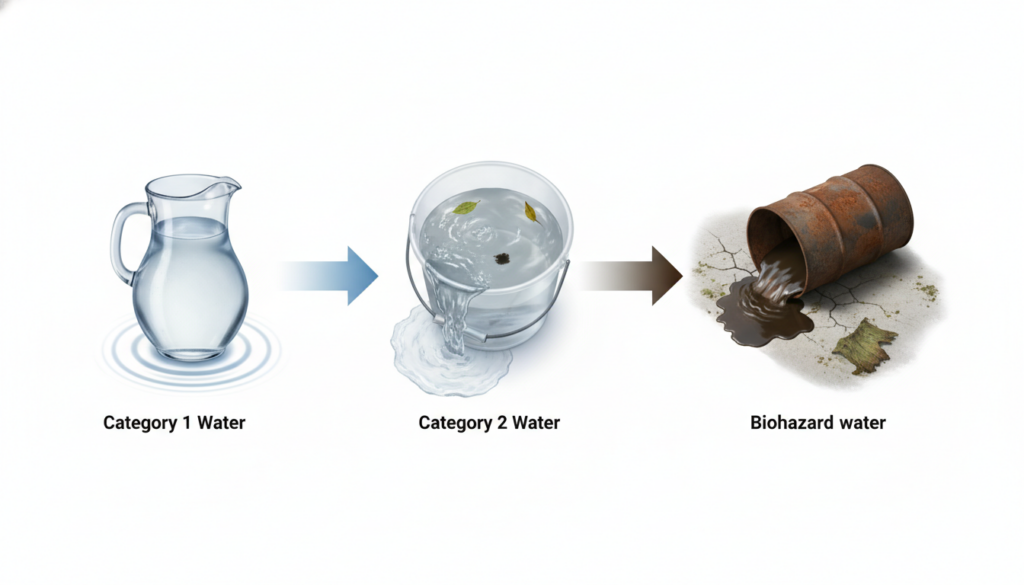
The IICRC Classification System
The IICRC classification system is designed to quantify the risk of the water based on its source and its potential for containing pathogenic, chemical, or biological agents. When we arrive on-site, our first priority is to identify the “Category” of the loss. This determines the PPE (Personal Protective Equipment) we wear, the chemicals we use, and, most importantly, which parts of your home must be torn out and thrown away.
For tenants, this classification is your greatest tool in advocating for your health rights. If your landlord is trying to “dry out” a carpet that was soaked in sewage, they are violating industry standards and putting your life at risk. Below is a breakdown of the risk levels associated with each category.
| Category | Source Examples | Health Risk | Action Required |
|---|---|---|---|
| Cat 1 (Clean) | Supply pipe, faucet | None | Extract & Dry |
| Cat 2 (Grey) | Dishwasher, sump pump | Discomfort/Sickness | Clean & Disinfect |
| Cat 3 (Black) | Sewage, Flood water | Severe/Death | Remove & Abate |
Category 1: Clean but Time-Sensitive
Category 1 water originates from a sanitary source. This is the water that comes out of your kitchen faucet or the supply line to your toilet. In its initial state, it does not pose a substantial risk from dermal contact, ingestion, or inhalation. However, “Clean Water” is a deceptive term. In the world of biohazard restoration, Category 1 is a ticking time bomb.
The primary risk with Category 1 water is its ability to transition. When water leaves a pipe, it begins to dissolve minerals and pick up contaminants from the surfaces it touches. More importantly, it provides the “wicking” moisture necessary for dormant mold spores to activate. If a Category 1 leak is not professionally mitigated within 24 to 48 hours, the moisture interacts with organic matter—like the paper backing on your drywall or the dust under your baseboards—and begins to degrade into Category 2 or 3.
As a tenant, you must report even “clean” leaks immediately. If the water has been sitting for more than two days, you are no longer dealing with a Category 1 situation, regardless of where the water came from.
Category 2: Significant Contamination
Category 2 water, often referred to as “Grey Water,” contains a significant degree of chemical, biological, or physical contamination. This water has the potential to cause discomfort or even illness if consumed or if there is prolonged dermal exposure. Common sources include:
- Overflows from washing machines or dishwashers (containing soap, food particles, and bacteria).
- Sump pump failures (which often contain groundwater and soil particulates).
The danger of Category 2 water lies in the “microbial load.” While it may not contain the lethal pathogens found in sewage, it is a breeding ground for bacteria. For tenants with compromised immune systems, the elderly, or young children, Grey Water exposure can lead to skin rashes, gastrointestinal distress, and respiratory irritation. In a Category 2 loss, professional technicians must use specialized antimicrobial treatments. Simply “letting it dry” is an invitation for bacterial colonization that will linger long after the floor feels dry to the touch.
Category 3: The Danger Zone
We now enter the territory of Category 3 water damage risks. This is “Black Water,” and it is treated as a biohazard incident. By definition, Category 3 water is “grossly contaminated” and contains pathogenic, toxigenic, or other harmful agents. This is not water that you can simply “clean up.” It is a threat to human life.
The Pathogens in Black Water
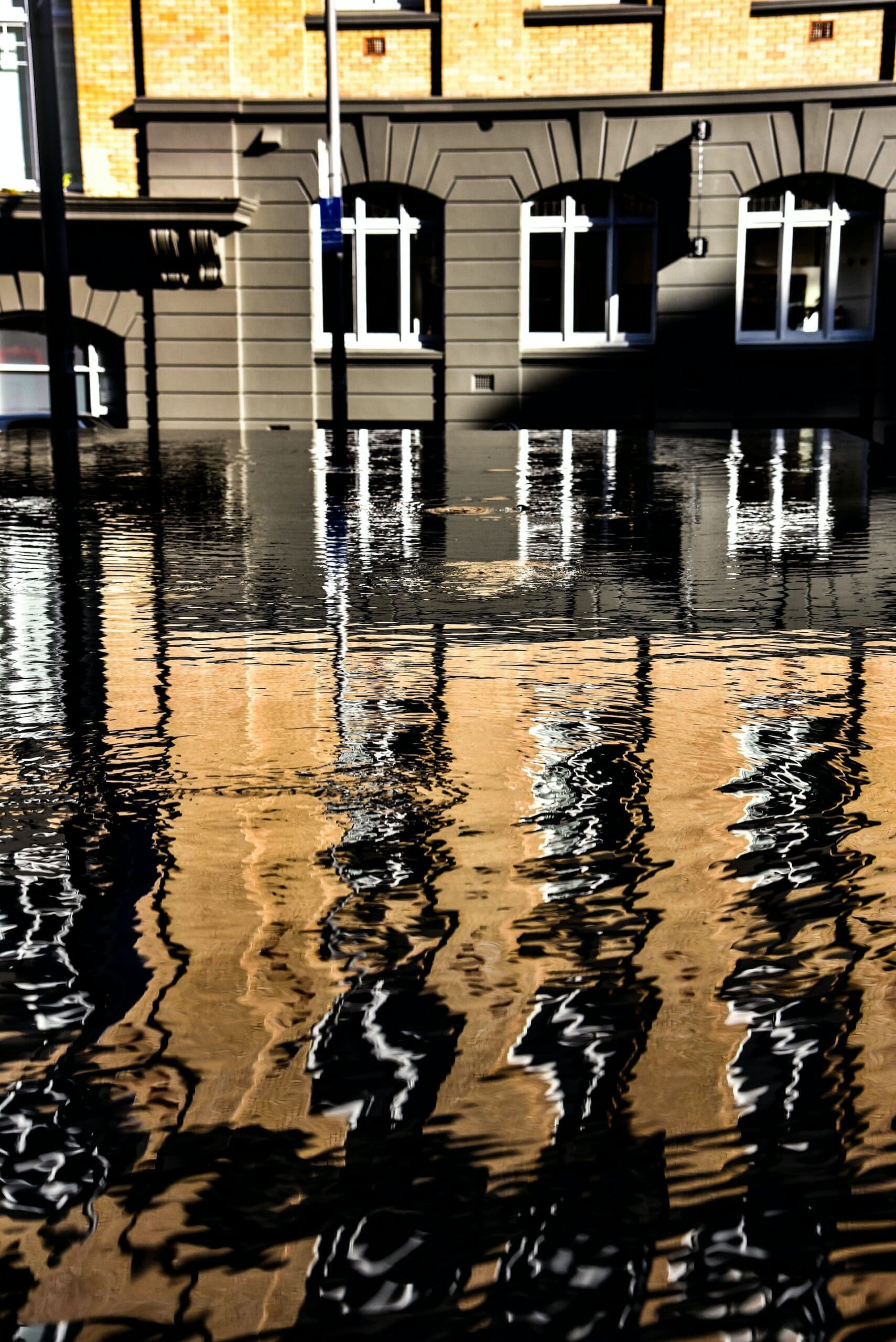
Category 3 water, such as sewage backups or rising floodwaters from rivers and streams, carries a cocktail of deadly microorganisms. According to CDC guidelines on floodwater safety, this water can contain:
- Bacteria: E. coli, Salmonella, and Shigella, which cause severe dysentery and organ failure.
- Viruses: Hepatitis A, Norovirus, and Rotavirus.
- Parasites: Giardia and Cryptosporidium.
- Toxins: Pesticides, heavy metals, and industrial chemicals carried in by floodwaters.
Why Porous Materials Must Go
One of the most common conflicts between tenants and landlords occurs during a Category 3 loss involving carpets. Industry standards are clear: Porous materials (carpet, padding, drywall, insulation) that have been saturated with Category 3 water cannot be salvaged.
The reason is scientific. Porous materials act as a filter, trapping pathogens deep within the fibers and cells of the material. There is no disinfectant on the market that can penetrate a carpet pad deeply enough to guarantee the total eradication of sewage-borne pathogens. If your landlord tells you they are going to “steam clean” a carpet soaked in sewage, they are attempting a cosmetic fix for a biological hazard. This is a direct violation of IICRC S500 protocols and a significant health risk to you and your family.
Why Time Escalates Categories
It is vital for tenants to understand the “Time Factor.” Water is not static. A Category 1 leak from a pipe behind a wall will not stay Category 1. As the water sits, it begins to stagnant. Bacteria begin to multiply exponentially. Within 72 hours, the microbial growth is typically so advanced that the loss is reclassified as Category 3.
This is why “waiting until Monday” for a repair is often unacceptable. The longer the water sits, the more it penetrates the structural elements of the building. In high-rise apartments, Category 3 water (like a sewage backup) can travel through floor assemblies, contaminating the units below. This creates a vertical biohazard plume that requires multi-level professional remediation. If you are a tenant and your landlord is dragging their feet on a water loss, they are not just saving money—they are allowing a biohazard to grow in your living space.
Professional Remediation Protocols
When dealing with Category 2 or 3 water, professional remediation is not optional; it is a necessity mandated by safety standards. As certified technicians, we follow a rigorous protocol to ensure the environment is returned to a “Pre-Loss Condition” that is safe for human habitation.
1. Containment
Before work begins, we establish “Critical Barriers.” Using 6-mil poly sheeting and tension poles, we seal off the affected area. This prevents cross-contamination of airborne pathogens and mold spores to the rest of your apartment.
2. HEPA Air Filtration
During a sewage cleanup, the air itself becomes a vector for disease. We use HEPA Air Scrubbers to create “negative pressure,” ensuring that any air leaving the work zone is filtered of 99.97% of particulates down to 0.3 microns.
3. Controlled Demolition
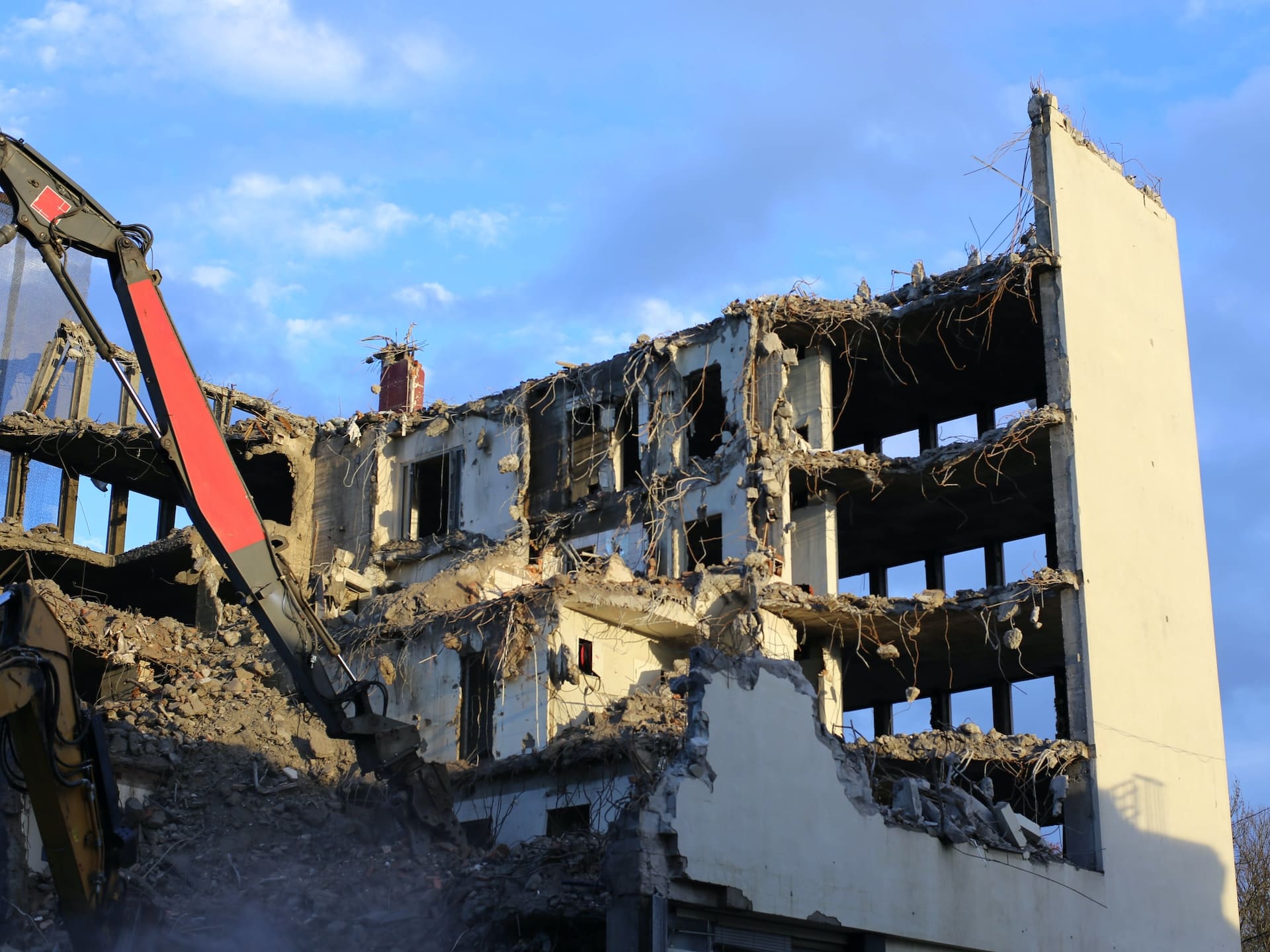
In Category 3 losses, we perform “flood cuts.” This involves removing the drywall at least 12 to 24 inches above the highest water line. We remove all saturated insulation and porous flooring. This is the only way to ensure no hidden pockets of sewage remain behind the walls.
4. Disinfection and Drying
We use EPA-registered hospital-grade disinfectants and phenolics to treat the remaining non-porous structural elements (like concrete subfloors or wood framing). Only after the area is biologically “clean” do we begin the industrial drying process using high-velocity air movers and LGR (Low Grain Refrigerant) dehumidifiers.
5. Tenant Rights and Biohazard Standards
As a tenant, you have a right to a habitable residence. A residence contaminated with Category 3 pathogens is legally uninhabitable in many jurisdictions. Our USPs at Upper Restoration include Certified Biohazard cleanup adhering to IICRC and OSHA standards. We provide the documentation necessary to prove that a space has been properly remediated—documentation that is vital for your health records and potential legal protection.
Do not attempt to handle a Category 3 loss with household cleaners. Bleach is not a magic wand; it is often deactivated by organic matter (like feces) and does nothing to address the pathogens deeply embedded in your subfloor. Professional hazmat protocols are the only way to ensure your home is safe to live in again.
Frequently Asked Questions
Q: Can I clean sewage myself?
A: No. Sewage contains dangerous bacteria, viruses, and parasites. Cleaning it yourself without specialized PPE (including respirators and tyvek suits) and industrial-strength disinfectants puts you at risk of severe infection and spreads the contamination through your home.
Q: My landlord says the carpet just needs a “deep clean” after a backup. Is that true?
A: Absolutely not. According to IICRC S500 standards, porous materials like carpet and padding contaminated by Category 3 (Black Water) must be removed and disposed of as biohazardous waste. There is no way to guarantee they are safe for human contact after such a loss.
For more information on handling specific types of waste incidents, visit our guide on Residential Restoration | Sewage Cleanup | Upper Restoration.