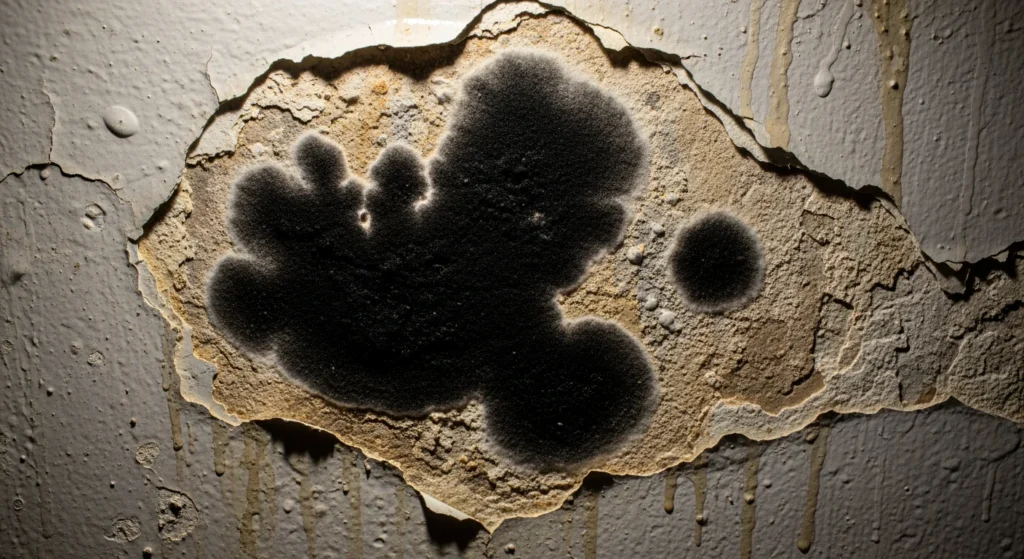
That musty smell when the air kicks on — stronger in some rooms, worse after it rains — is one of the clearest signs of mold in your HVAC system. And when mold colonizes an HVAC system, it doesn’t stay in one place. It uses your ductwork as a delivery system, circulating spores throughout every room the system serves, every time the fan runs.
How Mold Gets Into HVAC Systems
HVAC systems create near-ideal conditions for mold growth: darkness, dust as a food source, and intermittent moisture from condensation. The most common entry points and colonization zones are the evaporator coil and condensate drip pan (where condensation accumulates), flexible ductwork with dust buildup on interior surfaces, return air plenums that pull in humid unconditioned air, HVAC closets with poor ventilation, and uninsulated ductwork running through crawlspaces or unconditioned attics.
In NYC and Long Island homes, two specific conditions drive HVAC mold: humid summers that push moisture into return ducts through poorly sealed return grills, and older building stock where HVAC closets were built without adequate exhaust — trapping humidity around the air handler unit. In co-op and condo buildings, shared HVAC risers can transfer mold spore load between units when one unit has an active mold source.
7 Signs Mold Is in Your HVAC System
| Sign | What It Indicates | Urgency |
|---|---|---|
| Musty odor when system runs | Active mold colony in ductwork or air handler | High — test immediately |
| Visible growth near supply or return vents | Spore load high enough to deposit at vent outlets | High — system likely colonized |
| Symptoms improve when away from home | Airborne spore source inside the structure | High — professional assessment needed |
| Uneven air quality between rooms | Localized duct contamination | Moderate |
| Condensation on duct surfaces or insulation | Moisture conditions for mold present | Moderate — fix before mold establishes |
| Recurring symptoms after previous mold remediation | HVAC system was not cleaned during remediation | High — incomplete remediation |
| Musty smell only in certain zones | Section of ductwork contaminated, not whole system | Moderate — targeted inspection needed |
How Mold Spreads Through Ductwork
Once mold establishes a colony on a duct surface, the HVAC fan does the rest. Airflow velocities inside residential ductwork — typically 600–900 feet per minute — are more than sufficient to detach and aerosolize mold spores from colonized surfaces. A single HVAC cycle can distribute millions of spores throughout the entire served area. This is why HVAC-distributed mold is disproportionately difficult to resolve through surface remediation alone: the source must be eliminated before any surface cleaning in living spaces is meaningful.
The most dangerous pattern: mold remediation is performed in a bedroom or bathroom, but the HVAC system is not cleaned. The system continues to reintroduce spores from the ductwork into the remediated space, and the homeowner believes the problem has recurred — when in fact the ductwork was the original source all along.
Health Risks of HVAC Mold Exposure
Airborne mold spore exposure through HVAC systems produces a wider range of health effects than localized surface mold because the exposure is continuous and whole-home. For otherwise healthy individuals: chronic nasal congestion, coughing, eye and throat irritation, and fatigue. For individuals with asthma, allergies, or immunocompromise: bronchospasm, hypersensitivity pneumonitis, and in rare cases invasive fungal infections (primarily from Aspergillus). Children and elderly occupants are at elevated risk. The key differentiator from seasonal allergies: symptoms are present year-round and worsen during HVAC operation, then improve when occupants leave the building for extended periods.
Can You Clean HVAC Mold Yourself?
Wiping visible surface mold off a vent cover: yes, that’s manageable. Anything beyond the vent face: no. Accessing ductwork interior requires professional equipment and technique for three reasons. First, disturbing mold inside a duct without containment and negative air pressure will aerosolize spores directly into living spaces — the opposite of remediation. Second, the evaporator coil, blower fan, and condensate pan require specific cleaning protocols; improper cleaning can damage coil fins and reduce system efficiency. Third, under NYS mold law, any remediation project involving more than 10 square feet of mold requires a licensed mold remediator — a threshold easily reached in a colonized duct system.
The Professional HVAC Mold Remediation Process
- Air and surface sampling — establishes baseline spore counts and identifies species present before work begins; required for post-remediation clearance comparison
- System shutdown and containment — HVAC system is locked out; negative air pressure established in the work area
- Camera-based duct inspection — identifies extent and location of colonization before cleaning begins
- Mechanical duct cleaning — negative pressure extraction combined with rotary brush agitation removes deposits from duct interior surfaces; all registers sealed during cleaning
- Air handler cleaning — evaporator coil, blower assembly, and condensate pan cleaned separately using coil-safe antimicrobial products
- Antimicrobial treatment — encapsulant applied to duct surfaces to inhibit regrowth
- Post-remediation air clearance testing — confirms spore counts have returned to acceptable baseline before system restart
Prevention: Stopping HVAC Mold Before It Starts
The most effective prevention measures in order of impact: maintain indoor relative humidity below 60% year-round (the threshold above which mold growth accelerates dramatically); use MERV-13 or higher filters and change them on schedule — clogged filters reduce airflow and increase moisture retention in the system; have the condensate drain line cleaned annually, as a clogged drain line causes pan overflow that saturates insulation around the air handler; seal return air duct leaks, as unsealed returns in humid spaces (crawlspaces, attics) pull in unconditioned humid air directly onto the evaporator coil; and schedule annual HVAC system cleaning and inspection before cooling season begins.
Upper Restoration provides HVAC mold inspection and remediation across Nassau County, Suffolk County, and all five NYC boroughs. See our related guides on identifying dangerous mold species in your attic and NYS mold law requirements.
Upper Restoration provides professional mold remediation services across Nassau County, Suffolk County, and all five NYC boroughs — available 24/7.
Upper Restoration provides professional water and flood damage restoration services across Nassau County, Suffolk County, and all five NYC boroughs — available 24/7.
Frequently Asked Questions About HVAC Mold
Can mold spread from one apartment to another through a shared HVAC system?
Yes, in buildings with shared HVAC risers or plenum systems, spores can migrate between units. This is common in older NYC pre-war buildings. If you’ve had mold remediated but symptoms continue, request that your building management inspect the shared HVAC infrastructure.
How long does HVAC mold remediation take?
A single-system residential remediation typically takes 4–8 hours for the cleaning work, plus the time required for pre- and post-remediation air sampling (results take 24–48 hours from a certified lab). Total project timeline is usually 2–3 days from start to clearance.
Will my homeowners insurance cover HVAC mold remediation?
Coverage depends on the cause. If the mold resulted from a sudden covered event (e.g., a burst pipe that wet the air handler), remediation is typically covered. Mold from long-term humidity or deferred maintenance is typically excluded. Document the moisture source and call your insurer promptly.
What does mold in ductwork smell like?
Musty, earthy, or damp — similar to a basement or wet cardboard. The distinctive characteristic of HVAC-distributed mold odor is that it’s strongest at supply vents and increases when the fan is running, then diminishes when the system is off.
Is it safe to run the HVAC while waiting for mold remediation?
No. Running the system before remediation continuously redistributes spores throughout the living space. Turn the system off or set it to fan-off mode (not auto) until the ductwork is professionally cleaned.