Why Board-Up and Tarping Matter Immediately After a Loss
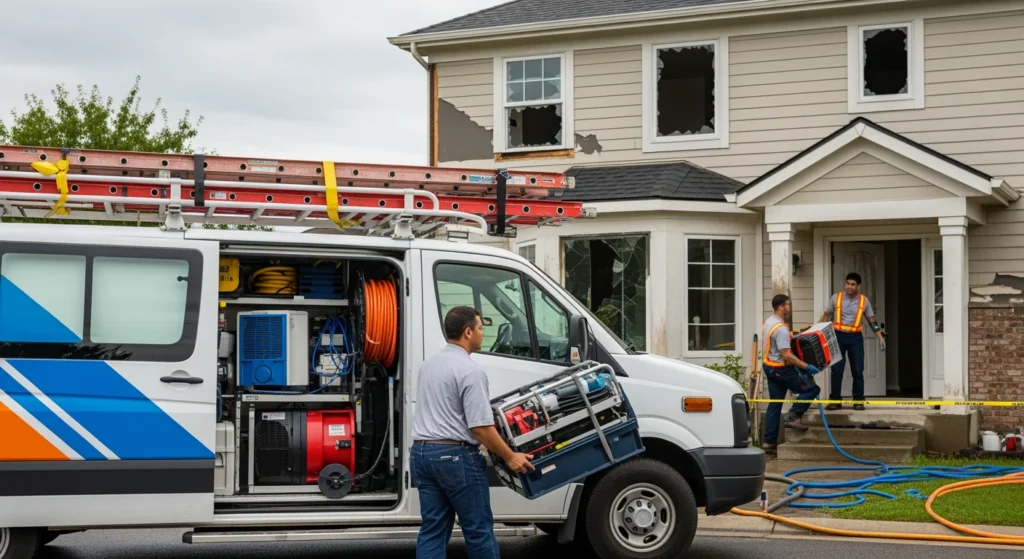
When a house fire breaks through a wall, a storm tears off a section of roof, or a car impacts a garage, the structure is immediately vulnerable to weather, theft, unauthorized entry, and secondary damage that multiplies the original loss. Board-up and emergency tarping services address these vulnerabilities within hours of the incident. Your insurance policy likely requires you to take reasonable steps to mitigate further damage after a covered loss. Emergency board-up and tarping is the practical implementation of that requirement and the cost is typically covered under your policy mitigation provisions.
When Board-Up and Tarping Are Required
- House fires: Flames or firefighting operations break windows, weaken doors, and compromise roof sections. Board-up seals these openings against weather, prevents unauthorized entry, and protects remaining contents.
- Storm damage: Fallen trees through roofs, wind-damaged soffits, shattered windows, and blown-off roofing sections require emergency tarping to prevent rain intrusion from turning a manageable repair into a mold and water damage catastrophe.
- Vehicle impacts: A car hitting a garage or wall creates an immediate structural compromise requiring emergency board-up while permanent repairs are arranged.
- Vandalism or break-in: Broken windows and forced doors need immediate securing to prevent further entry and weather damage.
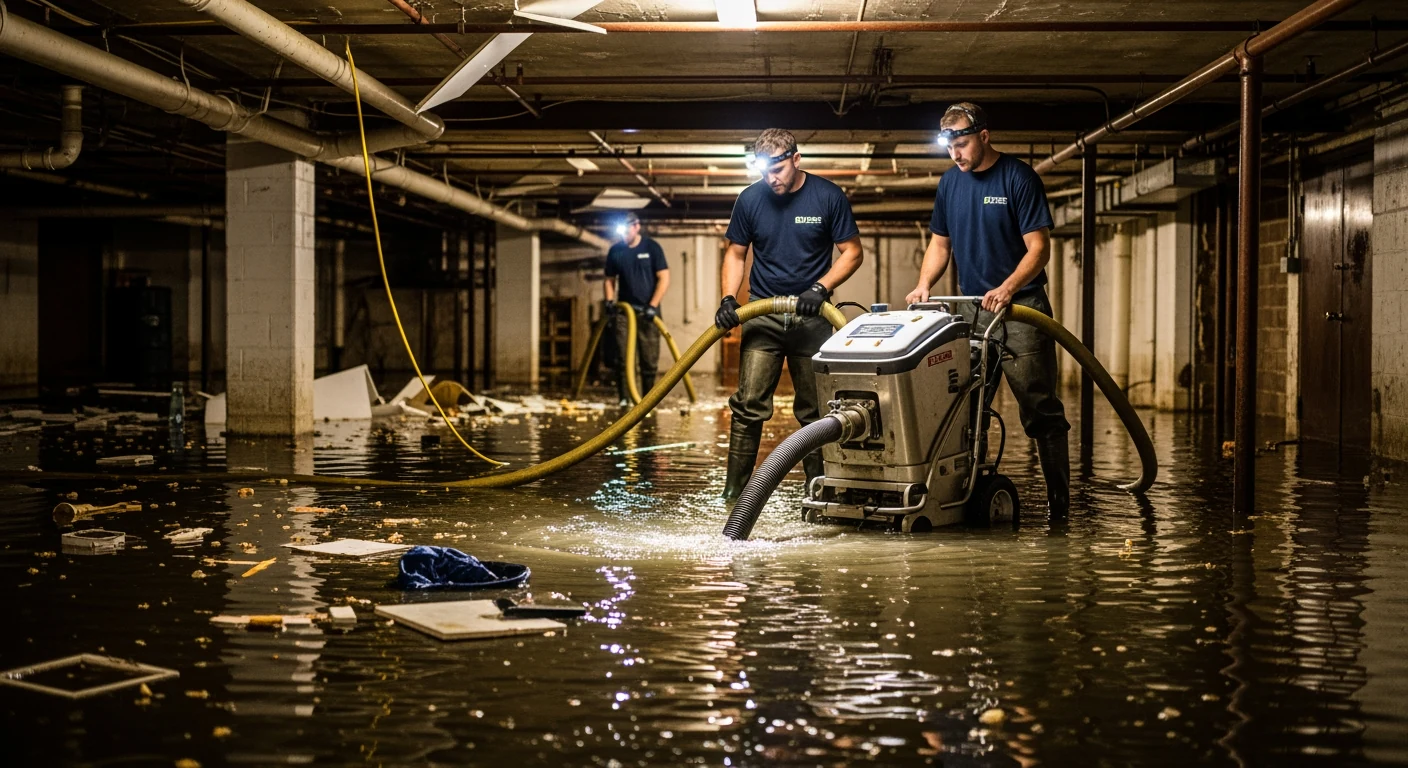
- Burst pipe or flood evacuation: When a property must be vacated due to water damage, securing all access points protects the property during the restoration period.
What Board-Up Services Actually Involve
Professional board-up includes assessment of all structural vulnerabilities, measurement and cutting of OSB or plywood panels to cover all openings, secure installation preventing both weather infiltration and forced entry, notation of any contents visible through openings for insurance documentation, photo documentation of all board-up work performed, and provision of a written scope for insurance carrier submission. Emergency tarping involves securing heavy-duty polyethylene tarps over damaged or missing roof sections, properly fastened to prevent wind uplift and overlapping to direct water away from the structure.
2026 Board-Up and Tarping Costs on Long Island
- Single window board-up: $100-$250
- Multiple windows standard house fire or storm: $400-$1,200
- Full structure board-up after major fire: $1,500-$4,000
- Emergency tarping small area up to 400 sq ft roof: $300-$700
- Emergency tarping large area 400-1,000 sq ft roof: $600-$1,500
- Emergency tarping major roof section loss: $1,200-$3,500
- Combined board-up and tarping fire plus storm combo: $2,000-$5,000 plus
After-hours and weekend emergency rates apply a premium of 20-35% in most Nassau and Suffolk County markets.
Does Insurance Cover Board-Up and Tarping?
In most cases yes if the underlying loss event is a covered peril under your policy. Emergency board-up and tarping are treated as mitigation expenses to prevent further damage from a covered loss. Most homeowners and commercial property policies cover reasonable mitigation expenses as part of the claim. Get written or verbal authorization from your insurer before work begins if possible. Use a licensed and insured contractor as cash-only unlicensed services often produce documentation that insurers reject. Retain all invoices and photographs. The board-up cost is typically applied toward your deductible like any other claim expense.
How to Include Board-Up in Your Insurance Claim
Notify your insurer at the same time you arrange board-up. Provide the carrier with the board-up contractor name, license number, and written scope. Submit the board-up invoice with photos as a supplement to your main claim. Confirm with your adjuster whether the board-up will be paid as a separate line item or incorporated into the main property damage estimate. If the insurer is slow to authorize board-up and you have an open roof or unsecured structure, document that you acted to prevent further loss. Courts and arbitrators have consistently held that policyholders who take reasonable mitigation steps are covered even without prior authorization when the carrier could not be reached in time.
What to Look for in a Board-Up Contractor
- Licensed and insured in New York State
- Provides a written scope of work before starting
- Provides photographic documentation of all work performed
- Offers an invoice in the Xactimate format that insurance adjusters accept
- Has emergency dispatch capability with response time under 2 hours
FAQ
How quickly can I get emergency board-up after a fire on Long Island?
Upper Restoration mobilizes in under 90 minutes throughout Nassau and Suffolk County. The fire department typically releases the scene within a few hours. Board-up should happen the same evening or at latest the following morning to prevent weather and trespass damage overnight.
Does board-up prevent secondary damage claims?
Yes in multiple ways. Physically it prevents rain, wind, and unauthorized entry from causing additional damage. Legally it demonstrates you fulfilled your policy obligation to mitigate further loss, protecting your right to full recovery of the original loss.
Who pays for board-up after a storm on Long Island?
For storm damage that is a covered peril under your homeowners policy, board-up costs are typically covered as mitigation expenses. Check your flood policy specifically as NFIP and private flood policies may handle mitigation expenses differently. In any case proper documentation and a licensed contractor are required for insurance reimbursement.
Upper Restoration 90-Minute Emergency Board-Up and Tarping
Upper Restoration dispatches emergency board-up and tarping crews throughout Nassau County and Suffolk County with a 90-minute mobilization commitment. We provide written documentation, Xactimate-formatted invoices, and full photographic records for your insurance carrier. Available 24 hours a day. Call us immediately after a fire, storm, or any event that has compromised your property.