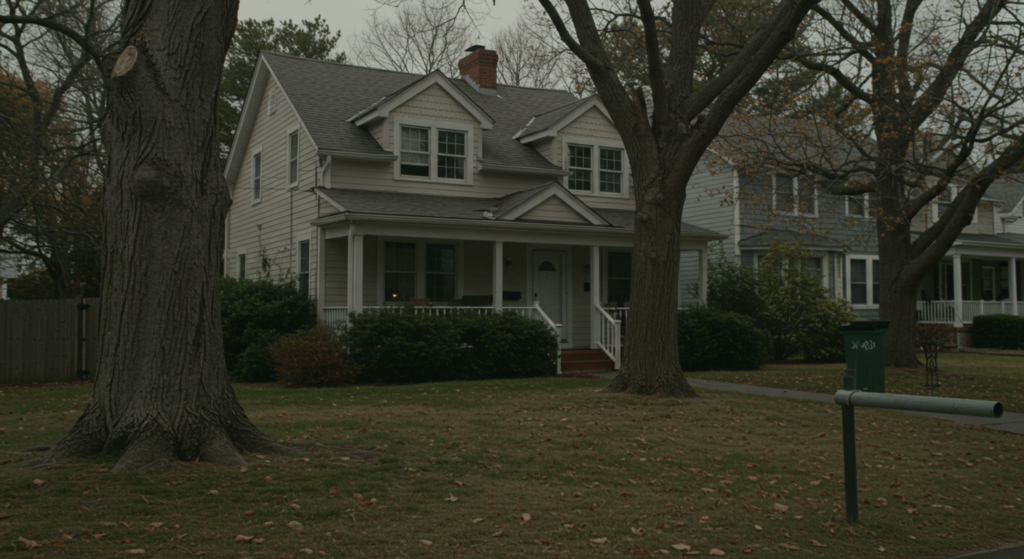
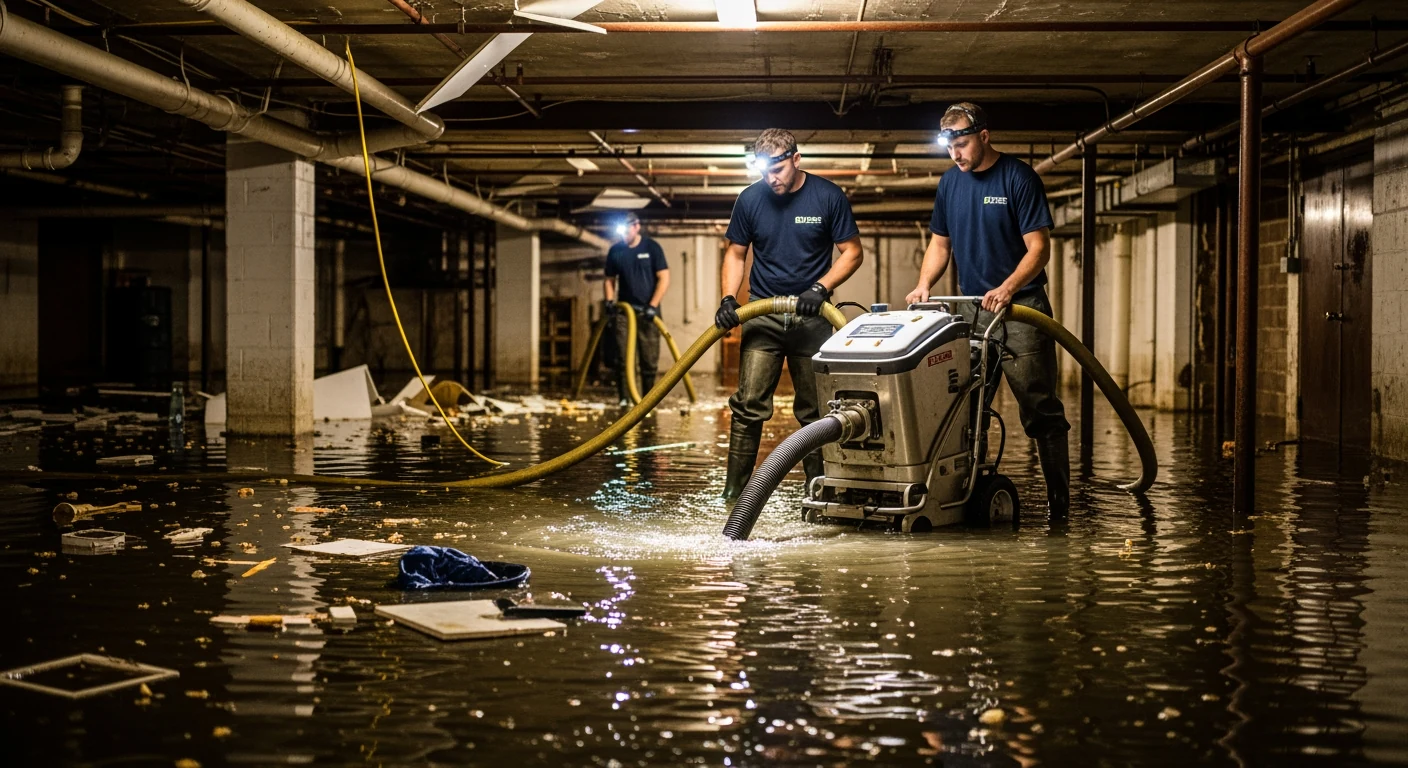
When water enters a basement in Queens or Brooklyn, it does not wait for business hours. The dense urban fabric of these two boroughs, combined with aging combined sewer systems and tightly packed row homes and multi-family buildings, creates flood conditions that are distinct from anywhere else in the country. Understanding basement flooding Queens and basement flooding Brooklyn requires a working knowledge of both infrastructure and building type.
Why Queens and Brooklyn Basements Flood Differently
The NYC Department of Environmental Protection manages a combined sewer system in much of Queens and Brooklyn that was engineered for a different era. When rainfall exceeds 0.15 inches per hour — a threshold now routinely exceeded during summer convective storms — the system surcharges. This means raw sewage and stormwater push back through floor drains, basement toilets, and utility sink connections. This is Category 3 water contamination under IICRC S500 standards, and it requires full decontamination, not simply drying.
In Brooklyn, neighborhoods like Canarsie, East New York, and Flatlands sit in low-lying areas along Jamaica Bay’s tidal influence zone. The basement flooding Brooklyn dynamic here is frequently driven by groundwater rise rather than sewer backup. During storm events, the water table in these neighborhoods can rise to within inches of the basement slab, creating hydrostatic pressure that forces water through the cove joint — the seam where the floor meets the wall.
In Queens, the pattern differs by geography. Flushing, Jamaica, and South Ozone Park are vulnerable to both sewer surcharge and overland flooding from the Jamaica Bay watershed. Bayside and Whitestone face a different challenge: steep terrain that channels runoff rapidly toward older foundations that lack modern drainage provisions.
The Legal Landscape: NYC Homeowner Liability After Flooding
What many Queens and Brooklyn property owners do not realize is that flood damage creates immediate legal obligations. Under NYC Construction Code §28-301.1, property owners are required to maintain their structures in a safe condition. When basement flooding causes structural compromise — even a cracked foundation wall — the owner’s obligation to remediate becomes urgent.
For multi-family buildings, which dominate much of Brooklyn and Queens, the NYC Housing Maintenance Code (HMC) §27-2005 mandates that landlords keep all areas of the building free from conditions dangerous to life or health. Mold growth following unmitigated basement flooding is a Class B or Class C violation depending on severity, and the NYC Department of Housing Preservation and Development (HPD) will issue violations during inspections. Each open violation delays rent filings and mortgage refinancing.
The 48-Hour Window: Why Speed Is the Only Variable You Control
IICRC S500 research establishes that mold colonization begins within 24 to 48 hours of water intrusion in conditions of elevated humidity. In a Brooklyn or Queens basement in summer — ambient temperatures in the 70s, relative humidity already at 60 to 70 percent before the flood — that window shrinks. Upper Restoration’s NYC response protocol is built around a 2-hour initial response target for Category 2 and Category 3 losses.
The drying process in dense urban basements is technically complex. Party walls in row homes and attached multi-families mean that moisture migrates laterally into adjacent units. Psychrometric calculations must account for vapor drive through shared concrete and masonry assemblies. Industrial dehumidification alone is insufficient — negative air pressure and structural drying panels are frequently required to dry embedded wall cavities without demolishing tile or plaster that can be preserved.
Insurance Considerations for NYC Basement Flooding
Standard homeowner’s insurance policies (HO-3) in New York explicitly exclude flood damage caused by surface water or groundwater rise. Coverage may exist under NFIP (National Flood Insurance Program) federal flood insurance, which covers direct physical loss from flooding but has limitations for basement contents and finishes. If a DEP infrastructure failure contributed to your basement flooding, you may have a viable tort claim against the City. Upper Restoration documents all sewage backup events with photographs, swab samples, and third-party testing that supports these claims.
Upper Restoration’s Queens and Brooklyn Response Protocol
Upper Restoration deploys IICRC-certified Water Damage Restoration Technicians (WRT) and Applied Microbial Remediation Technicians (AMRT) for all Category 3 basement events. Our NYC fleet maintains dedicated equipment for urban basement access, including compact extraction units for stairwell-accessed spaces and inline drying systems for rooms where equipment cannot be staged conventionally. For condominium and co-op buildings in Brooklyn Heights, Park Slope, and Astoria, we work directly with managing agents to coordinate access, documentation, and insurance billing. All work is performed under EPA RRP guidelines where lead paint disturbance is possible in pre-1978 buildings.
Frequently Asked Questions
What causes basement flooding in Brooklyn and Queens?
The primary causes are combined sewer surcharge during heavy rain, groundwater rise in low-lying areas near Jamaica Bay, and internal plumbing failures. Storm-related sewer backup is the most common trigger during summer storms.
Is basement flood water dangerous?
If the source is a sewer backup, yes — it is classified as Category 3 (black water) under IICRC S500 and contains bacteria, viruses, and other pathogens. Even Category 1 clean water becomes Category 2 or 3 within 24 hours if left standing in warm conditions.
How long does basement flood cleanup take in NYC?
Initial extraction and decontamination typically takes 1 to 2 days. Structural drying to IICRC S500 goals takes 3 to 5 days. Full restoration including flooring and drywall replacement adds additional time depending on scope.
Does homeowner’s insurance cover basement flooding in Queens or Brooklyn?
Standard HO-3 policies exclude flood damage from external sources. Sewer backup may be covered if you have a sewer backup endorsement. An Upper Restoration estimator can review your policy language during the initial assessment at no charge.