Asbestos Testing in Suffolk County, NY: What Homeowners and Contractors Need to Know in 2026
Suffolk County’s median home construction year is 1970 — slightly later than Nassau’s 1955, but still firmly within the era of widespread asbestos use in construction materials. The county’s 568,657 homes span from the densely-built Cape Cods of western Suffolk through the larger colonials and ranches of mid-county communities to the historic and high-value properties of the East End. Pre-1980 construction permeates all of these zones, and with it the potential presence of asbestos-containing materials in floor tiles, insulation, drywall compound, textured ceilings, roofing, and mechanical systems.
This guide covers the legal requirements for asbestos testing in Suffolk County, the testing methods used, 2026 cost benchmarks, and the specific materials most commonly found in Suffolk County’s housing stock.
NYS Code Rule 56: Suffolk County’s Pre-Demolition Survey Requirement
New York State Code Rule 56 (12 NYCRR Part 56) applies in Suffolk County as throughout New York State. Before any demolition or significant renovation in a building constructed before 1980, a pre-demolition asbestos survey by a NYS-certified asbestos inspector is required. This applies to homeowners, general contractors, and specialty contractors alike — subcontractors who disturb building materials in pre-1980 Suffolk County structures without a prior survey are in violation of Code Rule 56 regardless of whether they knew asbestos was present.
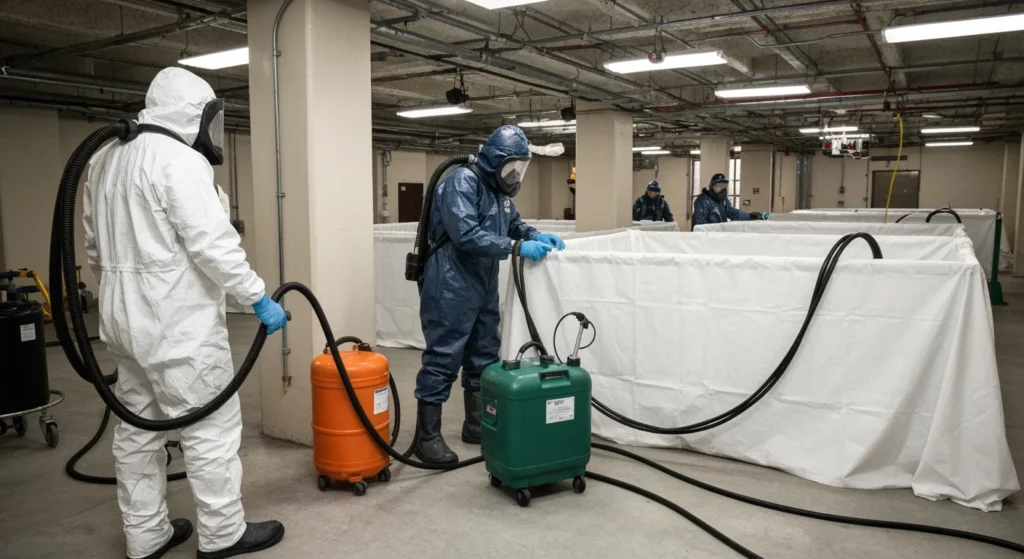
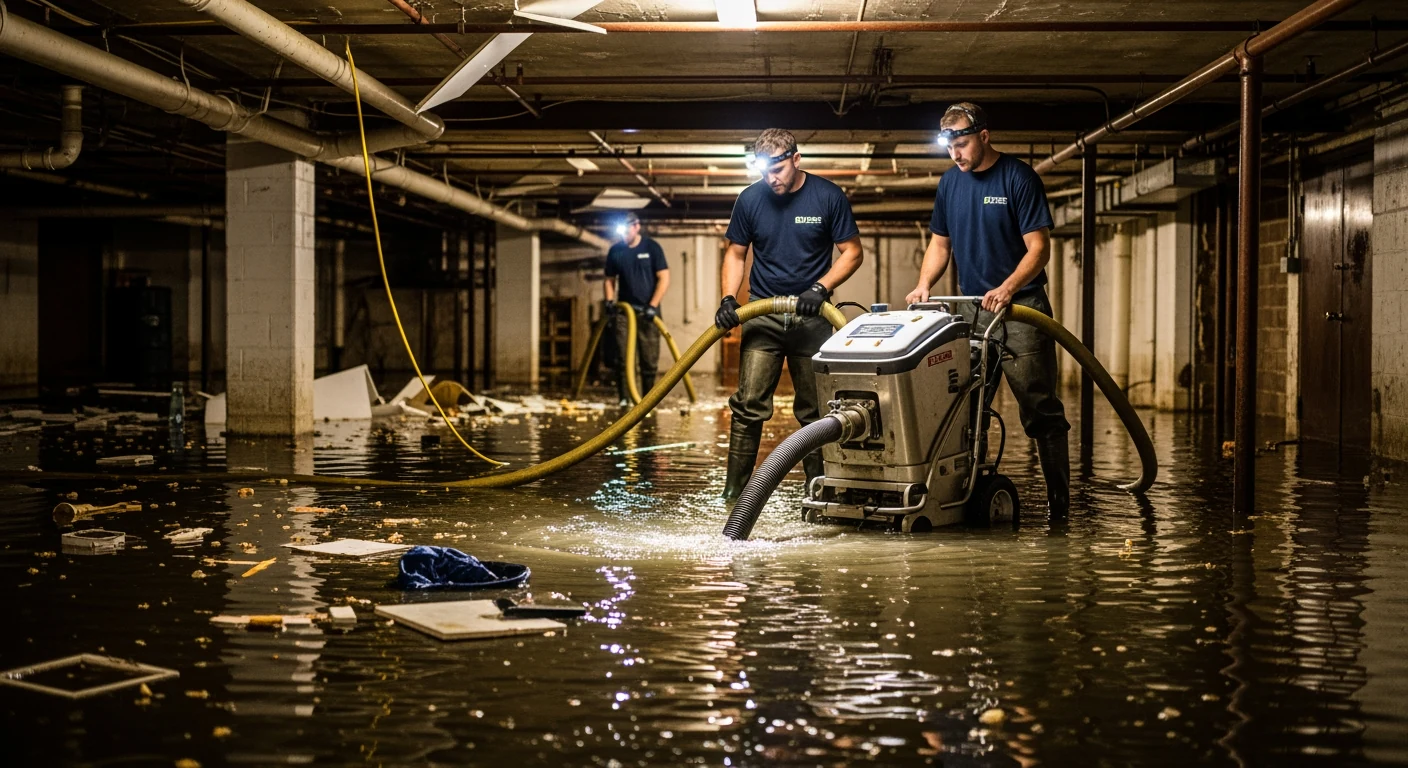
The requirement is particularly active in Suffolk County’s restoration market. Water damage events, fire damage, and mold remediation projects in pre-1980 homes all potentially require demolition of building materials — and each of those projects should be preceded by an asbestos survey scoped to the demolition area. A restoration contractor who skips this step creates legal exposure for themselves and the homeowner and risks dispersing asbestos fibers throughout the living space.
Suffolk County Housing Stock and Common ACMs
Suffolk County’s pre-1980 housing stock spans a wider geographic range than Nassau’s and includes distinct regional construction patterns:
Western Suffolk (Babylon, Islip, western Huntington and Brookhaven) shares Nassau County’s post-war Cape Cod and ranch profile — 9×9 floor tiles, pipe insulation, joint compound, and popcorn ceilings are common in the same proportions as Nassau. Testing protocols and abatement costs are essentially identical to Nassau County.
Mid-Suffolk (Smithtown, Hauppauge, Commack, eastern Huntington) has a 1960s–1970s construction concentration. Homes from this era frequently contain aluminum wiring (an electrical, not asbestos, concern) alongside asbestos joint compound in drywall from before 1978 — a combination that is common enough that any renovation triggering wall demolition in a mid-Suffolk 1970s home should address both the electrical inspection and the asbestos survey.
East End (Southampton, East Hampton, Riverhead, North Fork) has a uniquely varied housing stock: pre-war bungalows and cottages from the 1920s–1930s with original construction materials; 1950s–1960s mid-century construction in the hamlet communities; and the post-1980 renovation wave that has transformed many older structures. Pre-war East End properties may contain asbestos in materials not commonly found in post-war suburban homes — plaster with asbestos reinforcing, original slate roofing with asbestos underlayment, and early-generation pipe and boiler insulation with high asbestos content.
Suffolk County schools under AHERA (Asbestos Hazard Emergency Response Act) are required to maintain asbestos management plans and conduct triennial inspections. Homeowners living near or involved with school buildings should be aware that commercial and institutional asbestos programs run under different regulatory frameworks than residential Code Rule 56.
Asbestos Testing Methods in Suffolk County
The same testing methods apply in Suffolk County as Nassau: XRF (X-ray fluorescence) for non-destructive analysis, bulk sampling for regulatory compliance, and air testing for post-abatement clearance verification. Bulk sampling with PLM laboratory analysis is the standard for pre-demolition surveys under Code Rule 56.
East End properties with diverse material ages may require more extensive survey sampling than a standard Nassau County Cape Cod — inspectors working pre-war East End cottages routinely collect 20–35 samples versus the 8–12 typical for a standard post-war ranch. This additional scope reflects the broader range of potential ACMs in older and more complex structures.
Asbestos Testing Costs in Suffolk County (2026)
Standard pre-purchase or pre-renovation asbestos inspection with bulk sampling for a typical western or mid-Suffolk single-family home (up to 12 samples, lab included): $350–$700. Pre-demolition survey for a significant renovation (up to 25 samples): $500–$1,200. East End properties with pre-war construction and larger sample requirements: $700–$1,800.
Post-abatement air clearance testing: $250–$500 per area. Rush laboratory turnaround (24–48 hours when timeline is critical): add $100–$200 per sample.
If positive results require abatement before your renovation proceeds: see our Long Island asbestos guide. Abatement costs in Suffolk County are comparable to Nassau for standard materials; East End properties may run higher due to trade availability and project access considerations.