Asbestos Testing in Nassau County, NY: What Homeowners and Contractors Need to Know in 2026
Nassau County’s median home construction year is 1955. That single fact means the majority of residential properties in the county — the Cape Cods of Levittown and Hicksville, the ranches of Wantagh and Massapequa, the Colonials of Garden City and Manhasset — were built during the peak era of asbestos use in construction materials. Floor tiles, pipe insulation, joint compound, duct wrap, textured ceilings, roofing — the list of materials where asbestos was routinely used in 1955 construction is long, and the probability that a pre-1980 Nassau County home contains asbestos-containing materials somewhere is high enough that professional testing before renovation or demolition is not overcautious. It is standard professional practice.
This guide covers when asbestos testing is legally required in Nassau County, what the different testing methods are, what they cost in 2026, and what happens next if the results are positive.
When Asbestos Testing Is Required in Nassau County
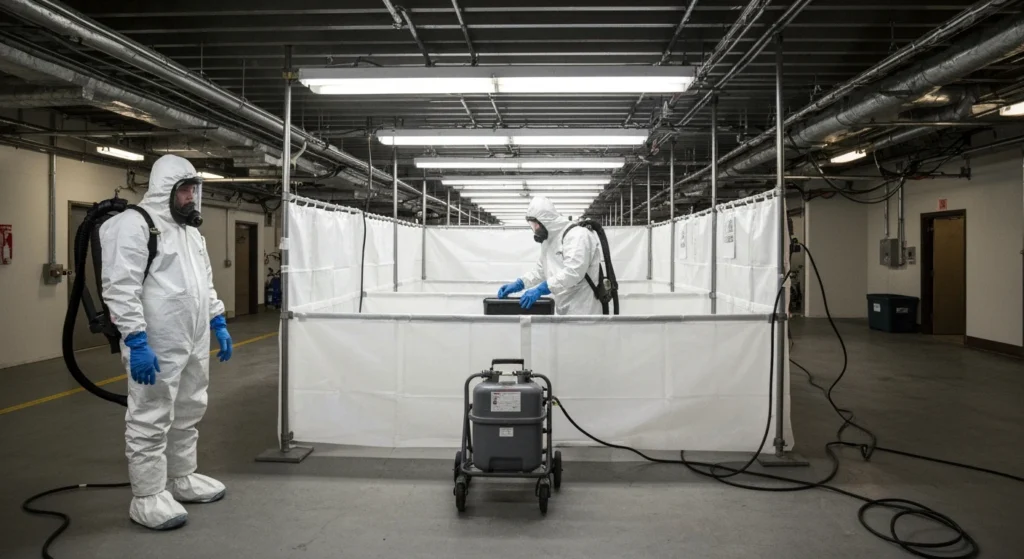
Before any renovation or demolition in pre-1980 construction. New York State Code Rule 56 (12 NYCRR Part 56) requires a pre-demolition asbestos survey before any demolition or significant renovation work in any building built before 1980. This applies to Nassau County homeowners undertaking kitchen remodels, bathroom renovations, basement finishing, window replacement, or any project that disturbs building materials. The survey must be performed by a NYS-certified asbestos inspector. If asbestos-containing materials are confirmed in the affected area, licensed abatement must be completed before any demolition or renovation proceeds.
When selling a pre-1980 Nassau County home. New York’s Property Condition Disclosure Statement requires sellers to disclose known defects. While asbestos-containing materials in good condition in a pre-1980 home do not automatically require disclosure as a “defect” (they are a known feature of era construction), discovered asbestos-containing materials in poor condition or in areas where they were disturbed without proper abatement must be disclosed. Many buyers request independent asbestos inspections as part of due diligence for pre-1980 Nassau County properties.
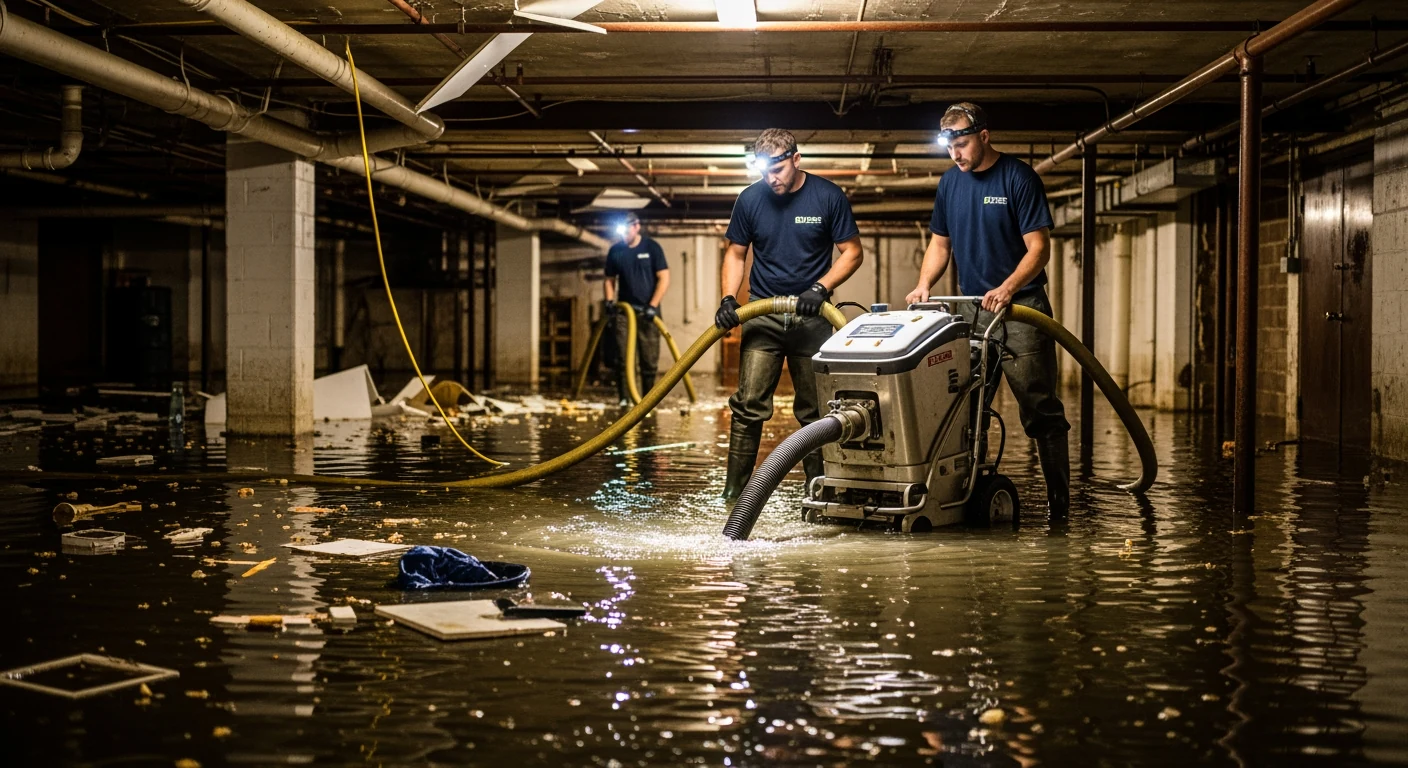
When water damage or fire damage requires demolition. Any restoration project in a pre-1980 Nassau County home that involves demolishing walls, ceilings, or floors requires a pre-demolition asbestos survey. This is one of the most frequently overlooked requirements in residential restoration — a water damage contractor who demolishes drywall in a 1960 Cape Cod without a prior asbestos survey is potentially violating Code Rule 56 and creating asbestos fiber release into the living space.
Before purchasing a pre-1980 Nassau County property. Pre-purchase asbestos inspections are increasingly standard in Nassau County real estate transactions. Knowing whether the home you are buying contains asbestos-containing materials, where they are, and what condition they are in allows you to price the cost of abatement into your offer or budget for future renovation requirements accurately.
Asbestos Testing Methods: XRF vs. Bulk Sampling vs. Air Testing
XRF (X-ray fluorescence) testing uses a handheld device to analyze the elemental composition of building materials non-destructively. XRF can confirm or rule out asbestos in floor tiles, pipe insulation, and some other materials without removing samples. It is fast — a typical Nassau County home can be XRF-tested in two to four hours — and produces immediate results. XRF is the preferred method for pre-purchase inspections where minimal disruption is required. Limitation: XRF cannot test all material types with equal accuracy, and some results require confirmation through bulk sampling.
Bulk sampling and laboratory analysis involves physically removing small samples of suspected materials — a piece of floor tile, a section of pipe insulation, a scraping of joint compound — and sending them to a NVLAP-accredited laboratory for polarized light microscopy (PLM) analysis. PLM is the regulatory standard for asbestos confirmation. Laboratory turnaround is typically two to five business days for standard service; rush turnaround (24–48 hours) is available at premium cost. Bulk sampling is required for regulatory compliance in pre-demolition surveys.
Air testing measures the concentration of asbestos fibers in the air of a space. Air testing is used after abatement to confirm that fiber concentrations have been reduced to clearance levels — it is the post-abatement verification standard, not the initial identification method. Pre-abatement air testing can establish baseline conditions for the abatement contractor’s safety protocols.
Common Asbestos-Containing Materials in Nassau County Homes
The most frequently identified asbestos-containing materials in Nassau County’s 1940s–1970s housing stock, in order of frequency:
9×9 vinyl composite floor tiles — the ubiquitous tan, brown, or marbled floor tiles installed throughout Nassau County’s post-war homes from the 1940s through the mid-1970s. The tiles themselves contain chrysotile asbestos at varying concentrations; the black mastic adhesive beneath them often contains asbestos at higher concentrations than the tiles. Both must be tested and, if positive, abated before removal.
Pipe insulation on heating system lines — particularly the tan or gray wrap on hot water lines in basements and the insulation on oil furnace exhaust connections. This material is often friable (crumbles when dry), meaning fiber release risk is high when disturbed.
Joint compound on drywall — pre-1978 joint compound used to tape and finish drywall seams was frequently asbestos-containing. This is one of the most commonly missed materials because it is invisible behind painted surfaces and is disturbed whenever walls are drilled, cut, or demolished.
Textured ceiling spray (popcorn ceiling) — applied from the late 1950s through the mid-1970s, popcorn ceiling texture in Nassau County homes has tested positive for asbestos frequently. It is friable; any disturbance releases fibers.
Duct insulation and wrap on oil furnace ductwork — particularly the fibrous gray or silver wrap on rectangular supply ducts in older HVAC systems.
Asbestos Testing Costs in Nassau County (2026)
Standard pre-purchase or pre-renovation asbestos inspection with bulk sampling (up to 10 samples, typical single-family home): $350–$700. Laboratory analysis is typically included in this range. XRF inspection without bulk sampling: $300–$600.
Pre-demolition survey for a significant renovation project (kitchen, bathroom, basement — up to 25 samples): $500–$1,200. Post-abatement air clearance testing: $250–$500 per area tested.
If asbestos-containing materials are confirmed and abatement is required before renovation: see our Long Island asbestos guide for full abatement cost breakdowns. Floor tile abatement (typical Nassau County basement or kitchen): $2,000–$6,000. Pipe insulation abatement: $1,500–$5,000 depending on linear footage. Popcorn ceiling abatement: $3–$7 per square foot.