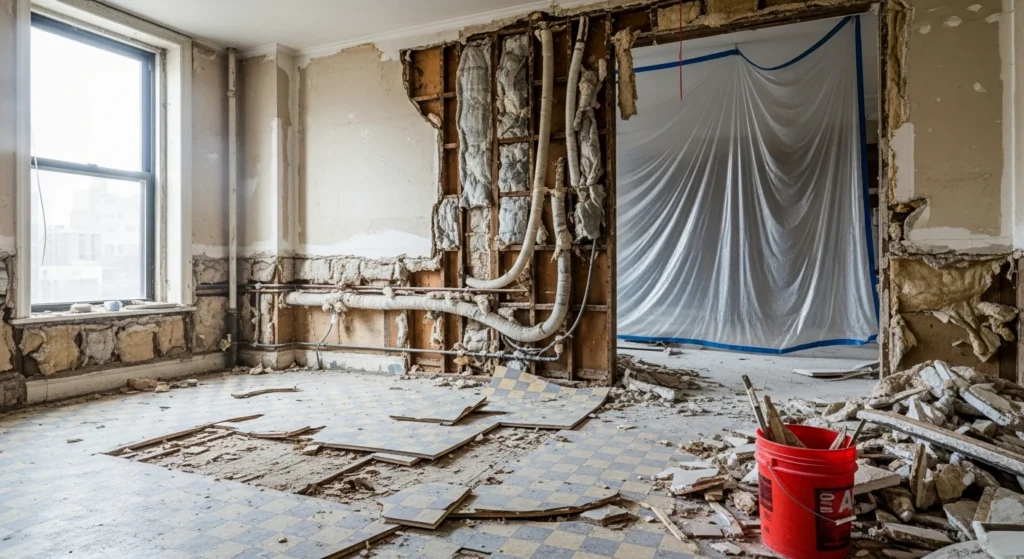
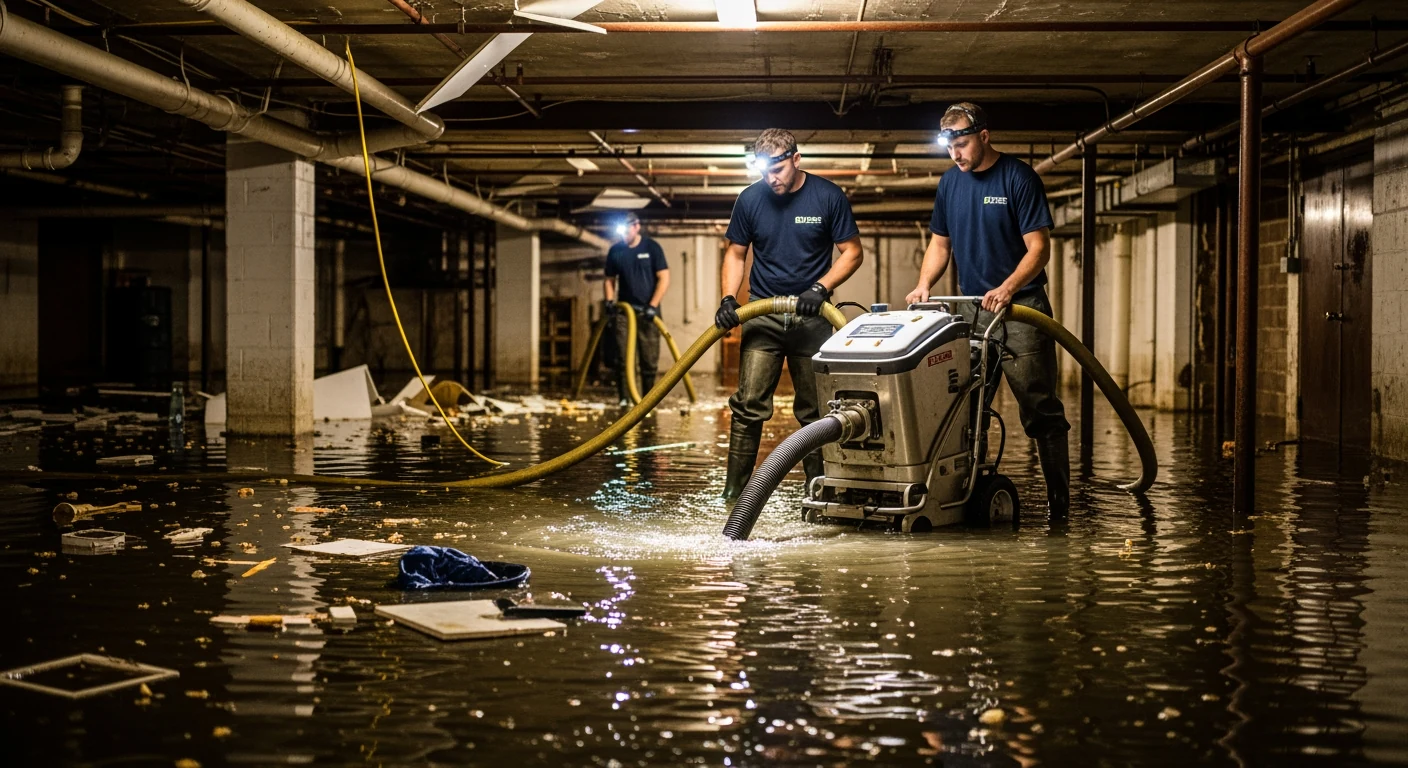
April is when renovation projects begin. Contractors become available after the winter slowdown, building permits get pulled, and New York City and Long Island homeowners start the gut renovations, kitchen remodels, and bathroom overhauls they planned over winter. What most of them don’t know — and what their contractors may not be telling them — is that pre-1978 NYC and Long Island housing stock contains asbestos-containing materials (ACM) and lead-based paint in concentrations that require specific legal compliance before a single wall comes down. The consequences of skipping this step range from significant personal health risk to six-figure cleanup costs when improperly disturbed materials must be remediated under emergency protocols.
What’s Actually in Pre-1978 NYC and Long Island Buildings
The probability of encountering asbestos-containing materials in a New York building depends heavily on construction decade. These ranges reflect documented ACM probability in NYC and Long Island building stock:
Pre-1940 construction (pre-war): Very high ACM probability. Pipe insulation containing chrysotile or amosite asbestos is nearly universal in steam heating systems from this era. Boiler insulation, duct insulation, and boiler room ceiling spray are almost certainly ACM. Floor tiles, if original, are high-probability ACM (9″x9″ vinyl asbestos tile is the most common form). Transite (asbestos cement) siding, roofing, and flue pipes are common.
1940–1960 construction: High ACM probability. All of the above plus textured ceiling finishes (popcorn/vermiculite) that may contain tremolite asbestos if applied before 1978. Vinyl floor coverings and the adhesive (mastic) beneath them are high-probability ACM. Plaster tape compound may contain chrysotile.
1960–1978 construction: Moderate to high ACM probability. Textured ceiling spray, floor tile mastic, HVAC insulation, and drywall joint compound all have documented ACM presence in this construction period. Asbestos use was declining but not eliminated — the 1973 EPA ban on spray asbestos and the 1978 CPSC ban on asbestos in patching compounds were the last major regulatory restrictions before the current regime.
Lead-based paint: Any surface painted before 1978 may contain lead. Lead paint was not banned in residential use until 1978 (Consumer Product Safety Improvement Act). In pre-war NYC buildings, lead paint layers are typically present on all painted surfaces — the question is not whether it’s present but how many layers deep and whether it is intact or deteriorating.
New York State Rule 56: What It Requires Before Renovation
New York State Industrial Code Rule 56 (12 NYCRR 56) is the primary regulatory framework governing asbestos in construction in New York. Before any demolition or renovation work that will disturb building materials in a pre-1980 building, Rule 56 requires:
Asbestos survey: A licensed asbestos inspector must survey the areas to be disturbed and collect bulk samples of suspect materials. Samples are analyzed by a NYSDOH-accredited laboratory. The inspector’s report identifies whether ACM is present and classifies it as friable (can be crumbled by hand pressure — higher risk) or non-friable (intact, lower risk unless disturbed).
Pre-demolition notification: For most asbestos abatement projects in New York State, the contractor must file a pre-demolition notification with the NYSDOL Asbestos Control Bureau at least 10 working days before work begins. Emergency notifications are available for urgent situations (24-hour notice) but require documentation of the emergency condition.
Abatement by licensed contractor: Only a contractor holding a NYSDOL Asbestos Handling Contractor certification may perform asbestos abatement in New York State. The abatement must be performed under the direct supervision of a licensed Asbestos Project Monitor, who is typically a separate licensed entity from the contractor — parallel to the Article 32 assessor/remediator separation for mold.
Air monitoring and clearance: Air monitoring for airborne asbestos fiber concentration must be performed during abatement. Post-abatement clearance air sampling must meet the EPA’s AHERA clearance standard (0.01 f/cc or below) before the containment is dismantled and the area is returned to occupancy.
EPA RRP Rule: Lead Paint in Pre-1978 Housing
The EPA’s Renovation, Repair and Painting (RRP) Rule (40 CFR Part 745) requires contractors performing renovation, repair, or painting work that disturbs more than six square feet of painted surfaces per room (interior) or more than 20 square feet (exterior) in pre-1978 housing to be certified and to follow specific lead-safe work practices.
What this means practically: any contractor performing a kitchen or bathroom renovation in a pre-1978 NYC or Long Island home must hold EPA RRP Lead-Safe Certified Renovator status. They must contain the work area, use HEPA vacuums for cleanup, and follow specific disposal protocols for renovation debris containing lead paint. Post-renovation cleaning verification is required using standardized wipe sampling.
New York City has its own parallel lead paint law (Local Law 1 of 2004) that is stricter than the federal standard for tenant-occupied dwellings with children under age 6. For landlords renovating pre-1978 apartments, Local Law 1 compliance is required regardless of whether the RRP threshold is met — any disturbance of painted surfaces in apartments where children under 6 reside requires lead-safe practices and inspection.
The Sequence: Inspection, Testing, Abatement, Clearance
Understanding the required sequence prevents the most common and expensive renovation mistake in NYC’s pre-1978 housing stock — discovering ACM after demolition has already begun:
Step 1 — Licensed asbestos inspector survey (2–5 days): Inspector surveys all materials in the renovation scope. Bulk samples collected and sent to laboratory. Typical turnaround: 3 business days standard, 24 hours rush. Cost: $400–$1,200 depending on property size and number of samples.
Step 2 — Pre-demolition notification (10 working days minimum): If ACM is confirmed, the abatement contractor files notification with NYSDOL. This is the step that delays renovation timelines most significantly — the 10-day waiting period is mandatory and cannot be shortened without emergency justification. Plan for it.
Step 3 — Licensed abatement (1–5 days depending on scope): ACM is removed under containment by a licensed contractor, with continuous air monitoring by a licensed project monitor. All ACM is disposed of as regulated asbestos-containing waste at a permitted facility — disposal manifests are required documentation.
Step 4 — Clearance air sampling (1 day): Post-abatement air samples collected and analyzed. Results must meet AHERA standard before area reopens. Written clearance report issued. This document is required for NYC Department of Buildings permit inspections on regulated asbestos projects.
What Improper Removal Actually Costs
Property owners who skip the Rule 56 process because it adds cost and timeline to a renovation regularly discover that the cost of cleaning up after improper asbestos disturbance is orders of magnitude higher than compliant abatement would have been. When asbestos fibers are released during improper demolition, the affected area must be decontaminated under emergency conditions — typically requiring NYSDEC notification, emergency containment, HEPA cleaning of all surfaces, and air clearance sampling. Emergency asbestos remediation in NYC runs $15,000–$80,000 for a typical apartment space. The same compliant pre-demolition abatement might have cost $3,000–$12,000.
Beyond remediation cost, property owners face NYSDOL stop-work orders, potential civil penalties, and in cases of significant release, criminal liability under New York’s Environmental Conservation Law.
Frequently Asked Questions About Pre-Renovation Asbestos and Lead in NYC
Do I need asbestos testing before renovation in NYC? Under New York State Rule 56, an asbestos survey is required before demolition or renovation work that will disturb building materials in any building constructed before 1980. This applies to residential as well as commercial buildings.
How much does asbestos removal cost in New York? Licensed asbestos abatement in NYC and Long Island runs $1,500–$8,000 for small residential scopes (one to three rooms). Whole-floor or building-wide abatement in multi-unit buildings can reach $50,000–$200,000+. Pre-demolition inspection and testing runs $400–$1,200. The full compliant sequence (inspection, notification, abatement, clearance) typically adds $3,000–$15,000 and 3 to 6 weeks to a renovation project timeline.
What happens if you renovate without asbestos testing in NYC? If ACM is disturbed without proper abatement, NYSDOL can issue stop-work orders and civil penalties. The property owner is responsible for emergency remediation costs under NYSDEC oversight. Building permit applications may be rejected for future work if prior violations are on record. For properties with active tenants, exposure of tenants to asbestos fibers creates significant personal injury liability.
Can my regular contractor do the asbestos removal? No. Only a contractor holding a NYSDOL Asbestos Handling Contractor certification may legally perform asbestos abatement in New York State. Ask for the contractor’s certification number and verify it on the NYSDOL website before signing any contract for renovation work in pre-1978 buildings.
Related reading: The April Property Assessment for NYC and Long Island Owners | Long Island Asbestos Abatement and Removal Guide | Spring Storm Season in NYC — Structural Vulnerabilities That Create $50,000 Claims