Brooklyn’s housing stock – packed with pre-war brownstones, converted factories, and mid-century co-ops – is one of the most asbestos-dense environments in the entire country. If you’re renovating, demolishing, or dealing with deteriorating building materials in a Brooklyn property, asbestos removal may not be optional. Here’s what NYC residents need to know about the process, the rules, and the costs.
Why Brooklyn Properties Have High Asbestos Risk
Asbestos was used extensively in building materials from the early 1900s through the mid-1970s. Brooklyn’s large inventory of buildings constructed during this period means asbestos-containing materials (ACMs) are extremely common. High-risk materials in Brooklyn properties include:
- Floor tiles and mastic adhesive (9″x9″ or 12″x12″ vinyl tiles from pre-1980 construction)
- Pipe and boiler insulation (often a plaster-like wrap on steam pipes in older brownstones)
- Popcorn/textured ceilings applied before 1980
- Drywall compound and joint tape in pre-1977 construction
- Transite board (a cement-asbestos composite used in utility areas, fire doors, and HVAC systems)
- Roofing materials including felt underlayment and shingles
NYC DEP Regulations for Asbestos Removal in Brooklyn
New York City has some of the strictest asbestos regulations in the country, overseen by the NYC Department of Environmental Protection (DEP). Key requirements for Brooklyn projects:
- ACP-5 form: Required before any demolition or renovation permit can be issued. A certified asbestos investigator must inspect the property and either certify it is asbestos-free or document the ACMs present.
- ACP-7 / Variance work: For disturbance of regulated ACMs during renovation, a licensed asbestos abatement contractor must file a variance (ACP-7) with DEP before work begins.
- Licensed abatement contractors: Only NYC DEP-licensed contractors may perform asbestos abatement in the five boroughs. Verify any contractor’s license at NYC DEP’s public license search.
- Air monitoring: A certified air monitor must be present during asbestos abatement work in NYC – this is separate from the abatement contractor.
- Waste disposal: Asbestos waste must be double-bagged, labeled, and disposed of at a licensed facility. Manifests must be maintained.
The Asbestos Removal Process in Brooklyn Properties
A typical asbestos abatement project in a Brooklyn home or co-op follows these steps:
- Step 1 – ACP-5 Survey: A certified asbestos investigator inspects and samples suspected materials before any permits are pulled
- Step 2 – DEP Filing: The abatement contractor files the required variance with NYC DEP (typically 10+ days before work begins)
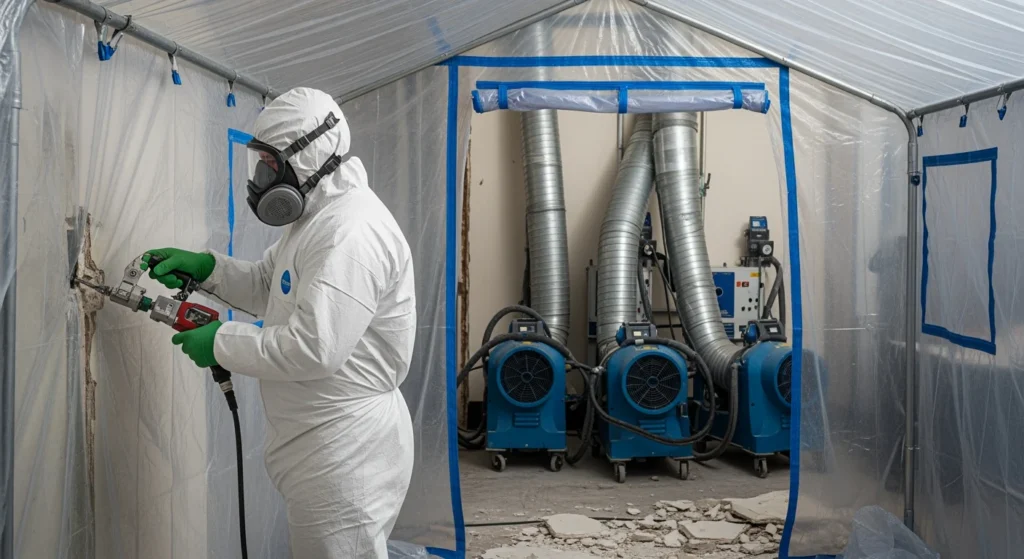
- Step 3 – Containment: The work area is sealed with plastic sheeting and negative air pressure is established using HEPA-filtered air scrubbers
- Step 4 – Abatement: Licensed workers in full PPE wet-remove or encapsulate the ACMs
- Step 5 – Air monitoring: A certified air monitor collects samples during and after the work
- Step 6 – Clearance: Air samples must pass clearance testing before containment is removed and the space is re-occupied
Asbestos Removal Costs in Brooklyn (2026)
NYC asbestos removal costs are higher than the national average due to DEP filing fees, mandatory air monitoring, and the complexity of urban work sites. Typical ranges for Brooklyn projects:
- ACP-5 survey (pre-permit inspection): – ,500 depending on property size
- Floor tile removal (one room): ,500 – ,000
- Pipe insulation removal: ,500 – ,000 per 100 linear feet
- Popcorn ceiling removal (one room): ,500 – ,000
- Full apartment abatement (pre-renovation): ,000 – ,000+
- Air monitoring (required): – ,500 per project
Co-op and condo buildings often require board approval before abatement work can begin, which adds time to the planning process. Budget 4-8 weeks from initial survey to completion of work for a typical Brooklyn residential project.
Upper Restoration Serves Brooklyn and All Five Boroughs
Upper Restoration’s licensed abatement team works throughout Brooklyn, Manhattan, Queens, the Bronx, and Staten Island, in addition to our Long Island service area. We handle the full process – from coordinating the ACP-5 survey through DEP filing, abatement, air monitoring coordination, and clearance. Learn more about our NYC asbestos removal services or call for a project assessment.
Frequently Asked Questions
Can I remove asbestos floor tiles myself in Brooklyn?
No. NYC Administrative Code prohibits unlicensed asbestos work on regulated ACMs. Even for small quantities, attempting DIY asbestos removal in NYC can result in substantial fines from DEP and potential health liability. All regulated asbestos work must be performed by NYC DEP-licensed contractors.
How do I know if I need an ACP-5 form?
Any permit application filed with NYC DOB for work on a building constructed before 1987 requires an ACP-5 form. This applies to renovation, gut renovation, demolition, and alteration permits. Your contractor should handle this filing, but the building owner is ultimately responsible for compliance.
How long does asbestos abatement take in a Brooklyn apartment?
A single-room asbestos floor tile removal typically takes 1-2 days of actual abatement work. Full apartment pre-renovation abatement can take 3-7 days. Add DEP filing lead time (typically 10-14 days before work can start) and post-clearance testing time to the overall project schedule.
Who pays for asbestos removal in a NYC co-op?
Responsibility depends on the proprietary lease and whether the ACMs are in the unit or in common areas. Unit owners are generally responsible for ACMs within their apartment; the building is responsible for common-area asbestos (boiler rooms, pipe chases, hallways). Review your proprietary lease and consult your building’s managing agent before proceeding.
Conclusion
Asbestos removal in Brooklyn is a highly regulated process requiring licensed contractors, DEP permits, and certified air monitoring. Whether you’re renovating a brownstone, gut-rehabbing a co-op, or addressing deteriorating pipe insulation, Upper Restoration can guide you through every step. Contact us for a free project assessment and ACP-5 coordination.
Frequently Asked Questions
What are the health risks of asbestos exposure?
Asbestos exposure can cause mesothelioma, lung cancer, asbestosis, and other serious respiratory diseases. Effects may not appear for 10-50 years after exposure.
Is asbestos in my home dangerous?
Asbestos in good condition is generally safe. However, if damaged or disturbed, it releases fibers into the air, creating a serious health hazard.
How do I know if my home contains asbestos?
Materials installed before 1980 are most likely to contain asbestos. Professional testing is recommended for insulation, floor tiles, roofing, and pipe wrapping.
Can I remove asbestos myself?
No. Asbestos removal must be performed by certified professionals. DIY removal can release dangerous fibers and contaminate your home.
How much does asbestos removal cost?
Cost varies based on location and extent. Most homeowners spend $5,000-$20,000. Get multiple quotes from certified contractors.
How long does asbestos remediation take?
Timeline depends on scope. Small projects may take 1-2 days; larger projects can take 1-2 weeks.