Why Basements Are a Common Place to Find Asbestos
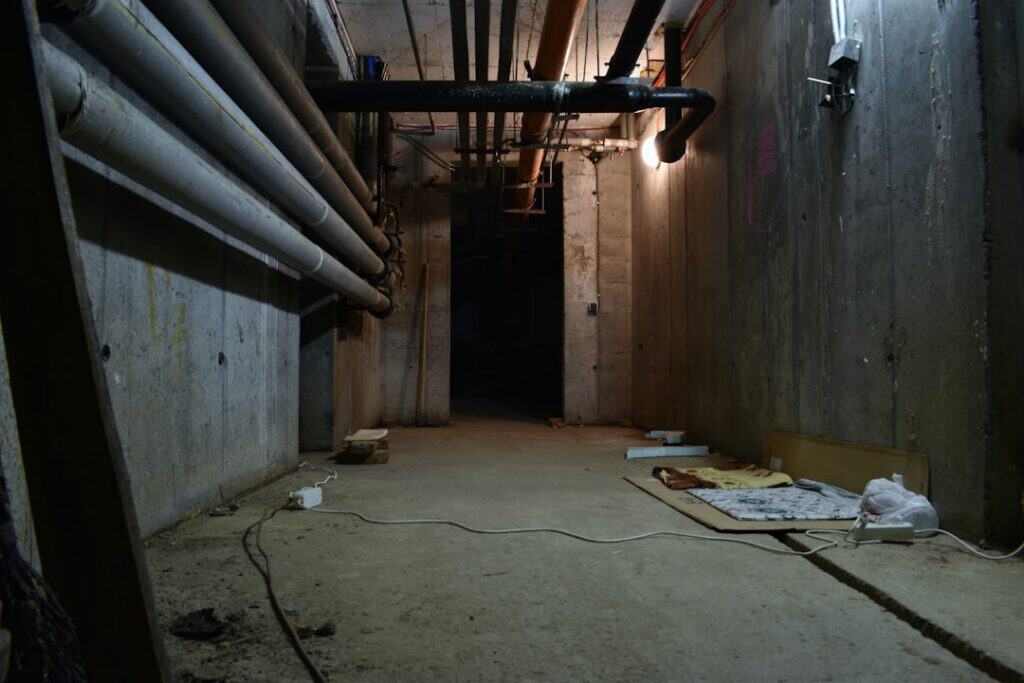
Basements built before 1980 rank among the top spots in a house for legacy asbestos-containing materials, according to industry sources tracking residential exposure. This includes pipe insulation, vinyl floor tiles, ceiling tiles, and cement products, largely because unfinished basements were rarely updated once installed. Age of construction, not appearance, is the real risk marker.
Basements got the asbestos treatment for practical reasons. Boiler rooms and pipe runs needed fire-resistant, heat-tolerant wrap. Utility spaces got cheap, durable flooring. Drop ceilings hid ductwork while muffling noise from mechanical equipment overhead. All three of those jobs, in homes built roughly between the 1930s and late 1970s, were frequently done with asbestos-containing products because the material was inexpensive, fireproof, and did its job well. The U.S. Environmental Protection Agency notes that widespread use of asbestos in insulation, flooring, and ceiling materials tracks directly with the construction era of a home, which is why a house’s age tells you more than its condition ever will.1
If you’re planning a basement renovation, a water-damage repair, or even just installing shelving in a house built before 1980, the calendar year on your deed matters more than how “finished” or “rough” the space looks. A pristine-looking unfinished basement can still be sitting on decades-old asbestos tile, and a recently painted one can have asbestos wrap hidden under fresh insulation jacketing. The sections below walk through exactly what to look for, room by room, material by material.
Pipe Insulation: What Asbestos Wrap Looks Like on Basement Pipes
Asbestos pipe insulation typically appears as a chalky, off-white or gray wrap, sometimes under a canvas-like jacket, wrapped in overlapping layers or corrugated paper along pipe runs and at elbow joints. It’s most common in homes with boilers or steam heat systems installed before 1980. Damage or crumbling, not the material’s mere presence, is what raises exposure risk.
Look at the pipes running along your basement ceiling or near the boiler and water heater. Older asbestos pipe wrap often shows up in a few recognizable forms: a corrugated paper wrap secured with wire or tape, a chalky plaster-like coating molded around fittings and elbows, or a canvas jacket that’s begun to fray or sag at the seams. The Centers for Disease Control and Prevention’s Agency for Toxic Substances and Disease Registry (ATSDR) confirms that pipe insulation and cement-based pipe products are established sources of residential asbestos, and that erosion or physical disturbance of these materials is a primary way fibers become airborne.2
Fittings and elbow joints deserve extra attention. Manufacturers often used a separate asbestos-containing compound at these connection points because it was easier to mold around irregular shapes than sheet wrap. If you see a section of pipe with smooth insulation but lumpy, hand-formed material at the joints, that’s a strong candidate for lab testing before anyone touches it. If the wrap looks intact and undisturbed, the EPA’s general guidance is that undamaged material poses lower risk sitting in place than it does once cut, sanded, or pulled apart.3 That’s a reason to leave it alone and get it tested, not a reason to ignore it indefinitely.
Floor Tiles and Black Mastic: The 9×9 Tile Red Flag
Vinyl floor tiles measuring 9×9 inches, often paired with black adhesive mastic underneath, are a widely recognized visual indicator of asbestos-containing flooring installed before the 1980s. Modern vinyl composition tile is almost always sized 12×12 inches. Tile size alone can’t confirm asbestos content, but it’s a strong enough signal to warrant sampling before removal.
This is one of the most searched basement-asbestos questions homeowners ask, and for good reason: the tile-size clue is genuinely reliable as a first flag. Industry sources tracking home asbestos identification point to 9×9 tiles specifically, distinct from the 12×12 standard that became common later, as a marker worth investigating.4 Real-world accounts back this up. In one widely referenced homeowner discussion about a suspected asbestos find in a basement, an inspector’s first move was checking tile dimensions before recommending lab testing.5
The tile itself often isn’t the biggest concern; it’s what’s underneath. Black mastic, the tar-like adhesive that held those tiles to a concrete slab, frequently contained asbestos in its own right, separate from the tile above it. That means even if you swap out cracked tiles, scraping up the old mastic to prep the subfloor for new flooring can disturb material the tile removal alone wouldn’t have touched. Both layers need to be accounted for before any floor project starts, which is exactly why guessing by sight and moving straight to demo is the wrong move.
Red flag combo: 9×9 tiles + black mastic + a pre-1980 build date. Any two of these together should stop a DIY floor project until testing confirms what you’re dealing with.
Ceiling Tiles and Drop Ceilings: Where Asbestos Hides Overhead
Acoustic drop ceilings and older fiberboard ceiling tiles, common in basements finished for extra living or utility space, were frequently manufactured with asbestos for fire resistance and sound dampening. Cutting, drilling, or removing these tiles can release fibers, especially where tiles are cracked, water-stained, or crumbling at the edges.
Basement drop ceilings had a job beyond looks: they hid pipes, ductwork, and wiring while cutting down on the mechanical noise from a furnace or laundry setup one floor below. Manufacturers leaned on asbestos to give these tiles fire resistance without adding weight, which made it a go-to ingredient for decades. Restoration and inspection industry sources both flag acoustic ceiling tiles in basements, kitchens, and utility rooms as a recurring source of legacy asbestos in older housing stock.6
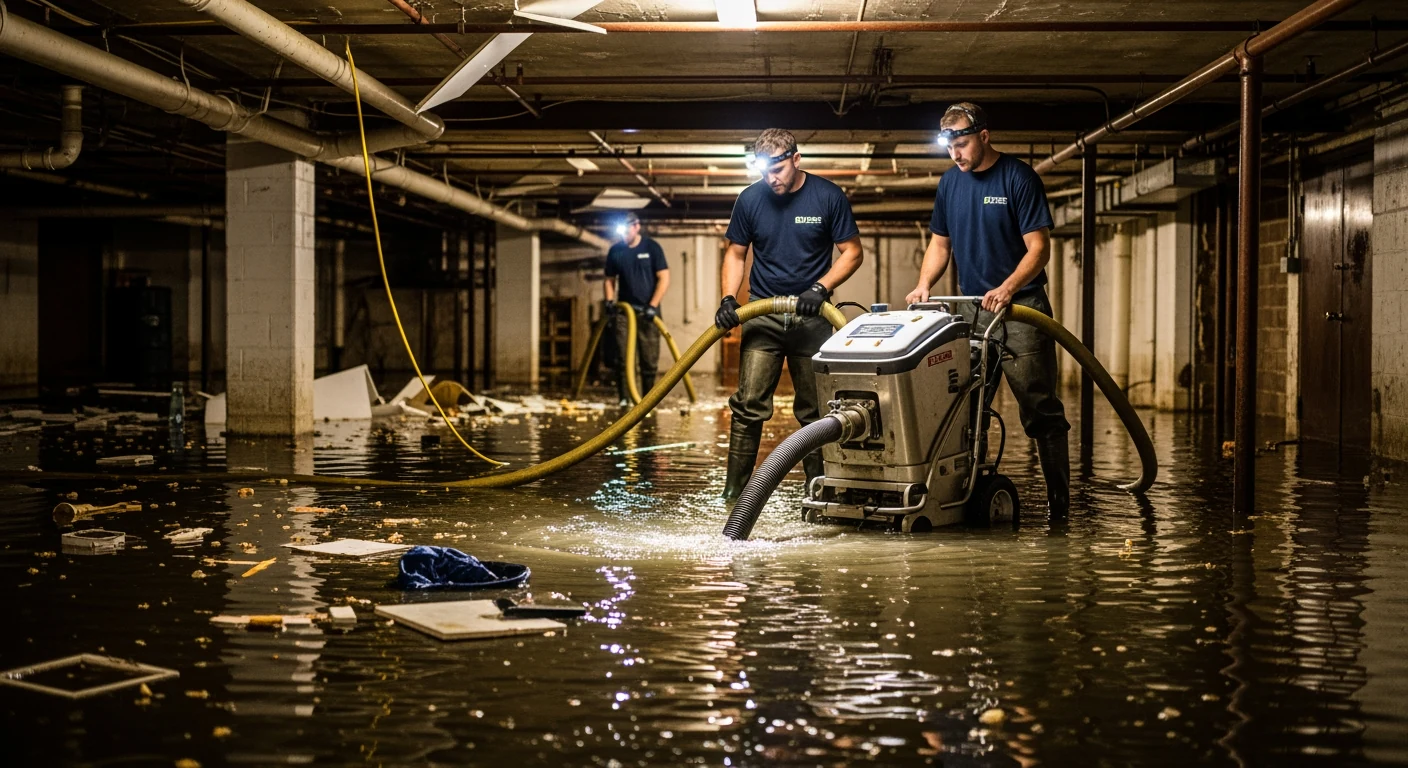
Water damage complicates this further. A basement that’s had even minor flooding or a slow pipe leak often shows staining, sagging, or crumbling in the ceiling tiles directly above the affected area, exactly the kind of physical breakdown that increases fiber release risk. If you’re dealing with water damage in a basement with older drop ceiling tiles, that’s a two-part problem: address the moisture source, and treat the tile removal as a potential asbestos job rather than routine cleanup. Pulling down damaged tiles without testing first is one of the more common ways homeowners unintentionally create an exposure event during what they thought was simple water-damage repair.
Other Basement Materials to Watch For
Beyond pipes, tile, and ceilings, basements can contain asbestos in cement board (often branded Transite), certain adhesives and joint compounds, and, less commonly, vermiculite insulation that’s migrated from an attic renovation. Each of these materials looks unremarkable until it’s tested, which is why a full basement walkthrough should account for all of them, not just the obvious three.
Cement-asbestos board, commonly known by the brand name Transite, shows up around older furnaces, as backing behind wood stoves, or as utility panel siding. It’s a gray, flat, rigid board that can look almost like plain fiber cement siding to an untrained eye. The Minnesota Department of Health’s list of common asbestos-containing products specifically calls out cement-asbestos board alongside adhesives and ceiling products as materials that turn up repeatedly in older homes.7 Joint compound and skim-coat plaster used to finish drywall seams in a basement build-out is another one worth flagging, since it’s easy to sand during a renovation without a second thought.
Vermiculite insulation deserves its own mention. It’s most associated with attic spaces, but renovation work sometimes moves it (or material contaminated by it) down into basement or utility areas, especially where a chute or old chimney chase connects the two. The EPA specifically warns homeowners not to disturb suspected vermiculite insulation and to seek professional testing rather than handling or removing it themselves, since some vermiculite deposits were contaminated with asbestos at the source.8 If you spot pebble-like, shiny gray-brown insulation anywhere in a basement utility chase, treat it the same way: don’t touch it, get it tested.
Why You Can’t Identify Asbestos by Sight Alone, Testing Matters
No visual inspection, no matter how experienced the inspector, can confirm asbestos content with certainty. Only laboratory analysis of a physical sample, examined under polarized light microscopy, can definitively identify asbestos fibers. Every red flag described above should be treated as a reason to test, not a diagnosis in itself.
Tile size, wrap texture, and ceiling tile appearance are useful screening clues, but they’re pattern-matching, not chemistry. Two materials can look nearly identical and have completely different fiber content depending on the manufacturer, the decade, and the specific product line. This is exactly why every source in this space, from the EPA to state health departments to restoration contractors, converges on the same message: sampling and lab analysis is the only way to know for sure.9 A visual red flag tells you where to sample. It doesn’t tell you what’s actually in the material.
This is also why DIY test kits deserve a skeptical eye. Improper sample collection, whether from cutting into material with the wrong tools, failing to wet the area first, or not sealing the sample correctly, can itself release fibers into the air of an enclosed basement space. A professional inspector collects samples using controlled methods specifically designed to minimize disturbance during collection, which is a meaningful difference from a homeowner scraping a chunk of tile into a sandwich bag.
What NOT to Do During a DIY Basement Project
The single biggest driver of asbestos exposure risk in a home isn’t the material sitting quietly in place, it’s disturbing it. Cutting, sanding, drilling, scraping, or demolishing suspect material releases fibers into the air where they can be inhaled. CDC/NIOSH occupational health guidance identifies these disturbance activities as the primary exposure pathway, which is the core reason “test before you touch” is the right default.10
A short list of common basement project moves that turn a manageable situation into a costly one:
- Snapping up 9×9 tiles with a floor scraper before confirming what’s underneath them
- Sanding down old pipe wrap to “clean it up” before wrapping it in new insulation
- Drilling into a drop ceiling tile to run new electrical or cable lines
- Sweeping or vacuuming debris from a damaged ceiling tile or crumbling pipe wrap with a standard shop vac
- Breaking apart cement board (Transite) panels to fit them into a dumpster or trash bags
Each of these actions can aerosolize fibers that then settle throughout the basement, on ductwork, on stored belongings, and potentially into the air handled by an HVAC system connected to the rest of the house. If you’ve already disturbed a suspect material, stop the project immediately, leave the area, close off the space if possible, and avoid running fans, HVAC systems, or shop vacuums that could spread material further before a professional arrives.
When to Call a Licensed Asbestos Inspector or Abatement Contractor
Call a licensed inspector before starting any basement demolition, flooring removal, or insulation work in a pre-1980 home, and call a licensed abatement contractor immediately if material has already been disturbed, damaged, or exposed by water intrusion. Licensed professionals handle sampling, containment, and removal under jurisdiction-specific regulatory requirements that unlicensed work cannot legally satisfy.
The right time to call is before the sledgehammer comes out, not after. If your basement was built before 1980 and your renovation plan involves pulling tile, removing pipe insulation, taking down ceiling tiles, or disturbing anything you suspect might be cement board, get a licensed inspection first. It’s a straightforward step that avoids the far more expensive and disruptive scenario of stopping mid-project because a contractor’s crew spots something they won’t touch without proper documentation.
Water damage adds urgency to this timeline. A burst pipe or basement flood that’s soaked into old ceiling tiles or degraded pipe wrap needs to be treated as a combined moisture-and-materials problem, addressed together rather than sequentially, since drying out the space often involves the same demolition work that would disturb suspect material anyway.
Suspect asbestos in your basement, or dealing with water damage near older pipe wrap, tile, or ceiling tiles? Get a professional assessment before you touch anything.
Frequently Asked Questions
What does asbestos pipe wrap look like in a basement?
Asbestos pipe insulation commonly appears as a chalky white or gray wrap, sometimes covered in a canvas-like jacket, wrapped around pipes and molded at elbow joints and fittings. It’s most often found on heating pipes and boiler lines in homes built before 1980. Visual appearance alone cannot confirm asbestos content; laboratory testing is required for confirmation.
Are 9×9 basement floor tiles always asbestos?
Not always, but 9×9-inch vinyl floor tiles are a well-documented visual indicator of asbestos-containing flooring, especially in homes built before 1980. Modern vinyl tiles are typically sized 12×12 inches. The black mastic adhesive often found underneath older tiles can also contain asbestos separately from the tile itself, so both layers warrant lab testing before removal.
Is it safe to remove old basement ceiling tiles myself?
Removing ceiling tiles without prior testing is not recommended in homes built before 1980, since acoustic and drop ceiling tiles from that era frequently contained asbestos for fire resistance. Cutting, drilling, or breaking these tiles can release fibers into the air. A licensed inspector should sample suspect tiles before any removal work begins.
Can I test for asbestos myself, or do I need a professional?
Homeowners can purchase DIY asbestos test kits, but improper sample collection can release fibers into the air and produce inaccurate results. Professional inspectors use controlled sampling methods designed to minimize disturbance, and samples are analyzed in accredited laboratories using polarized light microscopy, the standard method for confirming asbestos content.
What should I do if I accidentally disturb asbestos during a renovation?
Stop work immediately, leave the area, and avoid running fans, HVAC systems, or vacuums, which can spread fibers further through the property. Close doors to the affected space if possible. Contact a licensed asbestos abatement contractor for assessment and containment. Do not attempt to clean up suspected asbestos debris without professional guidance.
Who do I call if I find suspected asbestos in my basement?
Contact a licensed asbestos inspector for testing and, if confirmed, a licensed abatement contractor for safe removal or containment. Licensing requirements vary by state and municipality, so verify credentials for your jurisdiction. Avoid attempting removal yourself, since unlicensed abatement work can violate local regulations and increase exposure risk.
Does finding asbestos in my basement mean I need to move out?
Not necessarily. The EPA notes that intact, undamaged asbestos-containing material generally poses lower risk than material that is damaged or disturbed. Many homeowners can safely continue living in a home with confirmed asbestos while a licensed contractor plans containment or removal. A professional assessment will determine the appropriate next steps for your specific situation.
Sources
- U.S. EPA, “Learn About Asbestos,” https://www.epa.gov/asbestos/learn-about-asbestos
- ATSDR (CDC), “Where Is Asbestos Found?” (updated 2023-05-25), https://archive.cdc.gov/www_atsdr_cdc_gov/csem/asbestos/where_is_asbestos_found.html
- U.S. EPA, “Asbestos” (homeowner guidance), https://www.epa.gov/asbestos
- Asbestos.com, “What Does Asbestos Look Like? Identifying Asbestos in Homes” (2026), https://www.asbestos.com/exposure/home/
- Reddit r/RealEstate, “Possible asbestos in basement” (2022-04-23), https://www.reddit.com/r/RealEstate/comments/ua0rra/possible_asbestos_in_basement/
- ACM Services, “Where You Might Find Asbestos in Your Home and What to Do About It” (2024-10-02), https://acmservices.com/blog/2024/10/02/where-you-might-find-asbestos-in-your-home-and-what-to-do-about-it/; First Choice Inspectors, “Common Sources of Asbestos in Old Homes” (2022-08-01), https://firstchoiceinspectors.com/common-sources-of-asbestos-in-old-homes/
- Minnesota Department of Health, “Common Asbestos-Containing Products” (2025-12-18), https://www.health.state.mn.us/communities/environment/asbestos/products.html
- U.S. EPA, “Protect Your Family from Asbestos-Contaminated Vermiculite Insulation,” https://www.epa.gov/asbestos/protect-your-family-asbestos-contaminated-vermiculite-insulation
- ATSDR/CDC, “Asbestos Toxicity: Where Is Asbestos Found?” https://wwwn.cdc.gov/TSP/ToxFAQs/ToxFAQsDetails.aspx?faqid=29&toxid=4
- CDC/NIOSH, “Asbestos,” https://www.cdc.gov/niosh/topics/asbestos/
This content is for general informational purposes only and is not legal, medical, or insurance advice. Remediation scope, timelines, and costs vary by site conditions. Contact Upper Restoration for a professional assessment. Licensing and certifications apply per jurisdiction.