Why So Many New York Homes Have Asbestos Floor Tiles
Between the 1920s and late 1970s, asbestos was a standard additive in vinyl and asphalt floor tiles. It provided dimensional stability, fire resistance, and durability at low cost — properties that made it ideal for high-traffic floors in apartments, schools, offices, and homes across the New York metro area.
The density of pre-1980 housing stock in NYC and Long Island means asbestos floor tiles are extraordinarily common here. Brooklyn brownstones, Queens row houses, pre-war Manhattan apartments, and mid-century Long Island ranches and Capes all represent prime candidates. The U.S. Environmental Protection Agency estimates that asbestos-containing materials are present in the majority of buildings constructed before 1980 — and floor tiles are among the most prevalent forms.
How to Identify Asbestos Floor Tiles: Five Key Indicators
No visual test can confirm asbestos — only NVLAP-accredited laboratory analysis of a physical sample provides definitive confirmation. But these five indicators establish strong probability and should trigger professional testing before any disturbance:
1. Size: 9×9 Inch Tiles
The single strongest visual indicator is tile size. Asbestos-containing vinyl and asphalt floor tiles were predominantly manufactured in 9×9 inch squares. This dimension was standard from the 1940s through the 1970s. Modern vinyl composition tile (VCT) is typically 12×12 inches. If your floors have 9×9 inch tiles — or you can see 9×9 tiles beneath newer flooring layers — treat them as potentially asbestos-containing until tested.
2. Age: Installed Before 1980
Any floor tile installed before 1980 warrants testing before disturbance. This includes tiles installed during renovations of older buildings — a contractor in 1972 installing “new” flooring was still using materials from the asbestos era. Building permit records and contractor documentation can sometimes establish installation dates.
3. Appearance: Matte, Chalky, or Darkened Surface
Asbestos floor tiles often have a matte, slightly chalky surface that has dulled or darkened with age. Vinyl tiles of this era did not have the high-gloss finish of modern products. Heavy wax buildup over decades is also common — many asbestos-containing tiles have been waxed repeatedly and may appear lacquered or yellowed.
4. Condition: Cracking, Curling, or Missing Tiles
Cracked, curling, or missing tiles are not just cosmetic problems — they indicate friable or damaged material that may be releasing fibers. A tile with even hairline cracks across its surface is in a different risk category than an intact tile. Damaged tiles should be evaluated by a licensed inspector before any work in the area proceeds.
5. Black Adhesive Beneath the Tile
If tiles are loose or partially lifted, the adhesive underneath is another indicator. A thick, black, tar-like mastic adhesive is characteristic of asbestos-era flooring installations. This adhesive itself often contains asbestos — in many cases, the mastic poses more remediation complexity than the tiles it holds. Do not attempt to scrape or remove black mastic without testing it first.
Asbestos Floor Tiles vs. Modern Vinyl Tiles: Quick Reference
| Characteristic | Likely Asbestos-Containing | Likely Asbestos-Free |
|---|---|---|
| Size | 9×9 inches | 12×12 or 18×18 inches |
| Installation date | Pre-1980 | Post-1986 |
| Surface finish | Matte, chalky, dulled | Uniform sheen or texture |
| Adhesive beneath | Black tar-like mastic | White or tan adhesive |
| Condition | Cracking, curling, brittle | Flexible, intact |
| Confirmation | Lab PLM analysis required | Lab PLM analysis required |
Common Locations for Asbestos Floor Tiles in NYC and Long Island Buildings
Asbestos floor tiles appear throughout pre-1980 buildings, but certain locations are especially common:
- Basement and utility rooms: The most common location in Long Island homes. Asphalt tiles were frequently installed in basements of post-war ranches, Capes, and colonials built from the late 1940s through the 1970s.
- Kitchen floors: Vinyl composition tiles were the standard kitchen flooring in pre-1980 apartments and homes. Manhattan and Brooklyn apartment kitchens from this era should be assumed to contain asbestos tiles until tested.
- Entryways and hallways: High-traffic areas frequently used durable asbestos tiles. Common in pre-war apartment building lobbies and corridors throughout NYC.
- Schools and institutional buildings: Under AHERA (Asbestos Hazard Emergency Response Act), all public and private K-12 schools are required to maintain asbestos management plans — and floor tiles are among the most commonly documented asbestos-containing materials in school buildings.
- Beneath newer flooring layers: Extremely common in NYC renovations. Post-1980 flooring was frequently installed directly over existing asbestos tiles, which means current occupants may have no idea what lies underneath. This matters enormously during renovation work.
The Risk Profile: When Are Asbestos Floor Tiles Actually Dangerous?
The EPA’s guidance on asbestos in the home makes a critical distinction between friable and non-friable asbestos. Intact, well-bonded asbestos floor tiles in good condition are non-friable — fibers are locked within the tile matrix and not readily released into air under normal conditions.
Risk increases substantially when tiles are:
- Sanded, ground, or buffed — the most dangerous activity, as it generates high airborne fiber concentrations
- Cut with a saw or tile cutter during renovation work
- Broken during demolition or heavy impact
- Scraped during removal of the tiles or underlying mastic
- Already crumbling or friable from age and moisture damage
The practical implication for NYC and Long Island property owners: any renovation project involving flooring in a pre-1980 building requires testing before any cutting, sanding, or removal begins. A contractor who proceeds without testing is violating New York State law and creating serious liability exposure for the property owner.
New York State and NYC Regulations for Asbestos Floor Tiles
New York has some of the most rigorous asbestos regulations in the country, directly affecting how floor tile work is handled:
- NYC Local Law 76: Requires asbestos testing before any renovation or demolition in buildings constructed before 1987. Applies to all five boroughs without exception.
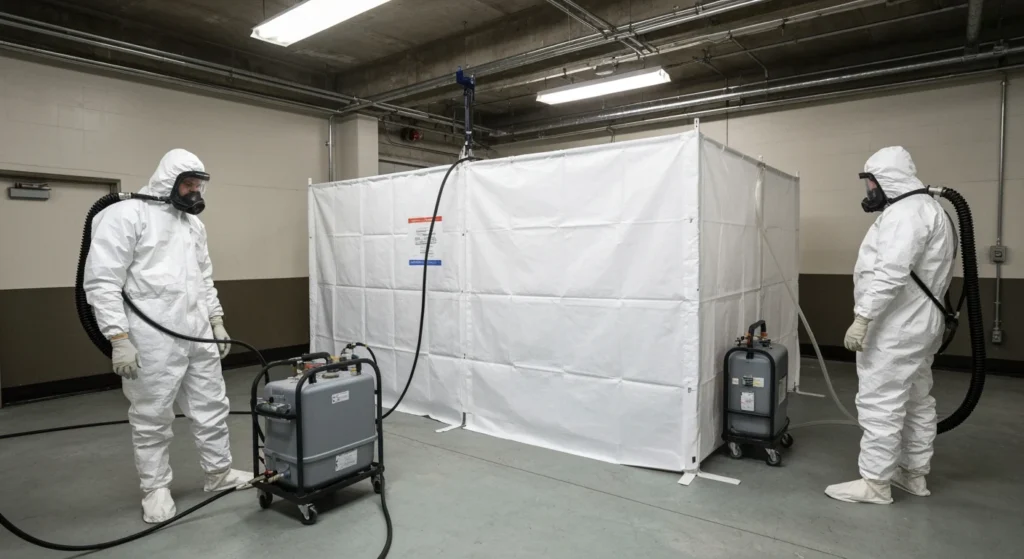
- NYS Industrial Code Rule 56: Governs all asbestos abatement work statewide. Requires licensed contractors, specific containment procedures, air monitoring, and disposal documentation.
- NYS DOL Notification: Projects above threshold quantities require notification to the New York State Department of Labor at least 10 days before work begins.
- Nassau and Suffolk Counties: Follow NYS ICR 56 requirements. Some municipalities have additional local requirements — confirm with your contractor before work begins.
Property owners who allow unlicensed asbestos work face civil penalties and potential liability for occupant health impacts. Disclosure obligations to buyers and tenants also apply under New York real estate law.
Asbestos Floor Tile Removal vs. Encapsulation
Two compliant approaches exist for managing asbestos floor tiles:
Removal (Abatement): Licensed removal under full containment protocols per NYS ICR 56. Required when tiles are friable, when the subfloor needs to be accessed, or when the building will be demolished. Generates asbestos waste requiring licensed disposal. Provides a permanent solution with no ongoing disclosure obligations.
Encapsulation: Installing new flooring over intact asbestos tiles using an approved overlay method — new tiles, hardwood, or vinyl plank installed directly over the existing surface without disturbing it. The EPA recognizes this as an acceptable management approach for non-friable tiles in good condition. Less expensive than removal but creates a disclosure requirement for future renovations and sales.
Encapsulation is appropriate only when tiles are fully intact, firmly bonded, and will not be disturbed. If even one tile is cracked, curling, or loose, full testing and likely abatement is the correct path.
Asbestos Floor Tile Removal Cost in NYC and Long Island
| Scope | NYC / LI Cost Range | Notes |
|---|---|---|
| Single room (residential) | $1,500–$4,500 | Includes mastic removal |
| Full apartment or floor | $4,000–$12,000 | Depends on access |
| Basement (Long Island) | $2,000–$6,000 | Common post-war home scope |
| Commercial floor (per sq ft) | $5–$15 per sq ft | Varies by containment level |
| Mastic removal only | $2–$8 per sq ft | Often more complex than tile |
New York metro labor rates run 25–40% above national averages per RSMeans construction cost data. National average figures for asbestos floor tile removal do not apply to NYC and Long Island projects.
Upper Restoration provides licensed asbestos floor tile testing, abatement, and mastic removal across NYC and Long Island. Our licensed inspectors assess the scope, and our abatement team executes removal under full NYS ICR 56 compliance with licensed waste disposal and air clearance testing included.
Frequently Asked Questions About Asbestos Floor Tiles
How do I know if my floor tiles contain asbestos?
The strongest visual indicator is tile size — 9×9 inch tiles installed before 1980 have high probability of containing asbestos. Black tar-like mastic adhesive beneath loose tiles is another strong indicator. Only PLM laboratory analysis of a physical sample provides definitive confirmation. In New York commercial buildings, sampling must be performed by a licensed asbestos inspector.
Can I install new flooring over asbestos floor tiles?
Yes — encapsulation by installing new flooring over intact, well-bonded asbestos tiles is an EPA-recognized management approach. The tiles must be in good condition with no cracking, curling, or looseness. Encapsulation creates a disclosure obligation for future renovations and property sales in New York. If any tiles are damaged, removal by a licensed contractor is required before new flooring is installed.
Are 9×9 floor tiles always asbestos?
Not always, but 9×9 inch floor tiles from pre-1980 installations have a high probability of containing asbestos. This size was the industry standard for vinyl composition and asphalt tiles during the primary asbestos manufacturing era. Only laboratory testing can confirm or rule out asbestos content. All 9×9 tiles in pre-1980 buildings should be treated as potentially asbestos-containing until tested.
Is it safe to live with asbestos floor tiles?
Intact, undisturbed asbestos floor tiles in good condition are classified as non-friable and pose minimal risk under normal living conditions. The risk profile changes significantly when tiles are damaged, crumbling, or subject to renovation activity. The EPA recommends leaving intact asbestos materials undisturbed rather than attempting removal, as improper removal creates more risk than management-in-place.
How much does asbestos floor tile removal cost in NYC?
Single-room residential removal in the NYC and Long Island market typically runs $1,500–$4,500 including mastic removal. Full apartment or floor abatement ranges from $4,000–$12,000 depending on access and square footage. Commercial projects run $5–$15 per square foot. New York labor rates are 25–40% above national averages, so national cost estimates significantly understate local pricing.
Does black mastic under floor tiles contain asbestos?
Frequently yes. The black, tar-like cutback adhesive mastic used to install floor tiles from the 1950s through the 1970s commonly contained asbestos fibers. In many NYC and Long Island abatement projects, the mastic is more complex to remediate than the tiles themselves — it cannot be sanded or dry-scraped, and requires wet methods and licensed disposal. Always test mastic separately from tiles, as they may have different asbestos content.
Do I need a permit to remove asbestos floor tiles in NYC?
Yes. NYC Local Law 76 requires asbestos testing before any renovation or demolition in buildings constructed before 1987. Abatement projects above threshold quantities require NYS DOL notification at least 10 days in advance and must be performed by a licensed contractor under NYS ICR 56 protocols. Unlicensed asbestos removal exposes property owners to civil penalties and health liability.