Asbestos waste from commercial abatement projects on Long Island is classified as regulated asbestos-containing material (RACM) under both federal and New York State law, subject to specific packaging, transportation, and disposal requirements that carry significant penalties for non-compliance. Building owners who hire abatement contractors are ultimately responsible for ensuring their waste reaches a permitted disposal facility with proper documentation.
Federal Requirements (EPA NESHAP)
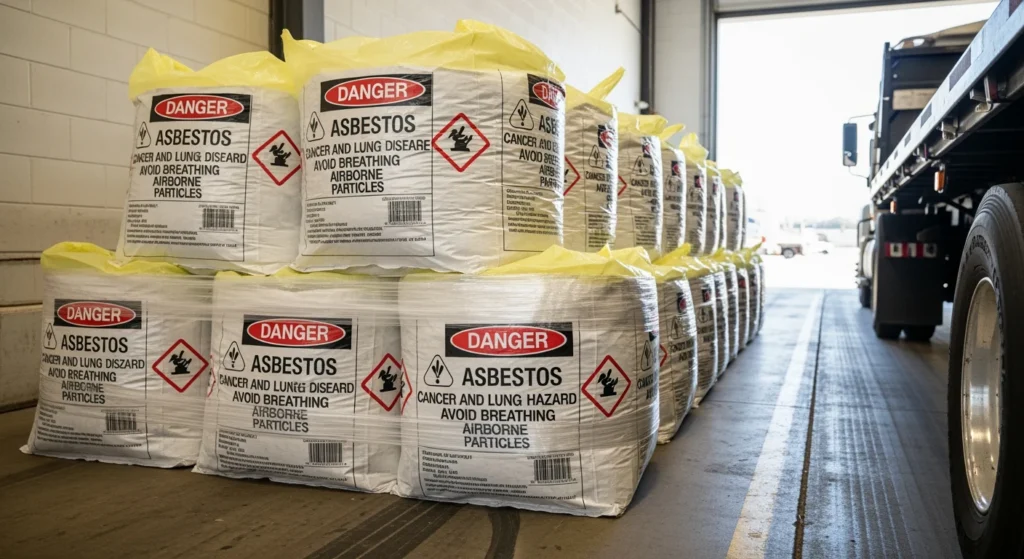
The National Emission Standards for Hazardous Air Pollutants (40 CFR Part 61, Subpart M) establish the baseline requirements for asbestos waste disposal nationwide. All friable asbestos waste and regulated asbestos-containing material must be adequately wetted before packaging, sealed in leak-tight containers (minimum 6-mil polyethylene bags, double-bagged), and labeled with OSHA asbestos warning labels plus generator identification. Waste must be transported to a landfill that meets EPA requirements for asbestos waste disposal — either a licensed asbestos disposal facility or a location meeting EPA technical standards. Waste shipment records must accompany every load from generator to disposal facility.
New York State Requirements
New York State adds requirements beyond federal minimums. The NYS Department of Environmental Conservation (DEC) requires asbestos waste transporters to register with the state. NYS DEC regulates disposal facilities accepting asbestos waste and conducts inspections to verify compliance. Waste shipment records must document the chain of custody from the abatement site through transport to final disposal, and these records must be maintained for a minimum of 30 years.
The NYS DOL Industrial Code Rule 56 also addresses waste handling during abatement, requiring that waste remain wetted throughout handling, that waste bags are inspected for tears before leaving the containment area, and that waste containers are stored in a designated area with restricted access until transport.
Packaging and Labeling Standards
Standard waste: Wetted asbestos debris goes into a primary 6-mil polyethylene bag, which is goosenecked and sealed with duct tape. The sealed bag goes into a second 6-mil poly bag (double-bagging). Each outer bag must display the OSHA asbestos warning label and the generator’s name, address, and waste shipment record number.
Large or irregular items: Asbestos-containing materials too large for bags (pipe insulation sections, transite panels, equipment components) are wetted, wrapped in at least one layer of 6-mil polyethylene sheeting, and sealed with tape. Each wrapped item receives labeling identical to bagged waste.
Non-friable waste: Intact non-friable materials (undamaged floor tiles, roofing material) may have slightly relaxed packaging requirements but still must be wetted, contained, and labeled. However, if non-friable materials have been rendered friable through the abatement process (breaking, cutting, grinding), they must be handled as friable waste.
Disposal Facilities Serving Long Island
Long Island commercial asbestos abatement projects typically use permitted disposal facilities in the region. The Brookhaven Town landfill in Suffolk County accepts asbestos waste. Several permitted facilities in New Jersey and upstate New York also serve the Long Island market. Disposal fees average $35 to $75 per cubic yard, not including transportation costs. Abatement contractors are responsible for confirming that their disposal facility holds current permits for RACM before delivering waste.
Building Owner Liability
While the abatement contractor handles day-to-day waste management, the building owner is the waste generator under EPA regulations. This means ultimate responsibility for proper disposal flows back to the property owner. Long Island building owners should verify their contractor’s waste transporter registration, confirm the disposal facility is properly permitted, and retain copies of all waste shipment records. Upper Restoration maintains full documentation for every commercial abatement project and provides building owners with complete waste disposal records for their files.