If you’re health-conscious or environmentally minded, you’ve probably asked:
Can I clean up mold without using harsh chemicals?
It’s a fair question — especially for families with kids, pets, or anyone with chemical sensitivities. And while there’s no shortage of natural mold cleaner recipes online, the answer isn’t always black and white.
Let’s explore how non-toxic mold cleaners compare to traditional chemicals — and when each one makes sense.
What Counts as “Non-Toxic” in Mold Cleaning?
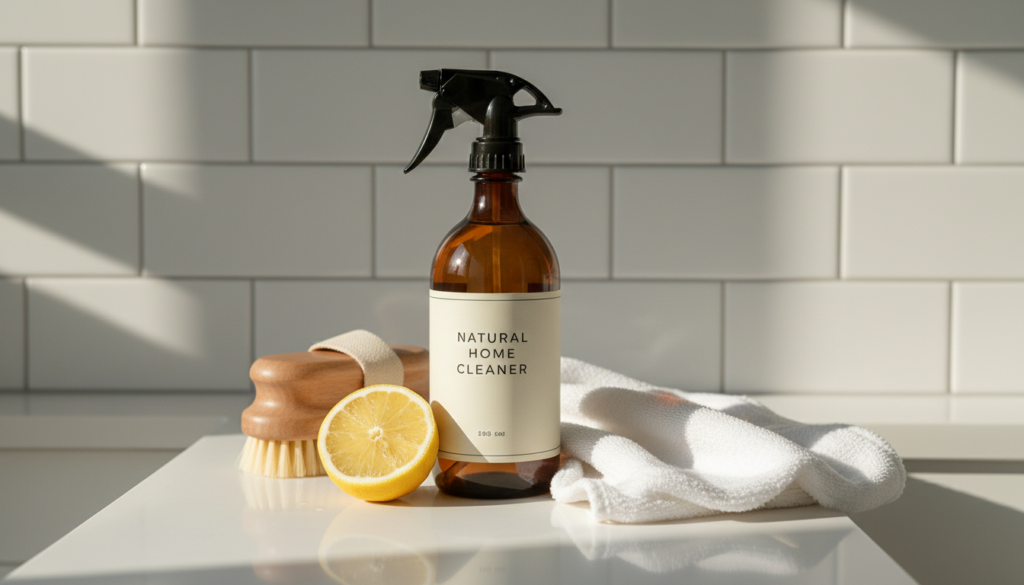
Non-toxic cleaners typically include:
- White vinegar
- Baking soda
- Hydrogen peroxide
- Tea tree oil
- Enzyme-based cleaners
- Botanical sprays (like thyme or citrus-derived formulas)
These options are favored for being:
- Biodegradable
- Safer to use around people and animals
- Free from bleach, ammonia, or VOCs
Do Natural Mold Cleaners Actually Work?
Yes — to a degree.
Studies have shown that white vinegar and hydrogen peroxide can kill many surface-level mold spores. Tea tree oil also has antifungal properties.
They’re effective for:
- Non-porous surfaces (tile, glass, sealed countertops)
- Small, localized areas (under 10 square feet)
- Preventive cleaning or deodorizing
- Post-remediation maintenance
They’re not effective for:
- Mold inside drywall, wood, or insulation
- Large-scale infestations
- Deep-rooted moisture issues
- Stachybotrys (“black mold”) or mycotoxin-producing strains
Why Professionals Use EPA-Registered Products
When the goal is full remediation, licensed professionals are required to use EPA-approved mold control products — not just for effectiveness, but for compliance.
These products:
- Penetrate porous materials
- Kill mold at the root
- Prevent regrowth
- Are tested for safety and efficacy
- Leave behind no active spores
At Upper Restoration, we use a mix of botanical-based antimicrobials and advanced EPA-registered formulas — chosen for each project’s specific needs and occupant sensitivities.
The Real Difference: Scope, Not Just Chemistry
It’s not just what you spray — it’s what you’re trying to solve.
| Scenario | Non-Toxic DIY | Professional Remediation |
|---|---|---|
| Small, surface-only spot | ✅ Effective | Optional |
| Mold behind wall or baseboard | ❌ Ineffective | ✅ Required |
| Mold after flood or leak | ⚠️ Risky to DIY | ✅ Strongly recommended |
| Recurring musty odor | ❌ Likely insufficient | ✅ Includes air testing |
| Health concerns in home | ❌ Avoid exposure | ✅ Safer under containment |
What Eco-Conscious Homeowners Should Know
You don’t have to choose between green and effective.
Upper Restoration offers:
- Non-toxic and low-VOC options
- HEPA-filtered containment
- Safe air scrubbing and post-remediation clearance
- Clear guidance on when natural cleaners are appropriate
We’re here to help you make informed choices — without compromise.
Final Thoughts
Yes, non-toxic mold cleaners can be effective — for the right job, in the right context.
But if you’re facing more than a surface-level issue, professional remediation is safer, faster, and ultimately more sustainable.
Upper Restoration believes in cleaner air, cleaner homes, and cleaner choices.
Schedule a mold inspection today — and let’s find the safest, most effective path forward.