Mold remediation isn’t complete until a post-remediation clearance test confirms the work was successful and the space is safe to re-occupy. Under New York’s Article 32 mold law, this clearance testing must be performed by an independent licensed assessor – not the remediation contractor. Here’s exactly what clearance testing involves and what a passing result looks like.
Why Post-Remediation Clearance Testing Is Required
Article 32 of the New York Labor Law requires that a licensed mold assessor conduct post-remediation verification before a remediated space can be returned to occupancy for projects over 10 square feet. This requirement exists for a critical reason: it creates an objective, independent verification that the work was done correctly. Without this check, there’s no way to know if mold was fully removed or if spores were simply redistributed.
What Clearance Testing Involves
A post-remediation clearance inspection includes three components: visual inspection, air sampling, and surface sampling.
Visual inspection: The assessor visually inspects the remediated area for any remaining visible mold, moisture, or inadequate cleaning. If visible mold remains, the remediation failed and additional work is required before sampling even begins.
Air sampling: Spore trap cassettes collect air samples inside the remediated area and in an adjacent unaffected area (control sample). An outdoor sample is also collected as a baseline. These samples are sent to an AIHA-accredited laboratory.
Surface sampling: Tape lifts or swab samples may be taken from remediated surfaces to check for residual mold presence, particularly on non-porous materials where visual inspection alone may miss remaining spore deposits.
What a Passing Clearance Result Looks Like
There is no single numerical threshold that constitutes a passing result – clearance is evaluated relative to control and outdoor samples. A passing result means: indoor spore counts in the remediated area are not significantly elevated compared to a non-affected area of the same building, no hazardous species (Stachybotrys, Chaetomium) are present at elevated levels, and the species distribution indoors is consistent with the outdoor environment rather than indicating an indoor source.
The assessor reviews the lab report and issues a written post-remediation verification report. This document is your proof that the work was done correctly – keep it permanently in your property records.
What Happens If Clearance Fails
A failed clearance means the remediation contractor must re-do some or all of the work. The failed areas must be re-cleaned, containment re-established if needed, and clearance testing repeated after the additional work. A reputable remediation contractor includes clearance re-testing in their project warranty – Upper Restoration guarantees passing clearance on all mold remediation projects.
Clearance Testing Cost on Long Island
An independent post-remediation clearance inspection typically costs – for a single affected area. Larger or multi-room projects may cost -. This cost is usually included in or billed alongside the remediation contract – but the key is that it is performed by an independent assessor, not the remediation company itself.
Frequently Asked Questions
Can the same company do the remediation and the clearance test?
No – New York Article 32 explicitly prohibits the licensed mold assessor and licensed mold remediator from being affiliated. The clearance test must be conducted by an independent assessor. This separation is a consumer protection, not a technicality.
How soon after remediation can clearance testing be done?
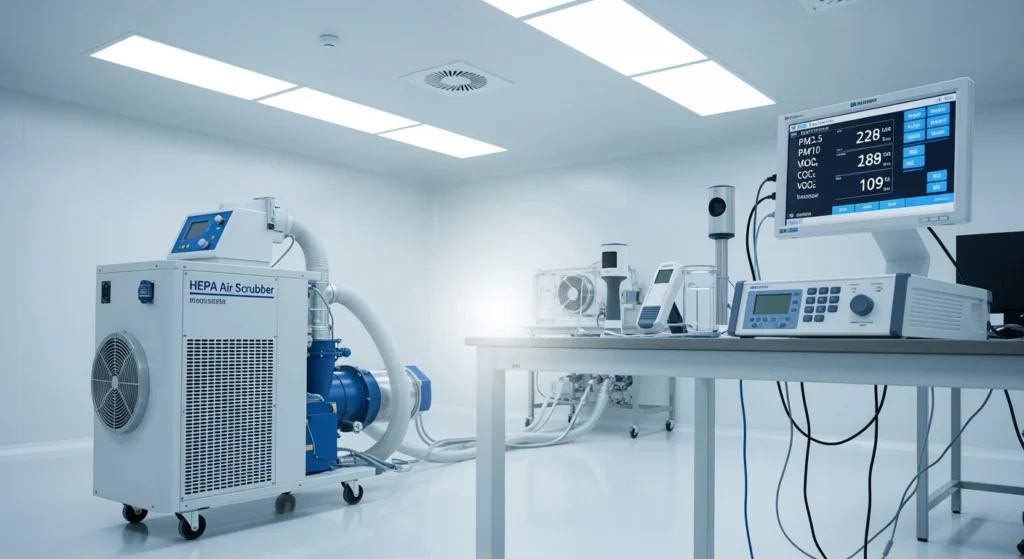
Testing can begin as soon as the remediation work is complete, the containment area has been cleaned, and HEPA air scrubbers have run for a sufficient period to clear airborne spores from the work area. Most assessors require that remediation be fully complete (no open materials, no active drying equipment running) before sampling.
Do I need clearance testing for a small area of mold?
Article 32 requires clearance testing for projects over 10 square feet. For smaller projects, clearance testing is not legally mandated but is still good practice – particularly if you’re dealing with a recurring moisture source or a sensitive occupant (children, immunocompromised individuals).
What should I do if my clearance test fails?
Contact your remediation contractor immediately – in writing. A reputable contractor will return to address the failing area at no additional charge. Document the failed result and the contractor’s response. If the contractor refuses to address a failed clearance, you may have recourse through NYS Department of Labor (which licenses mold contractors under Article 32).
Conclusion
Post-remediation clearance testing is the only objective way to verify that mold remediation worked. Upper Restoration coordinates independent clearance testing on all projects through certified assessors across Long Island and NYC – and we stand behind our work with a clearance guarantee. Learn more about our mold remediation services or contact us for a free assessment.
Related: → Complete Restoration Guide for Long Island Homeowners