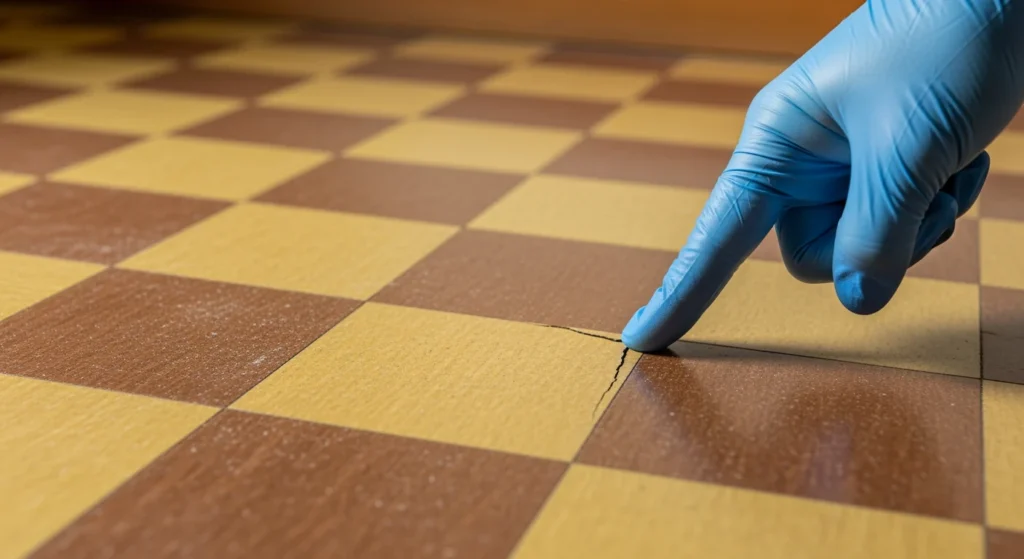
Asbestos Tiles: Asbestos tiles are resilient floor tiles manufactured from the 1920s through the early 1980s containing chrysotile asbestos fibers — typically 5–25% by weight — in a vinyl or asphalt matrix. The 9×9-inch format is the most common and carries the highest probability of asbestos content. When intact and undisturbed, asbestos floor tiles are classified as non-friable and pose minimal risk. When broken, scraped, sanded, or drilled, they release asbestos fibers that cause mesothelioma, asbestosis, and lung cancer with no safe exposure threshold.
What Are Asbestos Tiles?
Asbestos tiles — formally called Vinyl Asbestos Tile (VAT) or Asphalt Asbestos Tile — were the dominant resilient flooring material in American homes and commercial buildings from the 1940s through the late 1970s. Manufacturers including Armstrong, Congoleum, Kentile, and Flintkote produced hundreds of millions of square feet of asbestos-containing floor tile that was installed in kitchens, bathrooms, basements, and commercial spaces across the country.
Long Island’s large stock of mid-century housing — Cape Cods, split-levels, and ranch homes built during the postwar development boom of the 1950s and 1960s — means asbestos tiles are exceptionally common in Nassau and Suffolk County homes. A 1955 Cape Cod in Levittown or a 1963 split-level in Huntington almost certainly has asbestos floor tile somewhere in the structure, whether visible or buried under newer flooring.
What Are Asbestos Tiles Made Of?
Vinyl Asbestos Tile is composed of four primary components:
- Chrysotile asbestos fibers (5–25% by weight): The reinforcing component that gave tiles their durability, fire resistance, and dimensional stability. Chrysotile (white asbestos) was the predominant fiber type in floor tiles.
- Vinyl resin binder: Polyvinyl chloride (PVC) that held the composition together and provided the resilient, slightly flexible character of the finished tile.
- Limestone and clay fillers: Provided bulk, weight, and the characteristic density that distinguishes VAT from modern vinyl tile.
- Pigments: Produced the wide color range and marbled patterns characteristic of mid-century floor tile.
Asphalt asbestos tiles (common in basements and commercial spaces) replaced vinyl with asphalt binder — darker in color, more brittle, and even more common in pre-1960 applications. Both VAT and asphalt asbestos tiles require the same handling protocol: treat as asbestos-containing material until lab-tested.
What Do Asbestos Tiles Look Like?
The visual profile of asbestos floor tiles has several consistent characteristics, though appearance alone cannot confirm asbestos content — only laboratory analysis can do that.
Size: The 9×9 Rule
The 9-inch by 9-inch square format is the single strongest visual indicator of asbestos content. This size was the residential and light commercial standard during the peak decades of asbestos tile production. If your floor tiles measure exactly 9 inches square, treat them as VAT until tested. Some 12×12-inch tiles from before 1975 also contain asbestos — the 9×9 rule is a starting point, not an absolute.
Thickness
VAT is typically 1/8 inch thick — noticeably thinner than modern LVP (3/16 to 1/4 inch) and much thinner than ceramic or porcelain tile. The tiles feel dense and rigid, not flexible like modern vinyl sheet flooring.
Surface Appearance
Smooth surface with a slight waxy or dull sheen. Colors range across the full mid-century palette: beige, tan, brown, gray, green, terra cotta, maroon, and various marbled or speckled patterns. The color and pattern run through the tile material — not printed on top as in modern vinyl. Edges are square-cut and dense; older tiles may show crumbling or yellowing at the corners.
The Adhesive Beneath
Black cutback mastic — the tar-like adhesive used to install asbestos tiles — is itself a separate asbestos-containing material. If any tiles are missing or lifted and you see black adhesive on the subfloor, that material also requires testing. Mastic removal adds $3–$8 per square foot to abatement cost on top of tile removal.
Where Are Asbestos Tiles Found in Long Island Homes?
Asbestos tiles were installed throughout residential and commercial buildings during their production era. The most common locations in Long Island homes:
- Kitchens: The primary residential application — virtually every Long Island kitchen built before 1975 had some form of resilient floor tile
- Basements: Finished basement floors were a major market for asbestos tile — especially asphalt asbestos tile in unfinished utility areas
- Bathrooms: Smaller format asbestos tiles in bathrooms, often in black-and-white or solid color patterns
- Entryways and mudrooms: High-traffic areas where durability was prioritized
- Under newer flooring: The most common discovery scenario — carpet, laminate, or sheet vinyl installed directly over existing asbestos tile without removal
What Asbestos Tiles and What Are Asbestos Tiles Made Of: The Health Risk
Asbestos is a known human carcinogen with no safe level of exposure established by any regulatory body. The diseases caused by asbestos exposure include:
- Mesothelioma: Cancer of the lining of the lungs, abdomen, or heart — almost exclusively caused by asbestos exposure. Latency period of 20–50 years between exposure and diagnosis.
- Asbestosis: Progressive scarring of lung tissue causing irreversible breathing impairment.
- Lung cancer: Risk significantly elevated with asbestos exposure, especially in combination with smoking.
Intact, undisturbed asbestos tiles in good condition release very few fibers — the risk is low in that state. The danger arises during disturbance: drilling, cutting, sanding, scraping, or breaking tiles releases fibers into the air. A renovation project that disturbs asbestos tile without proper containment can contaminate an entire floor of a home.
What Are the Rules Around Asbestos Tiles in New York?
New York has some of the strictest asbestos regulations in the country:
- NYC: All asbestos removal — including floor tile — requires a licensed contractor and NYC DEP notification. Homeowner self-removal is prohibited for all but the smallest quantities (under 10 linear or square feet).
- Nassau and Suffolk Counties: NYS DOL regulations require licensed contractors for asbestos abatement above regulatory thresholds. Fines for non-compliance range from $5,000 to $25,000+.
- Pre-renovation testing: Any renovation that will disturb suspected ACM — including floor tile — requires asbestos assessment before work begins. Contractors who proceed without testing in pre-1981 homes face significant liability.
Asbestos Tile Options: Remove, Encapsulate, or Cover?
| Option | Cost Range (LI/NYC) | When Appropriate | Considerations |
|---|---|---|---|
| Professional removal + mastic abatement | $8–$23/sq ft | Renovation requiring bare subfloor access; tiles friable or damaged | Permanent solution; requires permits; highest cost |
| Encapsulation (cover with new flooring) | $2–$6/sq ft (flooring only) | Tiles intact and in good condition; renovation allows overlay | Most common approach; must be disclosed in property sale |
| Leave in place + monitor | $0 | Tiles intact, undisturbed, not in renovation path | Low risk if undisturbed; must be addressed before any renovation |
Frequently Asked Questions: Asbestos Tiles
Q: How do I know if my floor tiles have asbestos?
A: Measure them — 9×9-inch tiles have the highest probability of asbestos content. Check the installation date: pre-1981 is the primary risk window. Look for black mastic adhesive beneath any lifted tile. Confirm with laboratory PLM analysis of a tile sample — visual inspection cannot confirm or rule out asbestos.
Q: Are asbestos tiles dangerous if left in place?
A: Intact, undisturbed asbestos tiles in good condition pose minimal risk — asbestos fibers are bound in the vinyl matrix and are not released unless the tile is broken, scraped, sanded, or drilled. The standard guidance is to leave intact tiles in place and install new flooring over them. Damaged, crumbling, or friable tiles require professional assessment.
Q: Can I install new flooring over asbestos tiles?
A: Yes — this is the most common and often most cost-effective approach. Installing new flooring directly over intact asbestos tiles encapsulates them and eliminates the disturbance risk. Document the tiles’ location and condition for future buyers. In NYC, this must be disclosed in building records.
Q: How much does asbestos tile removal cost on Long Island?
A: Professional asbestos floor tile removal in Nassau and Suffolk Counties typically costs $8–$15 per square foot for tile removal alone. If the black mastic adhesive beneath also tests positive — which is common — mastic removal adds $3–$8 per square foot. A typical 400-square-foot basement costs $4,400–$9,200 all-in for tile and mastic abatement.
Q: What should I do if I accidentally broke an asbestos tile?
A: Stop work immediately. Do not sweep, vacuum (unless with a HEPA vacuum), or disturb the area further. Seal off the room if possible. If the tile is confirmed or suspected asbestos-containing, call a licensed asbestos abatement contractor for an emergency assessment. A single broken tile in a ventilated area is unlikely to cause significant exposure, but the area should be professionally decontaminated before re-occupancy.
Upper Restoration provides licensed asbestos tile and mastic abatement throughout Nassau County, Suffolk County, and all five NYC boroughs — available 24/7. Call 888-720-8376 for a free assessment.