Why Water Damage Claims Get Denied, and How to Protect Yours
Every water damage claim gets judged on two separate questions: is there damage, and what caused it. Adjusters rarely dispute the first. They dispute the second constantly. A ceiling stain from a burst supply line and an identical-looking stain from years of slow roof seepage can result in completely different claim outcomes, because homeowners policies are written around cause of loss, not visible damage.
The National Association of Insurance Commissioners notes that standard homeowners policies typically cover water damage originating from a home’s plumbing or a roof leak, but generally exclude flood damage from groundwater, rain runoff, or snowmelt. That single distinction, sudden and accidental versus gradual or ground-sourced, decides more claims than any dollar amount in the policy. This guide walks through the sequence that protects your position: stop the source, document before you touch anything, report fast, separate emergency work from permanent repair, and build a file that proves what happened. None of this guarantees a specific payout or coverage decision; that depends on your policy language and the adjuster’s findings. It does put you in the strongest possible position to make your case.
Step 1: Stop the Source and Make the Property Safe
The first move after discovering water damage is stopping the water and making the space safe, not calling anyone. Shut off the water supply or main valve, cut power to affected circuits if there’s any risk of contact with standing water, and move people and pets away from ceilings that show bulging or sagging.
If a supply line, water heater, or appliance is the source, shutting the local valve is often faster than the main. If the source is a roof leak or unclear, get buckets and a tarp down before you do anything else. New York Department of Financial Services guidance on managing and mitigating losses is explicit on this point: policyholders have a general duty to notify their insurer promptly and to take reasonable steps to limit further damage. Waiting a day to “see if it dries out” can work against you later, because an insurer can characterize that delay as a failure to mitigate, a separate reason claims get reduced, covered below.
Step 2: Document Everything Before Cleanup Begins
Before you extract water, pull up flooring, or throw out a single soaked item, document the scene as it exists right now. NY DFS’s disaster and flood recovery guidance specifically recommends photographing or video-recording losses before cleanup begins and preserving records of any emergency repairs made afterward. Once you clean, that evidence is gone.
Walk the property with your phone recording video first, then go back for still photos of specific details. Wide shots establish scope; close-ups establish proof.
Before You Clean Up, Photograph: the water source itself (pipe, appliance, roof opening), wide shots of every affected room, close-ups of water lines and staining on walls and floors, damaged systems or appliances, serial and model numbers on ruined items, and any exterior entry point (roof, window, foundation crack).
If the water reached furniture, electronics, or flooring you plan to discard, photograph and video them in place first. For flood-related losses specifically, NY DFS recommends compiling a home inventory with photos, video, sales receipts, and model and serial numbers, the same discipline applies even when the loss falls under a standard homeowners policy rather than a flood policy.
Step 3: Report the Claim Immediately, What to Ask For
Call your insurer the same day you discover the damage, not after you’ve cleaned up or gotten a repair estimate. The California Department of Insurance’s Residential Property Claims Guide recommends immediately reporting water damage and keeping a detailed log of every phone call and piece of correspondence from that point forward. NY DFS gives the same instruction and adds a specific tactic: ask your insurance company exactly what documents, forms, and data it will require to process the claim, rather than guessing.
On that first call, get four things in writing or in your notes: your claim number, the adjuster’s name and direct contact information, the timeline for inspection, and a clear answer on what you’re authorized to do before the adjuster arrives (see Step 4). NY DFS’s Homeowners and Tenants Insurance Guide recommends notifying the insurer first, then following up with written notification, and retaining copies of everything. An email confirming the phone call, sent the same day, creates a timestamped record that a phone log alone doesn’t provide.
Step 4: Separate Emergency Mitigation From Permanent Repairs
There’s a real difference between stopping damage from getting worse and fixing damage that already happened, and confusing the two is one of the most common ways homeowners hurt their own claims. Emergency mitigation, extracting standing water, running dehumidifiers, tarping a roof, boarding a broken window, is expected and generally supported. NY DFS’s guidance on managing and mitigating losses treats this as part of the policyholder’s duty.
Permanent repairs are different. NY DFS’s disaster and flood recovery guidance advises that permanent repairs generally should not begin until the insurer has had the opportunity to inspect the loss. Ripping out flooring, replacing drywall, or rebuilding a bathroom before an adjuster sees the damage removes the physical evidence they need to verify your claim, and it can give the insurer grounds to question the extent of loss you’re claiming. Take mitigation steps immediately. Hold off on rebuilding until you’ve heard from the adjuster, or at minimum have thorough documentation and their sign-off to proceed.
Need emergency water extraction, drying, or tarping right now, documented properly for your insurer?
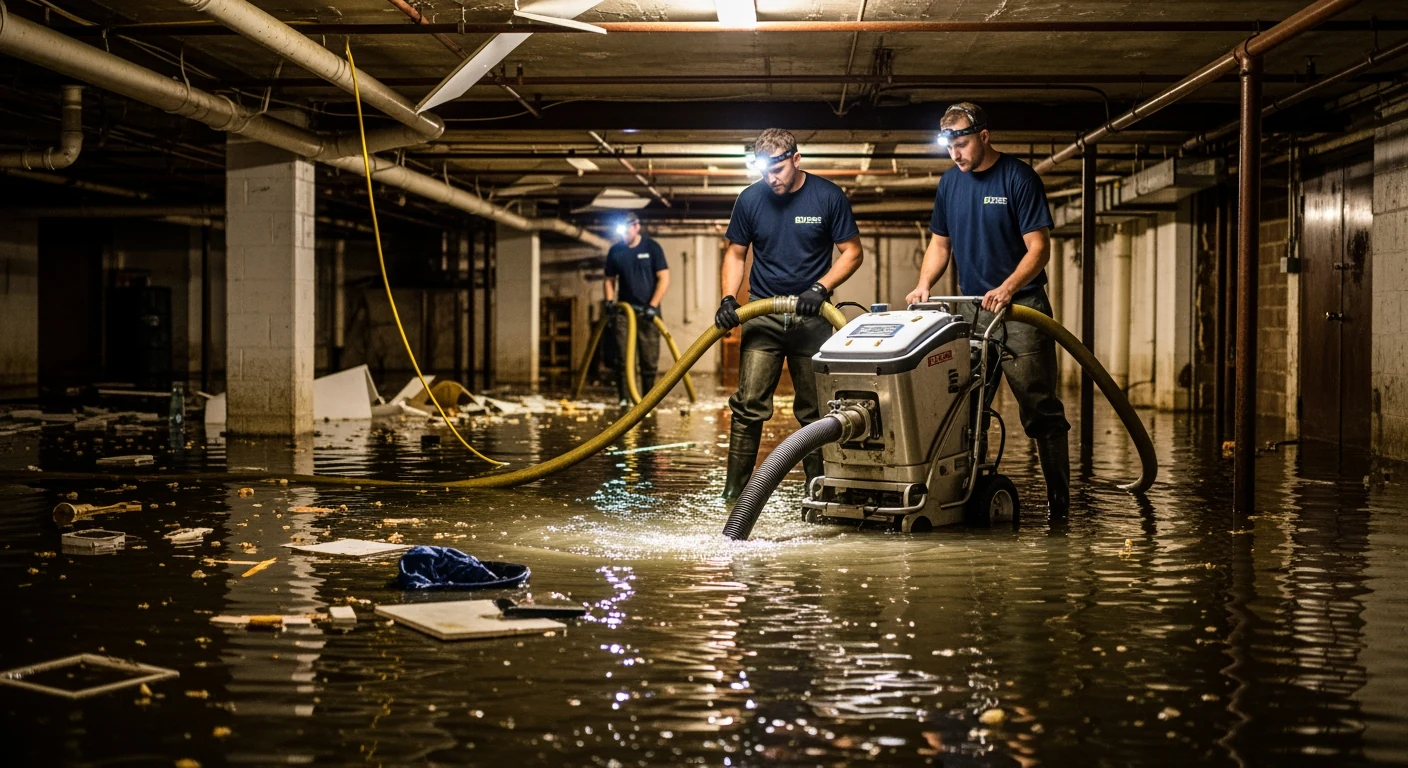
Upper Restoration responds 24/7 across the five boroughs, Long Island, New Jersey, Pennsylvania, and Connecticut to perform emergency mitigation, EPA and IICRC-certified, NYS-licensed, and licensed per jurisdiction, while generating the photo documentation and moisture readings that support your claim file. Upper Restoration doesn’t determine coverage, negotiate with your insurer, or guarantee claim approval; that’s between you, your policy, and your carrier.
Step 5: Build Your Claim File and Room-by-Room Inventory
A claim file is a living folder, not a single submission. It should grow every day the claim is open. Go room by room and log every damaged item, its approximate age and value, and photo evidence, the same standard NY DFS applies to flood inventories: photos, video, receipts, and model or serial numbers wherever they exist.
Save every receipt tied to the loss, temporary repairs, a hotel stay, storage fees, cleaning services, even if you’re not sure yet whether it’s reimbursable. If your policy includes additional living expense coverage, those receipts are what substantiates that claim. Keep a written log of every call and email with the adjuster, dated, with names. NY DFS notes that while an agent or broker may help you fill out forms and gather documents, proving the loss to the insurance company is ultimately your responsibility. The file you build is what does that proving.
Homeowner Claim Checklist: stop the source and secure the property; photograph and video before cleanup; notify the insurer the same day; get your claim number and adjuster contact; ask before removing or discarding anything; begin mitigation but hold permanent repairs; save every receipt; build a room-by-room inventory; preserve damaged materials until cleared; log every communication with dates; track additional living expenses; review your policy for flood, sewer-backup, mold, and deductible provisions; request coverage decisions in writing; escalate through your state’s insurance department if the claim stalls.
Common Reasons Water Damage Claims Get Denied or Reduced
Most denials and reduced payouts trace back to a handful of recurring issues. Knowing them ahead of time lets you avoid them entirely.
Flood and Groundwater Exclusion
Standard homeowners policies generally don’t cover flood damage but may cover other water damage, such as rain entering through a roof opening created by a covered event like wind damage, according to the California Department of Insurance. Flood insurance is a separate policy, commonly obtained through the National Flood Insurance Program, and NY DFS treats it as distinct from standard homeowners coverage.
Gradual Leakage vs. Sudden Discharge
A pipe that bursts overnight and a pipe that’s been seeping for two years are treated very differently, even though both end in water-stained drywall.
| Cause of Loss | General Coverage Pattern |
|---|---|
| Sudden pipe burst, accidental appliance discharge, sprinkler overflow | Typically covered under standard homeowners policies |
| Long-term slow seepage, deferred maintenance, neglect | Often excluded or reduced; can be treated as a maintenance issue |
| Flood, groundwater, storm surge, snowmelt | Generally excluded from homeowners policies; may require a separate flood policy |
| Sewer or drain backup | Often excluded unless a separate sewer-backup endorsement is added |
Coverage always depends on your specific policy wording. Treat this table as a general pattern, not a guarantee of how your claim will be decided.
Missing Sewer-Backup Endorsement
NY DFS’s guidance on choosing a policy points to accidental discharge or overflow of water or steam from plumbing, heating, air-conditioning, or automatic fire sprinkler systems as a coverage element worth checking when you shop for a policy. Sewer and drain backup is frequently a separate add-on, not automatically bundled in. If your basement has ever backed up, check your declarations page for this endorsement before you need it.
Failure to Mitigate Promptly
Because policyholders have a duty to limit further damage, an insurer can reduce a payout for the portion of damage that resulted from delay, mold growth over a week of unaddressed moisture, for example, rather than the original event itself.
Missing or Incomplete Evidence
If you clean up before documenting, you’re asking the adjuster to trust a description instead of evidence. Photos, video, and receipts close that gap.
Demolition Before Inspection
Tearing out damaged materials before the adjuster inspects removes the proof of the loss’s extent, even when your intentions were simply to prevent mold or speed up drying.
Policy Limits, Deductibles, and Mold Sub-Limits
Even a fully covered claim is subject to your deductible and any applicable coverage limits. Mold remediation frequently carries its own sub-limit or exclusion within a homeowners policy; the NAIC lists mold among common homeowners policy exclusions alongside flood and earthquake damage. Review your declarations page for these figures before assuming a number in your head is what you’ll receive.
Regional Notes for NY, NJ, PA, and CT Homeowners, and When to Call a Restoration Professional
Deadlines, appraisal procedures, and complaint channels vary by state, and your policy’s own language ultimately controls what applies to your claim. New York homeowners have access to the NY DFS Disaster Hotline and consumer resources through Help for Homeowners as a regulatory point of contact if a claim stalls or you have questions about adjuster conduct. NY DFS’s Adjusters, Appraisers & Umpires resource explains the roles involved if a dispute over the amount of loss requires appraisal. Homeowners in New Jersey, Pennsylvania, and Connecticut should check their own state insurance department for equivalent complaint and appraisal procedures, since NY DFS guidance applies specifically to New York policyholders.
Call a professional restoration company when standing water covers more than a small area, when water has reached electrical systems or has been sitting for more than 24 to 48 hours, when you smell musty or sour odors suggesting microbial growth has started, or when you simply need documentation you trust to hand an adjuster. The California Department of Insurance’s guidance on avoiding post-disaster scams recommends keeping contracts, invoices, change orders, payment records, and photographs from any contractor you hire, which is exactly the paper trail a properly licensed and certified restoration company should hand you as a matter of course, not something you have to request.
Upper Restoration serves NYC’s five boroughs, Long Island, New Jersey, Pennsylvania, and Connecticut with 24/7 emergency response, EPA and IICRC-certified technicians, and NYS licensing (MBE/DBE certified where applicable), providing extraction, drying, and mitigation reporting built to support your insurance claim file. Upper Restoration doesn’t replace your insurer, your adjuster, or an attorney, and doesn’t determine what your policy covers.
Dealing With Water Damage Right Now?
Get 24/7 emergency mitigation with documentation that supports your insurance claim.
Frequently Asked Questions
What should I do in the first hour after finding water damage?
Stop the water source if you can do so safely (shut off a valve, cut power to affected circuits), then photograph and video the damage before any cleanup begins. Notify your insurer the same day. NY DFS guidance emphasizes documenting losses before cleanup and reporting claims promptly to preserve your position.
Will my homeowners policy cover water damage from a burst pipe?
Sudden, accidental water discharge from plumbing is typically covered under standard homeowners policies, per NAIC consumer guidance. Coverage depends on your specific policy language, deductible, and whether the damage resulted from neglect or a pre-existing condition, so review your declarations page or ask your insurer directly.
Does homeowners insurance cover flood damage?
Generally, no. Standard homeowners policies typically exclude flood damage from groundwater, rain runoff, snowmelt, or storm surge, according to NAIC and NY DFS guidance. Flood coverage is a separate policy, commonly obtained through the National Flood Insurance Program, and must be purchased in addition to a homeowners policy.
Can I start repairs before the adjuster inspects the damage?
NY DFS guidance advises that permanent repairs generally should not begin until the insurer has had a chance to inspect the loss. Emergency mitigation, such as water extraction and drying to prevent further damage, is expected and should happen immediately; full rebuilding should wait for inspection or explicit insurer sign-off.
How fast do I need to report a water damage claim?
As soon as possible. NY DFS and the California Department of Insurance both recommend immediate reporting, and policyholders generally have a duty to notify their insurer promptly. Ask the insurer exactly what documents and forms they’ll require, and follow up any phone report with written notification for your records.
Do I need a separate sewer-backup endorsement?
Sewer and drain backup damage is often excluded from standard homeowners policies unless a specific endorsement has been added. Check your policy’s declarations page or ask your insurer directly whether this coverage is included, particularly if your home has a basement or has experienced backups before.
When should I hire a professional restoration company instead of handling cleanup myself?
Consider a professional when standing water is extensive, water has contacted electrical systems, moisture has been present more than 24 to 48 hours, or you notice musty odors suggesting microbial growth. Licensed, certified restoration companies also provide documentation and reporting that support your insurance claim file.
Sources
- New York Department of Financial Services (NY DFS), “Disaster and Flood Recovery Resources,” 2026
- New York Department of Financial Services (NY DFS), “FAQ: Disaster and Flood Recovery Resources,” 2026
- New York Department of Financial Services (NY DFS), “Homeowners Insurance: Choosing a Policy,” 2026
- New York Department of Financial Services (NY DFS), “Homeowners Insurance: Basic Coverage and Adding Coverage,” 2026
- New York Department of Financial Services (NY DFS), “Managing and Mitigating Losses,” 2026
- New York Department of Financial Services (NY DFS), “Adjusters, Appraisers & Umpires,” 2026
- New York Department of Financial Services (NY DFS), “Flood Insurance,” 2026
- New York Department of Financial Services (NY DFS), “Help for Homeowners,” 2026
- New York Department of Financial Services (NY DFS), “Homeowners and Tenants Insurance Guide,” 2020
- National Association of Insurance Commissioners (NAIC), “Consumer Homeowners Insurance,” 2026
- National Association of Insurance Commissioners (NAIC), Shopping Tool for Homeowners Insurance, 2026
- California Department of Insurance, “Residential Property Claims Guide,” 2026
- California Department of Insurance, “Don’t Get Scammed After a Disaster,” 2026
This content is for general informational purposes only and is not legal, medical, or insurance advice. Remediation scope, timelines, and costs vary by site conditions. Contact Upper Restoration for a professional assessment. Licensing and certifications apply per jurisdiction. This article does not guarantee any specific insurance coverage, claim approval, or payout outcome; coverage determinations are made solely by your insurance carrier based on your policy terms.