Water Damage Repair and Mitigation on Long Island: Understanding the Difference and What Each Involves
When water damage happens on Long Island — from a burst pipe, failed sump pump, appliance leak, or roof breach — two things need to happen in sequence: stop the damage from getting worse (mitigation), then fix what the damage did (repair). Understanding this distinction matters because insurance policies, contractor scopes, and timelines all treat these phases differently.
Upper Restoration handles both phases as a single integrated project, so Long Island homeowners and property managers work with one team from the emergency call through the finished restoration.
Water Mitigation: The Emergency Phase
Water mitigation begins the moment our team arrives on site. Every hour water sits in a structure, it migrates further — into wall cavities, under flooring, into insulation, into structural framing. The mitigation phase is about stopping that progression.
What water mitigation includes
- Source control: Identifying and stopping the water source — shutting supply lines, coordinating emergency plumbing, addressing roof breaches
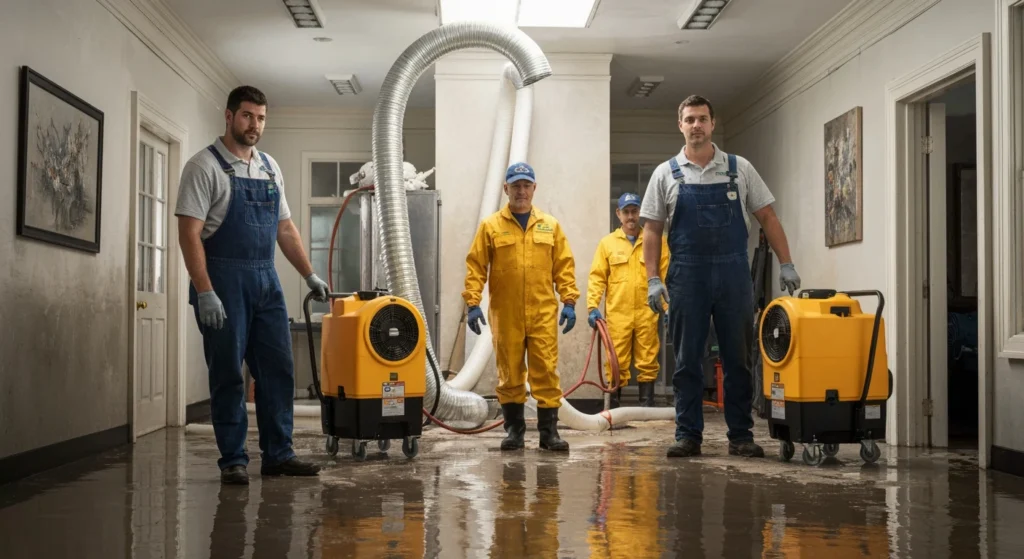
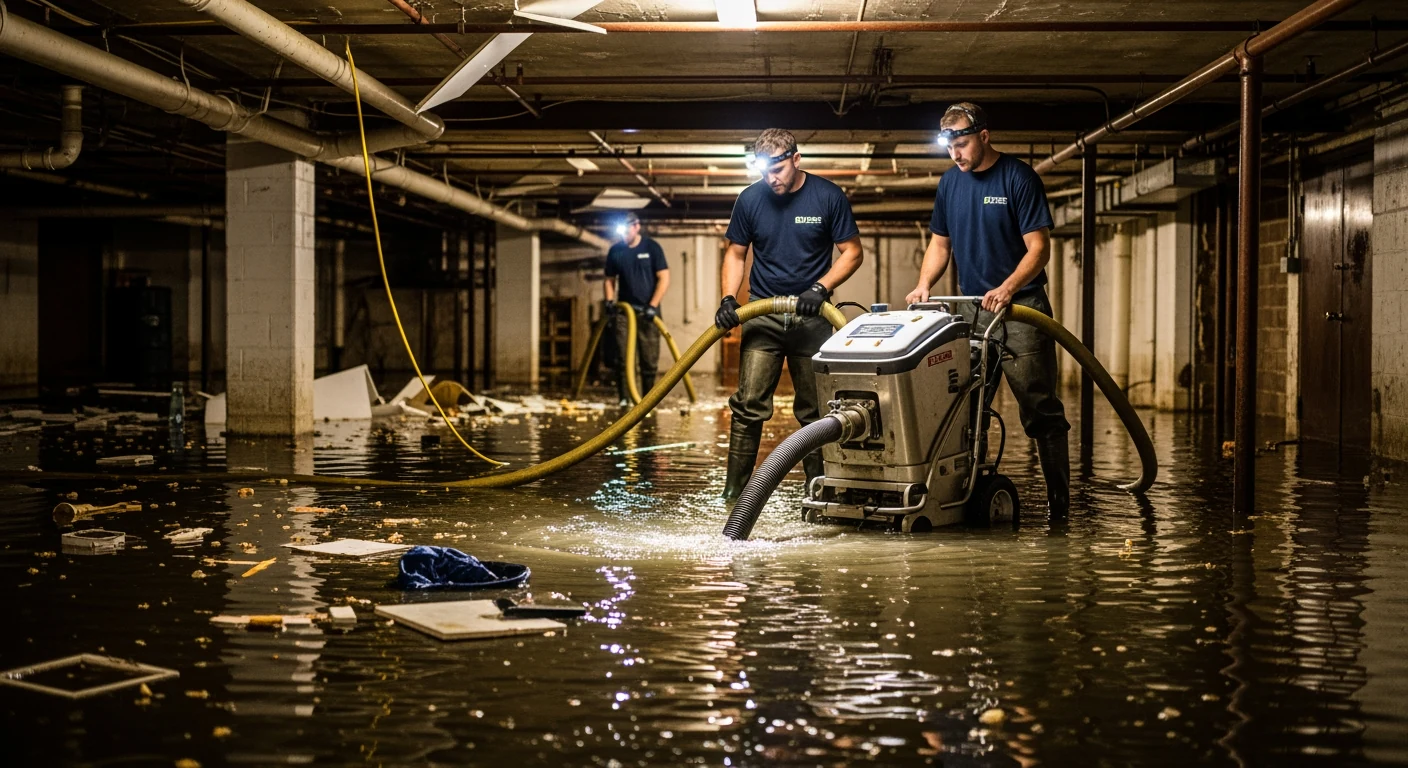
- Standing water extraction: Truck-mounted extractors and submersible pumps remove standing water from floors, basements, and crawl spaces
- Moisture mapping: Thermal imaging cameras and moisture meters map hidden moisture in walls, subfloors, and ceiling assemblies
- Equipment placement: Commercial dehumidifiers, high-velocity air movers, and desiccant units placed based on moisture map
- Daily monitoring: Moisture readings tracked daily to confirm drying progress and adjust equipment placement
- Documentation: Daily moisture logs and photos support insurance claims
Structural drying typically takes three to five days, though this depends on material type, depth of saturation, and ambient conditions. Drying is confirmed by moisture meter readings reaching target levels — not by elapsed time or visual appearance.
Water Damage Repair: After the Structure Is Dry
Once moisture levels are confirmed at target, the repair phase begins. Water damage repair restores the structure to pre-loss condition — replacing materials that were removed during mitigation and repairing anything the water damaged.
What water damage repair includes
- Drywall replacement in areas where saturated drywall was removed during mitigation
- Flooring replacement — hardwood, laminate, tile, or carpet that could not be dried in place
- Insulation replacement in walls or ceilings where wet insulation was removed
- Cabinetry and millwork repair or replacement where water caused swelling or delamination
- Paint and finish work throughout affected areas
- Mold remediation if mold developed during drying delay or was found during demolition
Water Mitigation vs. Water Damage Repair: Why the Distinction Matters
Insurance policies often separate mitigation and repair into different coverage considerations. The mitigation phase — extraction, drying, moisture mapping — is typically covered as emergency services under a covered water damage claim. The repair phase is covered under the property damage portion of the claim.
Some mitigation-only companies stop after drying and hand the homeowner off to a separate contractor for repairs. Upper Restoration handles both. This matters for Long Island homeowners because:
- You have one point of contact and accountability throughout the project
- Repair decisions are made with full knowledge of what the mitigation phase found
- Documentation is continuous from day one through project completion
- Scheduling is coordinated — repair begins as soon as drying is confirmed
Water Damage Repair on Long Island: Common Scenarios
The most common water damage situations we respond to across Nassau and Suffolk Counties:
- Burst pipes in winter: Supply line freezes during cold snaps are common in older Long Island homes with uninsulated pipes in crawl spaces or exterior walls
- Sump pump failure: During prolonged heavy rain, failed sump pumps cause basement flooding — often Category 2 water requiring full porous material removal
- Roof leak damage: Long Island’s nor’easters and coastal storms create roof breaches that allow water into attic spaces and ceiling assemblies
- Appliance failures: Washing machine supply lines, dishwasher connections, and refrigerator ice makers are frequent sources of slow leaks that cause hidden damage
- HVAC condensate overflow: Clogged condensate drain lines cause water to overflow into ceilings and wall assemblies without obvious signs
Home Water Damage Restoration: The Full Project Timeline
- Day 1: Emergency response — source control, extraction, moisture mapping, equipment placement
- Days 2–5: Active drying — daily monitoring, equipment adjustment, documentation
- Day 5–7: Final moisture verification — readings confirmed at target, equipment removed
- Week 2: Selective demolition of materials that could not be dried (if applicable), mold assessment
- Weeks 2–4+: Repair and reconstruction — drywall, flooring, painting, finish work
Frequently Asked Questions
What is the difference between water mitigation and water damage repair?
Water mitigation is the emergency phase — stopping the source, extracting water, and drying the structure to prevent further damage. Water damage repair is the restoration phase — replacing removed materials and restoring the property after drying is confirmed. Mitigation always comes first.
How long does water damage repair take on Long Island?
The mitigation phase typically takes three to five days. Repair and reconstruction timing depends on the scope of material removal — minor repairs may take a few days while significant reconstruction takes several weeks. Upper Restoration provides a repair timeline after mitigation is complete and the full scope is confirmed.
Does homeowners insurance cover water damage repair?
Water damage from sudden and accidental internal failures — burst pipes, appliance malfunctions, HVAC failures — is typically covered under standard homeowners policies. Gradual leaks, maintenance-related damage, and external flooding generally are not. Upper Restoration reviews scope of loss with your adjuster and documents the origin and extent of damage to support your claim.
Can water-damaged hardwood floors be saved?
Sometimes. Hardwood floors that are extracted and dried quickly — within the first 24 to 48 hours — have a reasonable chance of being dried in place without cupping or buckling permanently. Floors that have been wet for longer or that have already shown visible cupping are typically replaced. Our moisture monitoring during drying determines salvageability.
What is home water damage restoration?
Home water damage restoration is the complete process — mitigation and repair — that returns a water-damaged residential property to its pre-loss condition. A full-service restoration contractor handles both phases; a mitigation-only company handles extraction and drying but not the subsequent repair and reconstruction.