Mold Removal Cost on Long Island: What Determines the Price and What to Expect
Mold remediation cost is one of the most common questions homeowners ask — and one of the hardest to answer without seeing the property. The price range is genuinely wide because mold problems range from a small bathroom ceiling patch to a full basement colonization affecting structural framing. This guide explains the key factors that determine cost and what a professional remediation project actually includes.
Key Factors That Determine Mold Remediation Cost
Scope and square footage
The single biggest cost driver is how much affected area needs to be remediated. Small isolated patches on a single surface are far less expensive than widespread mold in a finished basement with multiple rooms of drywall, flooring, and stored contents. Square footage determines containment setup, labor hours, disposal volume, and air filtration requirements.
Location in the structure
Accessible mold on a bathroom ceiling is straightforward to remediate. Mold inside wall cavities, inside HVAC ductwork, in attic sheathing, or in crawl spaces requires additional labor for access, containment, and protective equipment. Confined space work is inherently more time-intensive.
Material type
Mold on non-porous surfaces (tile, glass, metal) can often be cleaned without removal. Mold in porous materials (drywall, wood framing, insulation, carpet, fabric) typically requires removal and disposal — those materials cannot be cleaned to acceptable levels. The more porous material affected, the higher the remediation cost.
Mold type and concentration
Standard mold remediation protocols apply to most common indoor mold species. Certain mold types with higher toxicity or unusual growth patterns may require more aggressive containment and protective protocols, which adds cost.
Moisture source complexity
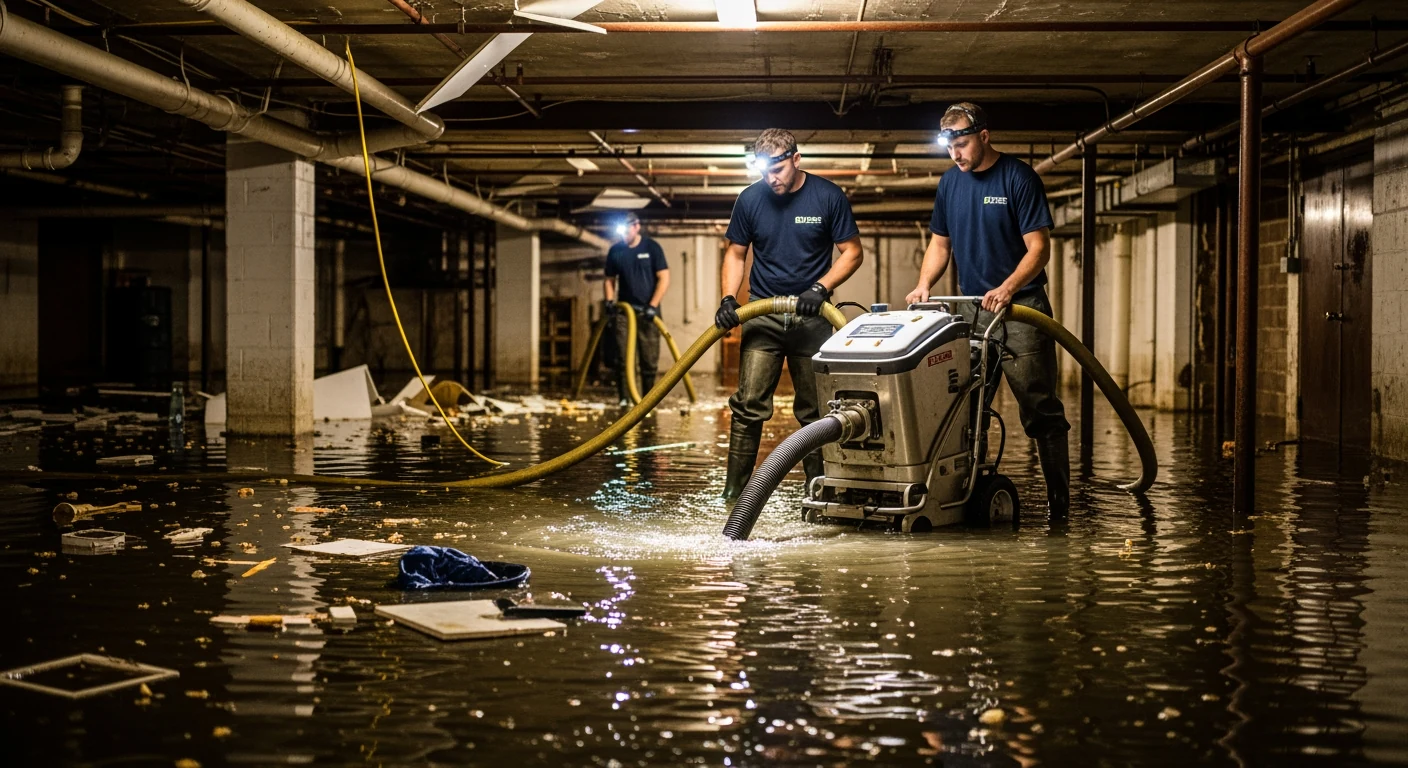
Mold remediation without moisture source repair will fail. If the moisture source is a simple leaking supply line, repair is straightforward. If it is a complex foundation waterproofing failure, roof leak requiring significant repair, or HVAC system issue, the moisture remediation scope adds to overall project cost.
Post-remediation testing
Independent air quality testing after remediation — conducted by an industrial hygienist rather than the remediation contractor — confirms that mold levels have been reduced to acceptable levels. This clearance testing is a separate cost but is recommended for significant mold events.
What Mold Remediation Includes
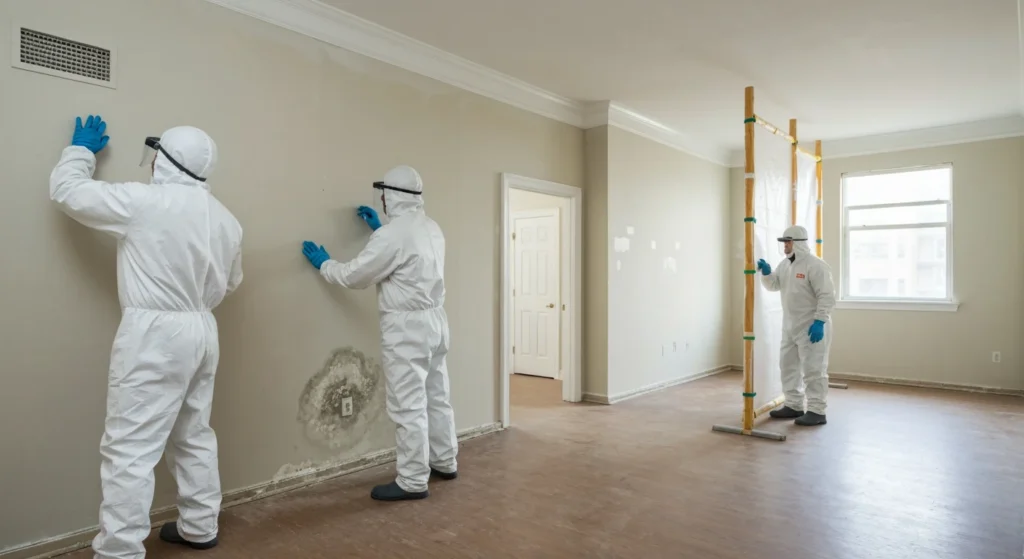
A professional mold remediation project from Upper Restoration includes:
- Initial assessment: Visual inspection, moisture mapping, and documentation of affected areas
- Containment setup: Polyethylene barriers and negative air pressure with HEPA filtration to prevent spore spread during work
- Material removal: Removal and disposal of all porous materials that cannot be cleaned to acceptable levels
- Surface cleaning: HEPA vacuuming and antimicrobial treatment of remaining structural surfaces
- HEPA air scrubbing: Continuous air filtration throughout the project
- Antimicrobial treatment: EPA-registered antimicrobial applied to treated surfaces
- Documentation: Before and after photos and a written scope of work for insurance claims
Mold Remediation and Homeowners Insurance
Whether mold remediation is covered by homeowners insurance depends on the source of the mold. If mold grew as a result of a sudden and accidental covered event — a burst pipe, sudden roof failure, appliance malfunction — the resulting mold is typically covered under the water damage portion of your claim. If mold resulted from long-term neglected moisture, lack of maintenance, or gradual leaks, it is generally excluded as a maintenance issue.
Upper Restoration documents every mold project with photos, moisture readings, and a detailed scope of work. We work directly with insurance adjusters to support covered claims and help property owners understand what their policy does and does not cover.
Affordable Mold Remediation: What to Look for in a Contractor
Price shopping for mold remediation is reasonable, but the cheapest option is often not the best value. When evaluating contractors, look for:
- Written scope of work before any work begins
- Proof of appropriate insurance and licensing
- A clear explanation of containment protocol — no containment means mold spores spread during work
- Independent post-remediation clearance testing (or a willingness to support it)
- A moisture source plan — remediation without moisture repair is temporary
Frequently Asked Questions About Mold Remediation
How much does mold remediation cost?
Mold remediation costs vary based on scope, location, and material type. Upper Restoration provides free on-site estimates after assessing the affected area. We provide written pricing before any work begins.
Is mold from water damage dangerous?
Many common indoor mold species cause respiratory irritation, allergic reactions, and worsening of asthma symptoms with prolonged exposure. People with compromised immune systems, infants, and the elderly are most vulnerable. Mold from water damage should be professionally assessed and remediated rather than ignored.
Can I remove mold myself?
Small surface mold patches on non-porous materials in areas like bathroom tile can sometimes be addressed with appropriate cleaners and protective equipment. However, mold inside wall cavities, in structural materials, in crawl spaces or attics, or in areas exceeding ten square feet requires professional remediation — surface cleaning alone will not resolve embedded mold and attempting it without containment spreads spores through the living space.
What does black mold look like?
Black mold (Stachybotrys chartarum) typically appears as dark greenish-black patches with a slimy texture, often with a distinctive musty odor. However, many other mold species are also dark-colored — mold identification requires laboratory analysis of a sample, not visual inspection alone.
How long does mold remediation take?
A small isolated mold project may be completed in one to two days. Extensive mold affecting multiple areas of a home, requiring significant structural material removal, can take one to two weeks. We provide a timeline estimate as part of every written scope of work.
Do I need to leave my house during mold remediation?
For small, contained projects, temporary relocation may not be necessary if the work area can be effectively isolated. For larger projects with significant mold colonization or where work affects major living areas, temporary relocation during active remediation is advisable. We discuss this with every homeowner during the assessment.