Water Damage Restoration in Nassau County, NY: A Homeowner’s Complete Guide for 2026
Nassau County is one of the most densely settled suburban counties in the United States — 1.39 million people packed into 453 square miles, most of them living in single-family homes built during a 30-year construction boom that peaked in 1955. That median construction year is not a trivia fact. It is the most important number in understanding why water damage restoration here is different from anywhere else: the median Nassau County home is over 70 years old, built without vapor barriers, with original plumbing, on a South Shore where the water table sits close to the surface and where Hurricane Sandy delivered one of the worst flood events in modern American history. When something goes wrong with water in a Nassau County home, the house itself is usually part of the problem.
This guide covers the restoration landscape specific to Nassau County — flood zone geography, housing stock characteristics by community, the services homeowners most commonly need, insurance claim dynamics, and what professional restoration costs in 2026.
Nassau County’s Water Damage Risk Profile
Nassau County’s restoration risk is shaped by three forces that compound each other: South Shore flood exposure, an aging housing stock where plumbing and drainage systems are decades past their design life, and a water table that makes basement moisture an endemic condition across much of the county rather than an occasional event.
South Shore Flood Exposure
The communities south of Sunrise Highway in Nassau County — Long Beach, Oceanside, Island Park, Freeport, Baldwin, Merrick, Bellmore, Wantagh, Seaford, and Massapequa — sit on or adjacent to barrier island terrain, canal-threaded neighborhoods, and low-lying shoreline with FEMA Zone AE and Zone VE flood designations throughout. During Hurricane Sandy in October 2012, FEMA documented 74,736 damaged or destroyed structures in Nassau County alone — more than in all of Suffolk County combined. The city of Long Beach, a barrier island resting on Reynolds Channel and the Atlantic, sustained over $150 million in damage from a single storm. The South Shore flooding pattern is not hypothetical; it is the documented baseline for what happens when a major storm arrives.
Post-Sandy restoration history is active in Nassau County in ways that directly affect current restoration work. Homes that were flooded in 2012 and improperly dried — cosmetically repaired without professional moisture mapping and structural drying — frequently present with chronic moisture problems, concealed mold, and deteriorating structural assemblies more than a decade later. Restoration contractors working in Freeport, Baldwin, Long Beach, and Massapequa regularly discover Sandy-era water damage behind walls that were never properly treated.
Housing Stock: Median Built 1955, 76% Single-Family
Nassau County’s 482,044 housing units are 76.2 percent detached single-family homes, according to census data, with a median construction year of 1955. That profile — nearly eight in ten homes are standalone detached structures built in the Eisenhower era — creates a specific restoration environment. These homes were built before modern vapor barriers, before GFCI electrical requirements, before PVC plumbing. Galvanized steel supply lines have corroded; cast iron drain lines accumulate root intrusion and mineral buildup; original water heaters in basements are at or past service life.
Pre-1980 construction also means that virtually every significant demolition job in Nassau County requires a pre-demolition asbestos survey under NYS Code Rule 56. The median Nassau home was built in 1955 — squarely in the era when asbestos-containing materials were standard in floor tiles, pipe insulation, joint compound, roofing, and duct wrap. Water damage restoration that requires wall or ceiling demolition must account for this. A water damage claim in a Nassau County home of average vintage is not simply a drying and reconstruction job — it is a drying, testing, potential abatement, and reconstruction job.
Nassau County Communities and Their Specific Risks
Long Beach is the highest-risk municipality in Nassau County — a barrier island city with Atlantic Ocean exposure on the south and Reynolds Channel on the north. Every significant storm puts Long Beach at risk from both sides. Flood insurance is mandatory for nearly all mortgaged properties here, and the renovation history since Sandy means many homes have been elevated, though some first-floor units in pre-Sandy structures remain at or below Base Flood Elevation.
Freeport, Oceanside, Baldwin, Merrick, Bellmore, Wantagh, Seaford, and Massapequa form the core of Nassau’s South Shore canal belt — neighborhoods where homes back onto canals, bays, and inlets throughout. Water intrusion in these communities can come from multiple directions in the same event: storm surge pushing inland from the bay, canal water overflowing, and groundwater rising through basement slabs. These communities also have the highest concentration of Nassau’s post-Sandy unresolved moisture issues.
Hempstead Village, Roosevelt, Uniondale, and Central Nassau experience water damage primarily from aging infrastructure: pipe failures, basement seepage from high water tables, and flat-grade lots where surface drainage channels water toward foundations. These communities have significant concentrations of pre-1960 housing.
Great Neck, Port Washington, Manhasset, Roslyn, and North Shore communities sit on hillier terrain with somewhat better natural drainage, but face distinct challenges: older estate-era homes with original plumbing systems, lead service lines in some pre-1950 properties, and basement water infiltration from local topography where groundwater concentrates in low spots. The Gold Coast communities also have the highest property values in the county — restoration in Great Neck and Sands Point involves higher-end finishes and more complex reconstruction than South Shore ranch homes of comparable square footage.
Levittown, Hicksville, Syosset, and central Nassau communities represent the densest concentration of post-war Cape Cods and split-levels. The Cape Cod attic configuration is especially relevant here: inadequate soffit-to-ridge ventilation in original construction traps moisture, producing chronic attic mold that often goes undetected until a home sale inspection or a separate water event brings contractors into the space. Many 1950s Cape Cods in central Nassau have bathroom exhaust fans that were originally vented into the attic rather than to the exterior — a building code violation that has been actively generating attic mold for six decades in some properties.
Most Common Water Damage Restoration Services in Nassau County
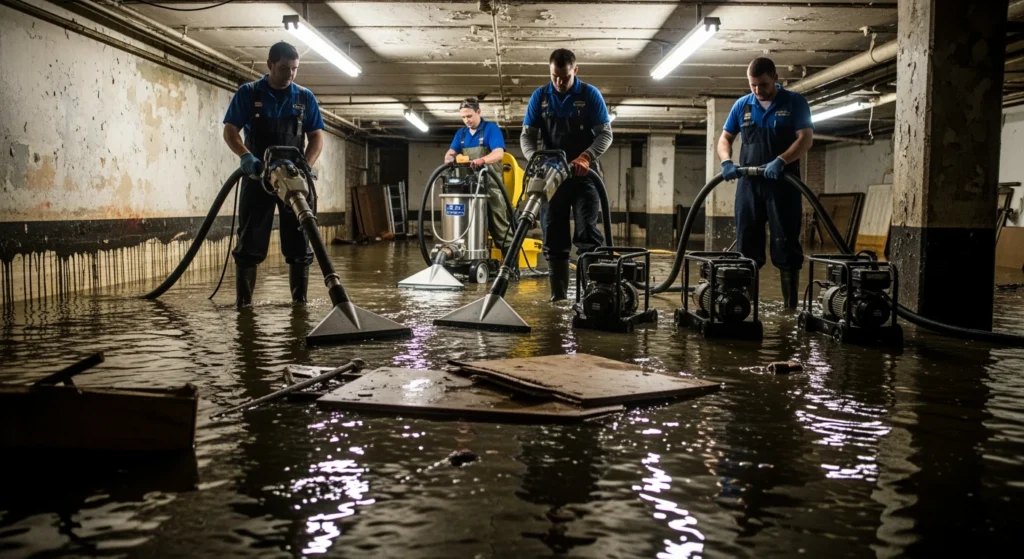
Emergency water extraction and structural drying after burst pipes, appliance failures, and storm-related intrusion is the most frequent restoration service across all Nassau County communities. The critical 24-to-48-hour window for preventing mold growth is consistently compressed by Nassau’s coastal humidity — in summer months, ambient relative humidity above 70 percent means porous materials that might take three days to develop mold in a dry climate can develop visible growth in 36 to 48 hours on Long Island. Industrial drying equipment, not household fans, is required.
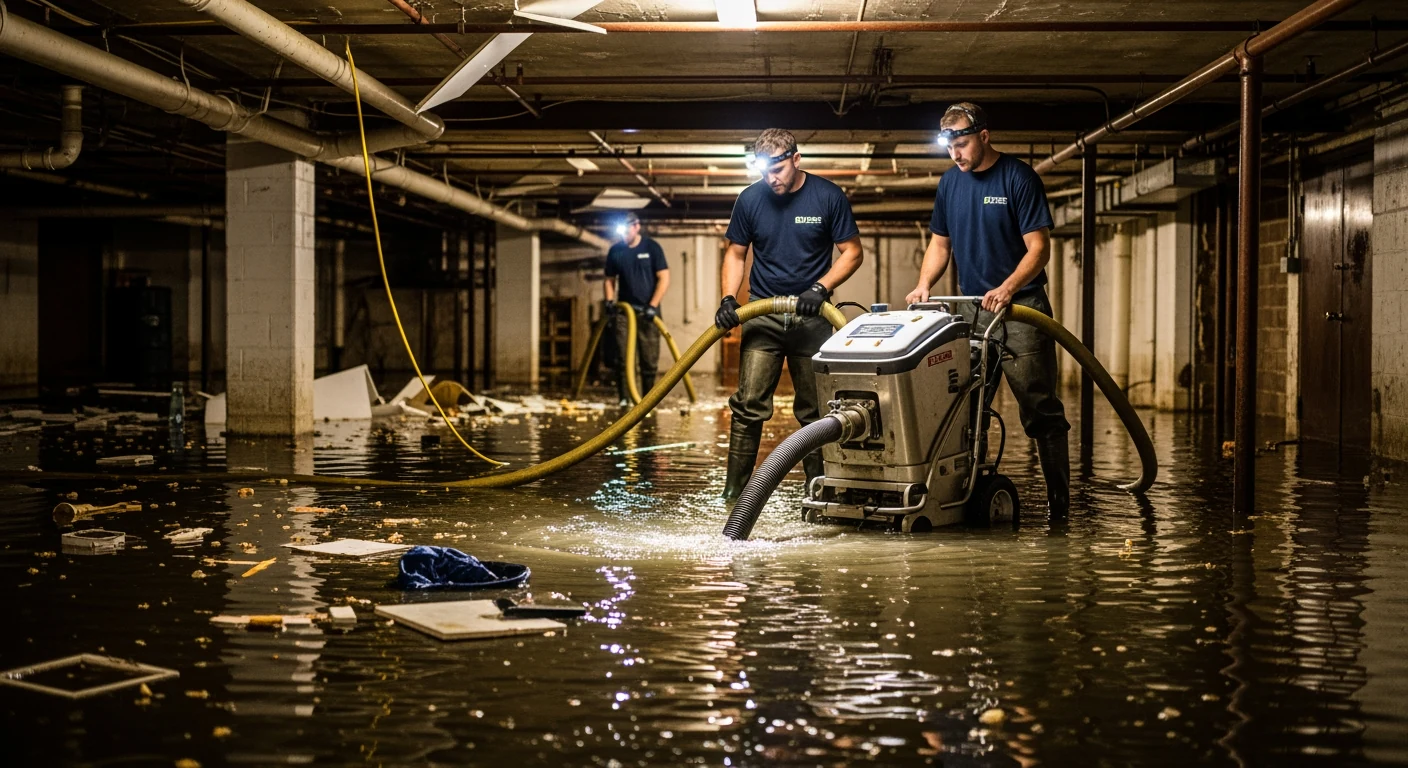
Basement water damage is the second most common category. Nassau County’s water table geography — particularly in South Shore communities — means basements periodically take on water from multiple sources: groundwater infiltration through slab cracks, window well overflow, sump pump failures, and storm-driven lateral intrusion. Basement restoration in Nassau County almost always involves Category 2 or Category 3 contamination protocols when the water source includes any groundwater or storm runoff component.
Mold remediation under NYS Article 32 is active year-round in Nassau County because the humidity profile supports mold establishment in any space with incomplete moisture control. The separate assessor and remediator requirement under New York State law applies to all projects of 10 square feet or more. Nassau County homeowners choosing a mold contractor must verify that the contractor holds both the correct NYS DOL license type and current insurance — the NYSDOL has increased enforcement activity in 2025.
Flood damage restoration following nor’easters, tropical storms, and bay flooding events requires Category 3 decontamination protocols, complete removal of porous materials that contacted exterior floodwater, and structural drying timelines extended by Nassau’s coastal humidity. South Shore flood restoration projects are among the most scope-intensive residential restoration jobs in the New York metro area.
Asbestos testing and abatement integrated with water damage restoration is a standard service requirement in Nassau County’s pre-1980 housing stock. Any demolition required as part of a water damage or mold remediation project in a home built before 1980 requires a pre-demolition survey and, if asbestos-containing materials are confirmed, abatement before reconstruction can proceed.
Nassau County Restoration Costs: 2026 Benchmarks
Nassau County sits in the upper tier of the New York metro restoration cost structure — above national averages and comparable to NYC boroughs for labor, but without the access surcharges and high disposal fees of urban settings. Key 2026 benchmarks:
Water extraction and structural drying (burst pipe, appliance failure, contained Category 1 loss): $2,500–$8,000 for a standard residential loss. Basement flooding from Category 2 or 3 sources adds material removal scope and decontamination, typically running $5,000–$15,000.
Mold remediation in Nassau County: $800–$2,000 for small contained projects under 10 square feet; $2,500–$7,500 for medium projects; $8,000–$25,000 for large attic or basement remediations. The mandatory NYS Article 32 assessment adds $350–$900 and post-remediation clearance testing adds $300–$600 to every project.
Full flood restoration (Category 3, first-floor loss, South Shore community): $30,000–$65,000 including extraction, decontamination, complete material removal, structural drying, and reconstruction. Asbestos abatement when required adds $3,000–$10,000.
Fire and smoke damage restoration in Nassau County’s median 1955-vintage home: $25,000–$80,000 for moderate losses; major losses involving full demolition, asbestos abatement, and reconstruction can reach $150,000+.
Nassau County’s median home value reached $684,700 in 2024 — the highest in New York State outside of Manhattan. Restoration quality matters here. Deferred or incomplete restoration that leaves hidden moisture, untreated mold, or improperly dried structure behind is discovered at sale, costs more to remediate under time pressure, and reduces the sale price by multiples of what proper restoration would have cost at the time of the original loss.
Filing a Water Damage Insurance Claim in Nassau County
Standard homeowners insurance covers sudden and accidental water damage — burst pipes, appliance failures, storm-driven water intrusion through a breach in the structure. It does not cover gradual seepage, flooding from outside the structure (requires separate flood insurance through NFIP or private carriers), or maintenance-related deterioration. Nassau County homeowners with South Shore properties should verify their flood insurance status independently from their homeowners policy — they are separate coverages, and the distinction matters enormously when a storm arrives.
Under New York State Department of Financial Services regulations, your insurer must acknowledge your claim within 15 business days and act on a completed claim within 15 business days. Every NYS homeowners policy includes a binding appraisal clause for loss amount disputes. If the insurer’s estimate and your contractor’s Xactimate estimate diverge significantly, invoking appraisal with documented contractor scope is often the most efficient resolution path.
Document everything before any cleanup begins: photographs and video of all visible damage, moisture readings if your contractor arrives before documentation is complete, and a room-by-room inventory of affected contents. The documentation taken before remediation starts is the foundation of your claim; documentation added afterward is always subject to adjuster challenge.
Frequently Asked Questions: Water Damage Restoration in Nassau County
How quickly does mold grow after water damage in Nassau County?
Under Nassau County’s coastal humidity conditions — average summer relative humidity above 70 percent — mold can begin colonizing wet porous materials within 24 to 48 hours. This is faster than in drier inland markets and is why professional moisture extraction and structural drying within the first 24 hours is critical. Consumer-grade fans and dehumidifiers cannot create the airflow and dehumidification capacity needed to meet this timeline in a significantly water-affected space.
Does Nassau County water damage restoration require asbestos testing?
For homes built before 1980 — which includes the majority of Nassau County’s housing stock given the median construction year of 1955 — any demolition required as part of a water damage restoration project requires a pre-demolition asbestos survey under NYS Code Rule 56. If asbestos-containing materials are confirmed in the area to be demolished, licensed abatement must be completed before reconstruction. This is a standard part of restoration in Nassau County’s older housing stock, not an unusual add-on.
What flood zones cover Nassau County’s South Shore communities?
South Shore Nassau County communities — Long Beach, Oceanside, Freeport, Baldwin, Merrick, Bellmore, Wantagh, Seaford, and Massapequa — have significant FEMA Zone AE and Zone VE designations. Zone AE indicates a 1 percent annual chance of flooding with detailed Base Flood Elevation data; Zone VE adds wave action risk for beachfront and near-beachfront properties. Flood insurance is mandatory for mortgaged properties in Special Flood Hazard Areas. Check your property’s specific zone at FEMA’s Flood Map Service Center (msc.fema.gov).
Is my Nassau County home covered for water damage from Hurricane Sandy residual issues?
Standard homeowners insurance covers current, sudden water damage events — not historical residual damage from past floods. If Sandy-era moisture issues are discovered during a current restoration project, they may be coverable if they can be connected to a currently active covered event (e.g., a new pipe failure that opened a wall revealing old water damage). Consult your insurer and, if needed, a licensed public adjuster to evaluate coverage scope for any discovered historical damage.
Who are licensed water damage restoration companies in Nassau County?
For any restoration project involving mold, verify NYS DOL Article 32 licensing at dol.ny.gov. For IICRC certification — the industry standard for water damage and structural drying — verify at iicrc.org. Upper Restoration is IICRC-certified, holds all required NYS DOL licenses for mold remediation and asbestos abatement, and serves all of Nassau County with 24/7 emergency response.
How much does water damage restoration cost in Nassau County?
Costs range from $2,500–$8,000 for contained Category 1 losses (burst pipe, appliance failure) to $30,000–$65,000 for full flood restoration in South Shore homes. Mold remediation adds $800–$25,000 depending on scope. Asbestos testing and abatement in pre-1980 homes adds $1,000–$10,000 when required. Nassau County costs run above national averages due to local labor rates, disposal costs, and the licensing requirements specific to New York State.