Flood Damage Restoration on Long Island: FEMA Flood Zones, Sandy Statistics, NFIP Coverage, and What Full Recovery Actually Costs
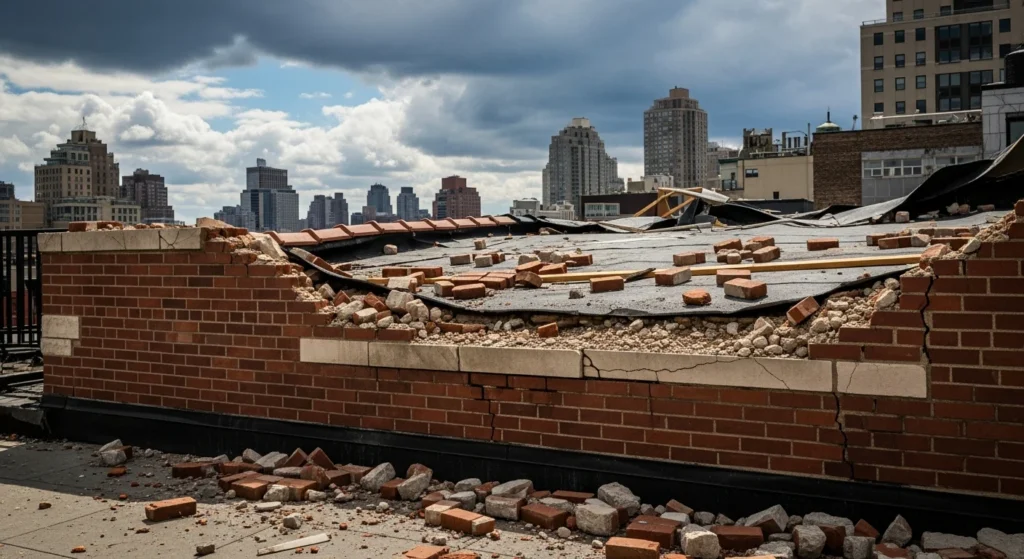
Long Island is not simply flood-prone. It is flood-defined. The same geography that makes Nassau and Suffolk County among the most desirable places to live in New York — the Atlantic coast, Great South Bay, Long Island Sound, the canal-threaded South Shore communities — is also what made 95,534 buildings flood-damaged or destroyed in a single October storm in 2012. Hurricane Sandy was not an anomaly. It was a demonstration of what Long Island’s geography does when a major storm arrives. Flood damage restoration here is a specialized discipline, shaped by FEMA flood zone designations, NFIP policy structures, Category 3 contamination protocols, and a coastal climate that works against every drying timeline.
This guide covers everything a Long Island homeowner needs to navigate flood damage: how FEMA classifies flood risk in Nassau and Suffolk, what Sandy established about where and how hard the Island floods, how the National Flood Insurance Program works in practice, what professional restoration actually involves when exterior floodwater enters a home, and what the full cost looks like in 2026.
Long Island’s FEMA Flood Zone Landscape: What the Maps Actually Show
FEMA designates flood risk through Flood Insurance Rate Maps (FIRMs) that carve Long Island into zones according to the statistical probability of flooding in any given year. Understanding these zones is the foundation of understanding your risk — and your insurance obligations.
Zone AE is the workhorse designation on Long Island’s South Shore. AE zones have a 1 percent annual chance of flooding — what is commonly called the 100-year flood — and have been mapped with detailed hydraulic analysis providing Base Flood Elevations (BFEs). If your home sits in Zone AE and carries a federally backed mortgage, flood insurance through the NFIP is mandatory, not optional. The BFE on your FIRM tells you how high floodwaters are statistically expected to rise; every foot your lowest floor sits below that elevation represents significantly higher insurance premiums under FEMA’s Risk Rating 2.0 methodology.
Zone VE designates the highest-risk coastal areas — beachfront and near-beachfront properties exposed to wave action in addition to flooding. Long Beach, portions of Fire Island, and the oceanfront communities from Westhampton Beach east through the Hamptons contain VE zones. A structure in Zone VE faces both storm surge inundation and 3-foot or greater wave action simultaneously. Restoration after a VE-zone flood event is categorically more destructive and expensive than AE-zone flooding because of the physical battering wave action causes before water levels even peak.
Zone X (shaded) covers moderate-risk areas between the 100-year and 500-year flood boundaries — areas with a 0.2 percent annual chance of flooding. Flood insurance is not mandatory here under federal lending rules, but Sandy demonstrated that shaded X and even unshaded X-zone properties can and do flood when a major storm surge pushes farther inland than the base flood maps anticipated. The FEMA analysis after Sandy found that in Nassau County, 89 percent of the actual flooded area fell within the high-risk zones on revised maps — but the remaining 11 percent did not, meaning thousands of homeowners without flood insurance still suffered significant flood damage.
FEMA has been revising Nassau and Suffolk County flood maps on a rolling basis since Sandy. According to Suffolk County, roughly 220,000 people — about 15 percent of Long Island’s 1.5 million residents — live in an area that would flood in a Category 4 hurricane event. The practical implication: flood risk on Long Island extends well beyond the blocks immediately adjacent to the water.
High-Risk South Shore Communities by Township
The heaviest FEMA flood zone concentrations on Long Island cluster along the South Shore, where low elevation, barrier island geography, and direct Atlantic exposure combine.
Town of Hempstead: Long Beach (a barrier island city ringed by Reynolds Channel and the Atlantic), Oceanside, Freeport, Baldwin, Merrick, Bellmore, Wantagh, Seaford, and Massapequa all contain significant AE and some VE zone parcels. Long Beach sustained over $150 million in damage during Sandy alone. The canals and channels threading through Freeport and Baldwin mean that flood water does not simply come from one direction — it can encircle properties as bay levels rise.
Town of Babylon: Amityville, Copiague, Lindenhurst, West Babylon, and the communities along Great South Bay. During Sandy, homes in Lindenhurst flooded so severely that two burning houses had to be demolished by payloaders while still burning because firefighters could not safely approach through the floodwater. Water levels around Peconic Bay reached 7 to 9 feet in some areas during the storm’s peak surge.
Town of Islip: Bay Shore, Islip, East Islip, West Islip, and the communities fronting Great South Bay. The water table throughout much of this township is already close to the surface; storm surge pushing bay water inland saturates ground that is already near-saturated, meaning floodwater does not drain quickly after the storm passes.
Town of Brookhaven (South Shore): Patchogue, Bellport, Mastic Beach, Shirley, Center Moriches, and East Moriches. Coastal damage in Mastic and Moriches during Sandy was among the most severe in Suffolk County. These communities remain active NFIP repetitive-loss areas — properties that have flooded twice or more within any 10-year period and received claims payments equaling or exceeding the building’s market value.
Hurricane Sandy: What the Data Established
Sandy made landfall on October 29, 2012, as a post-tropical cyclone with hurricane-force winds and a storm surge that FEMA’s regional director characterized as a 100-year-to-300-year event depending on location. In southwestern Nassau and southwestern Suffolk, the surge was more severe than a 100-year storm. The data FEMA provided after the storm is the most comprehensive picture of flood risk on Long Island ever assembled, and it should be required reading for any homeowner within ten miles of the South Shore.
The numbers: 95,534 buildings in Nassau and Suffolk counties were flooded, damaged, or destroyed. Nassau County accounted for 74,736 of those structures; Suffolk County for 20,798. Of the total, 38,189 structures had damage exceeding 50 percent of their value — meaning those properties triggered the NFIP’s Substantial Damage rule, requiring elevation to current Base Flood Elevation before rebuilding could occur. 182 structures were destroyed entirely — 117 in Nassau, 65 in Suffolk. Ten percent of all households in the two-county area experienced some flooding. The storm left behind 4.4 million cubic yards of debris.
Of the 113,901 people in Nassau and Suffolk who applied for FEMA disaster relief assistance, 43,106 held NFIP flood insurance policies and had experienced flooding. That means a substantial share of flood-affected homeowners were uninsured or underinsured — a gap that translated into out-of-pocket costs that destroyed household finances across the South Shore.
Sandy’s other legacy is less visible but equally consequential for restoration: homes that were flooded but not fully remediated — particularly those that received cosmetic repairs without professional moisture mapping and structural drying — have been dealing with chronic moisture problems, hidden mold colonization, and ongoing structural degradation ever since. More than a decade later, restoration contractors working in Mastic Beach, Lindenhurst, Long Beach, and Freeport still routinely discover Sandy-era water damage behind walls that were patched rather than properly dried and treated.
The NFIP on Long Island: Coverage, Limits, and What the Policy Actually Pays
The National Flood Insurance Program is the primary flood insurance mechanism for Long Island homeowners. Understanding what it covers — and what it does not — is essential before a flood event, not after.
Coverage structure. An NFIP Dwelling Policy offers two separate coverage components: building property coverage up to $250,000, and personal property (contents) coverage up to $100,000. These are separate limits, and you must elect contents coverage independently — a building-only policy does not cover your furniture, appliances, clothing, or other personal property. The $250,000 building limit is not a guaranteed replacement cost policy; it is a dollar ceiling, and in the current Long Island construction market, replacing a substantially damaged home often exceeds that limit. Excess flood insurance from private carriers is available and increasingly important for higher-value properties.
What NFIP covers in a flood loss. Building coverage pays for physical damage to your home’s structure directly caused by flooding: foundation walls, floors, ceilings, electrical systems, plumbing, HVAC systems, water heaters, fuel tanks, permanent carpet, built-in appliances, window blinds, and attached structures. The NFIP also covers structural drying of salvageable interior foundation elements, debris removal, and mold and mildew treatment — critically important items in a flood restoration context. Contents coverage pays for personal property: furniture, clothing, electronics, portable appliances, and similar items.
What NFIP does not cover. The policy does not cover additional living expenses if you are displaced from your home while it is restored — this is a significant gap compared to standard homeowners policies and means flood-displaced Long Island homeowners typically carry additional out-of-pocket costs for temporary housing during a restoration project that can run 90 days or longer for severely damaged homes. The NFIP also does not cover landscaping, decks and patios, fences, swimming pools, financial losses from business interruption, or most vehicles.
Increased Cost of Compliance (ICC) coverage. If your home is in a FEMA Special Flood Hazard Area and the community determines it has been substantially damaged — meaning repair costs equal 50 percent or more of the structure’s pre-damage market value — you must bring the building into compliance with current floodplain management ordinances before rebuilding. This typically means elevating the home. ICC coverage within the NFIP provides up to $30,000 toward these compliance costs (elevation, demolition, floodproofing, or relocation). The 2024 NFIP Claims Handbook confirms this coverage and the filing procedures; the 60-day filing deadline after receiving the community’s Substantial Damage letter is a hard cut-off that many homeowners miss because they are focused on cleanup and miss the administrative window.
Risk Rating 2.0 and what it means for Long Island premiums. In October 2021, FEMA implemented Risk Rating 2.0 — the biggest overhaul to NFIP pricing since the program began in 1968. Under the old system, flood zones were the primary premium driver. Under Risk Rating 2.0, your individual property’s specific risk factors determine your premium: distance from water, type of flooding, flood frequency, foundation type, height of your lowest floor relative to Base Flood Elevation, prior claims history, and the replacement cost value of your structure. The national average NFIP premium reached $898 per year as of March 2025, but Long Island properties in AE and VE zones — particularly those with first floors at or below BFE — can face premiums multiples of the national average. Premiums are capped at an 18 percent annual increase for primary residences on a “glide path” toward full-risk rates. Long Island homeowners who purchased policies under the old rate structure are seeing significant increases as they transition. An elevation certificate, obtained from a licensed land surveyor, can demonstrate that your lowest floor sits above BFE and reduce your premium substantially.
The 30-day waiting period. NFIP policies carry a 30-day waiting period from purchase to effective coverage in most circumstances. A policy bought the day before a storm has no coverage for that storm’s damage. If you are in a flood zone and do not currently have a policy, the time to purchase is before hurricane season — not during a storm watch.
Category 3 Floodwater: Why Flood Restoration Is Not the Same as Water Damage
When exterior floodwater enters a Long Island home — whether from storm surge, overland flooding, or a canal or bay overflowing its banks — that water is automatically classified as Category 3 under the IICRC S500 Standard for Professional Water Damage Restoration. Category 3, also called “black water,” is grossly contaminated water that poses serious health risks through dermal contact, inhalation, and ingestion. Floodwater in coastal communities like those throughout Nassau and Suffolk counties typically contains a combination of saltwater, raw sewage from overwhelmed municipal systems, petroleum from flooded vehicles and storage tanks, pesticides and fertilizers from yards and agricultural land, animal waste, and industrial chemicals from commercial properties inundated by the same storm surge.
The Category 3 classification has direct consequences for how restoration must be performed. It is not a cleanup job. It is a decontamination and restoration project that requires specific protocols:
All porous materials that have been in contact with Category 3 water — drywall, insulation, carpeting, carpet padding, fabric contents — must be removed and properly disposed of. They cannot be dried in place and considered restored. The contamination penetrates the material, and drying it does not render it safe. On Long Island, this means a flooded first floor typically requires complete removal of drywall to a flood cut height (commonly 24 inches above the high-water mark, adjusted based on moisture readings), removal of all insulation, removal of flooring, and removal of saturated subflooring where saturation has penetrated through. What appears to be a “cleanup” job after a South Shore flood event is almost always a gutting job.
Structural assemblies that cannot be removed — concrete slab foundations, masonry block walls, wood framing — must be HEPA vacuumed, thoroughly cleaned with EPA-registered antimicrobial agents, and dried to documented target moisture content before any reconstruction begins. The IICRC S500 requires that drying goals be established using psychrometric calculations that account for ambient temperature, relative humidity, and the specific moisture content targets for each material type. Industrial air movers and commercial dehumidifiers running continuously are standard for a flood restoration project; Long Island’s summer coastal humidity makes the drying timeline significantly longer than in drier climates, and the equipment loads reflect that.
Salt water presents an additional complication specific to coastal Long Island flooding. Salt is hygroscopic — it draws moisture from the air back into building materials even after the initial water has been removed. A structure flooded with saltwater from Great South Bay or a storm surge event that is not properly cleaned and treated can continue to absorb ambient humidity through residual salt deposits in the framing and masonry for months or years after the flood event. This is part of why post-Sandy homes with incomplete remediation continue to present moisture problems today.
The Professional Flood Restoration Process
A professional flood restoration project on Long Island follows a defined sequence, governed by IICRC S500 methodology and the scope of work the contamination level and water class dictate.
Emergency response and safety assessment. The first priority is safety — structural integrity, electrical hazards, and gas service must be assessed before any work begins. A flooded Long Island home that has had utility power on during flooding has live electrical hazards throughout the water-saturated structure. Licensed restoration contractors coordinate utility shutoffs before entry and assess whether the structure is safe to enter and work in.
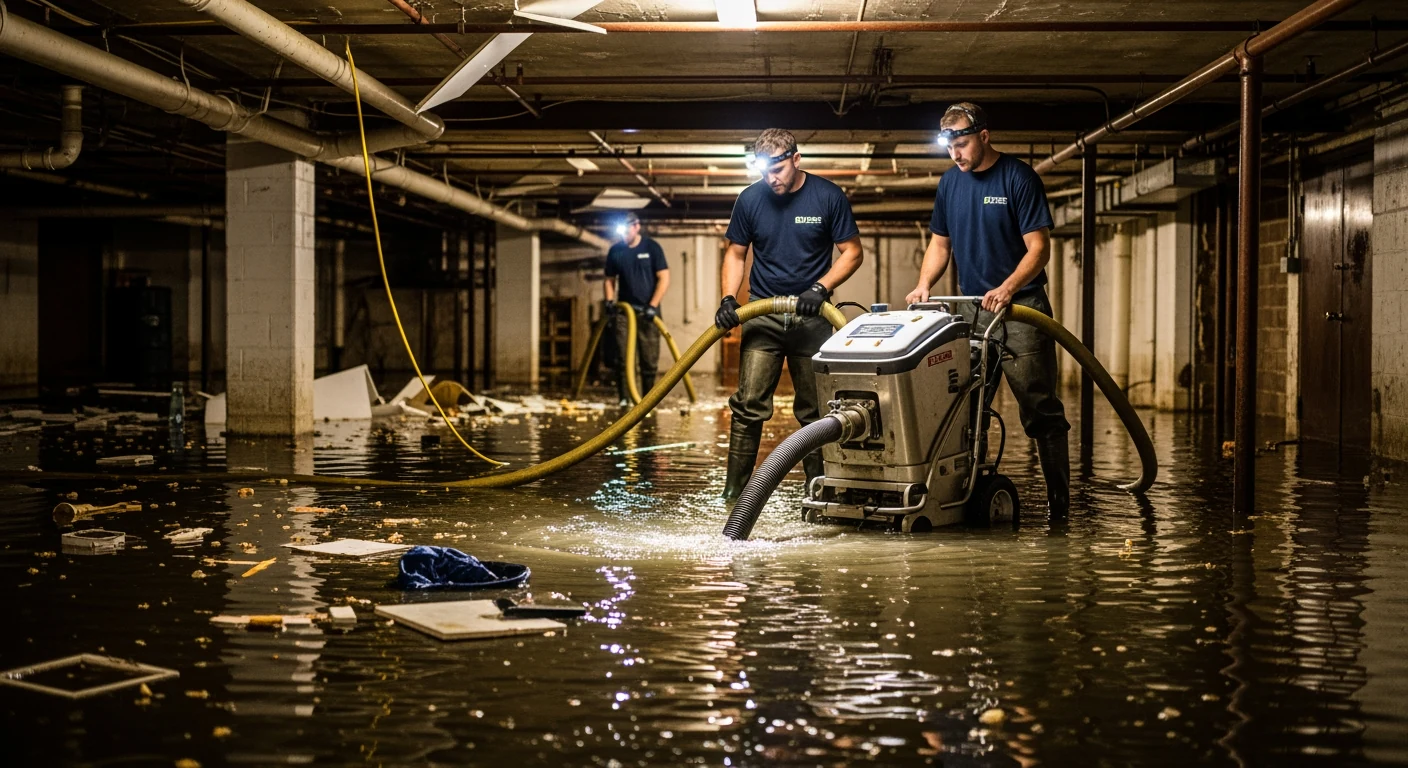
Water extraction. Industrial truck-mounted or portable extraction units remove standing water at volumes that consumer-grade shop vacuums cannot approach. Commercial flood pumpers can extract thousands of gallons per hour. The extraction phase also includes removal of saturated contents that cannot be restored, and initial moisture mapping to define the scope of the drying project using calibrated pin and pinless moisture meters at systematic grid intervals.
Category 3 material removal (flood cut). As described above: drywall, insulation, carpet, pad, and saturated flooring come out. In a South Shore flooding event, this phase is extensive. Flood cuts are documented with photographs and moisture readings at the cut line for insurance documentation and NFIP claim support.
Antimicrobial application and structural cleaning. Before any drying equipment is placed, exposed structural materials are cleaned and treated with EPA-registered antimicrobials per label requirements. In saltwater flood events, this includes a salt removal wash to reduce residual hygroscopic contamination. Antimicrobial application is not a substitute for physical removal of porous materials — it is a treatment for the structural assemblies that remain after porous materials have been removed.
Structural drying. Industrial air movers (typically one per 50–70 square feet of affected floor area) and low-grain refrigerant (LGR) dehumidifiers operate continuously. Psychrometric conditions — temperature, relative humidity, grains per pound of moisture — are monitored and documented daily. IICRC S500 requires drying to pre-loss equilibrium moisture content, not simply to the point where surfaces feel dry. In Long Island’s coastal humidity environment, drying times for a flood-affected first floor commonly run 5 to 14 days with continuous equipment operation. Attempting to shorten this timeline by removing equipment before target moisture content is reached is one of the primary causes of mold growth in the weeks following a flood restoration.
Mold remediation if indicated. If the flood event was not addressed within 24 to 48 hours, or if prior flood events left unaddressed moisture in structural assemblies, mold remediation under the IICRC S520 Standard and NYS Article 32 becomes part of the scope. On Long Island, this is common — particularly in communities that experienced Sandy damage, nor’easter events, and subsequent flooding on top of incompletely dried structures.
Reconstruction. Once the structure reaches target moisture content and antimicrobial treatment is complete, reconstruction begins: new insulation, new drywall, new flooring, new trim. In flood zone properties, reconstruction must comply with FEMA floodplain management ordinances — including elevation requirements if the structure has been determined to be substantially damaged.
Flood Damage Restoration Costs on Long Island: 2026 Pricing Guide
Flood restoration is consistently the most expensive category of water damage work, for three reasons: the scope of material removal required under Category 3 protocols, the extended drying timelines in Long Island’s coastal climate, and the reconstruction costs following a complete flood cut. Costs also run higher here than national averages because of the Long Island labor market, disposal costs for Category 3 materials, and the insurance documentation requirements that add administrative scope to each project.
Emergency extraction and initial response: $1,500–$4,000. Covers the mobilization, safety assessment, water extraction, and initial documentation. This phase is often time-billed at an emergency rate when the call comes in during or immediately after a storm event.
Category 3 material removal and disposal: $3,000–$12,000+. This is where flood jobs diverge sharply from standard water damage jobs. A flooded first floor of a 1,200-square-foot Long Island Cape Cod or ranch — which describes much of the South Shore housing stock — commonly requires 600 to 800 linear feet of drywall removal, disposal of all insulation, carpet removal, and subfloor evaluation. Material costs are low; labor and disposal costs are high because Category 3 materials must be properly bagged and removed to a licensed facility.
Structural drying: $2,500–$8,000. Equipment rental and labor for 7 to 14 days of continuous industrial drying in a typical flood-affected first floor. The equipment load for a coastal Long Island flood job is higher than inland locations because ambient humidity works against dehumidification efficiency throughout the project. Daily monitoring and documentation add labor scope that is billed separately from equipment.
Antimicrobial treatment and saltwater remediation: $800–$2,500. Application of EPA-registered antimicrobials and, in saltwater flood events, the additional cleaning protocol to address residual hygroscopic salt deposits in structural assemblies.
Full reconstruction (post-drying): $15,000–$60,000+ for a significant flood loss. Replacing drywall, insulation, flooring, trim, and fixtures throughout a flooded first floor in a Nassau or Suffolk County home. Costs vary with the size of the affected area, the finish quality of the home, and whether elevation work or other compliance measures are triggered by Substantial Damage determination. A fully flooded first floor of a typical South Shore home commonly costs $35,000–$50,000 to restore to pre-loss condition when all phases are combined.
Total project range: A moderate flood event affecting a portion of a basement or first floor: $8,000–$20,000. A full first-floor flood loss on a South Shore Cape Cod or split-level: $30,000–$65,000. A severe loss with structural damage, elevation requirements, and mold remediation in addition to standard flood restoration: $75,000–$150,000+.
One inch of floodwater can cause more than $25,000 in damage to a home when the full scope of Category 3 decontamination, drying, and reconstruction is accounted for. This is not a hypothetical. It reflects the real cost of doing the work correctly.
How to File Your NFIP Flood Claim: What Long Island Homeowners Need to Know
Filing an NFIP claim is different from filing a standard homeowners insurance claim. The procedures matter, and missing steps or deadlines can result in reduced or denied coverage.
Contact your flood insurance agent or carrier as soon as it is safe to do so — you do not need a federal disaster declaration to file an NFIP claim. A disaster declaration speeds access to FEMA assistance programs, but your flood policy is independent of it. Document all damage with photographs and video before any cleanup begins, even if emergency extraction has already started; take photographs before cleanup and at each stage of the process. The claims adjuster who visits your property is working off of what they can observe and document — the more complete your own documentation, the stronger your claim position.
Request a meeting with a licensed restoration contractor before or concurrent with the adjuster visit. A contractor familiar with Long Island flood claims can ensure the adjuster’s scope of loss includes all Category 3 material removal, antimicrobial treatment, and drying costs that are legitimately part of the project. NFIP adjusters are experienced but operate under policy limitations; understanding what the policy covers and documenting every aspect of the loss to policy scope is how homeowners maximize legitimate recovery.
If you believe the adjuster’s scope is insufficient, you have the right to file a written appeal with FEMA within 60 days of the insurer’s claim determination. Keep all receipts, contractor invoices, and documentation — the appeals process requires supporting evidence.
If your home is determined to be Substantially Damaged by your municipality, notify your flood insurance carrier immediately and file for ICC coverage within 60 days of receiving the community’s Substantial Damage letter. That 60-day window is fixed; missing it means forfeiting up to $30,000 in ICC benefits you have already paid premiums to fund.
Frequently Asked Questions: Flood Damage Restoration on Long Island
How much does flood damage restoration cost on Long Island?
Flood damage restoration on Long Island typically costs $8,000–$20,000 for a moderate loss affecting part of a basement or first floor, $30,000–$65,000 for a full first-floor flood loss in a typical South Shore Cape Cod or split-level, and $75,000–$150,000 or more for severe losses involving structural damage, mold remediation, and FEMA elevation compliance. Costs are higher than national averages because Long Island’s coastal humidity extends drying timelines and Category 3 contamination protocols require complete material removal and disposal.
Does the NFIP cover flood damage restoration on Long Island?
Yes, an NFIP flood insurance policy covers building damage directly caused by flooding, up to $250,000. Covered items include structural drying, debris removal, mold and mildew treatment, flooring, drywall, electrical, plumbing, and HVAC systems. The policy does not cover additional living expenses during displacement, landscaping, fences, or pools. A separate contents policy covers personal property up to $100,000. Private excess flood coverage is available for homes whose replacement cost exceeds the $250,000 NFIP building limit.
What FEMA flood zone is my Long Island home in?
South Shore communities — including Long Beach, Oceanside, Freeport, Baldwin, Merrick, Bellmore, Wantagh, Seaford, Massapequa, Amityville, Lindenhurst, Bay Shore, Islip, Patchogue, and Mastic Beach — have significant AE and VE zone concentrations. Zone AE designates a 1 percent annual chance of flooding with detailed Base Flood Elevation data. Zone VE designates coastal areas subject to wave action in addition to flooding. You can look up your property’s zone at FEMA’s Flood Map Service Center (msc.fema.gov) or through Nassau County’s myfloodrisk portal or the Nassau County Building Department.
How bad was Hurricane Sandy on Long Island?
Sandy damaged or destroyed 95,534 buildings in Nassau and Suffolk counties, with 74,736 in Nassau and 20,798 in Suffolk. More than 38,000 structures had damage exceeding 50 percent of their value. Ten percent of all households in the two counties flooded. Long Beach alone sustained over $150 million in damage. In southwestern Nassau, Sandy arrived as a storm estimated to occur once every 300 years. The storm left 4.4 million cubic yards of debris and displaced more than 113,901 households that filed for FEMA disaster assistance.
Why is floodwater treated differently than a burst pipe water damage?
Exterior floodwater is automatically classified as Category 3 (grossly contaminated) under the IICRC S500 Standard because it contacts soil, roadways, and sewage systems before entering your home. It typically contains raw sewage, petroleum, pesticides, chemicals, and pathogens. Unlike Category 1 water from a burst supply line, Category 3 water requires full removal of all porous materials that contacted the water — drywall, insulation, carpet, carpet pad — which cannot be dried in place and considered restored. This is why flood restoration is fundamentally a decontamination and rebuilding project, not simply a drying project.
What is FEMA Risk Rating 2.0 and how does it affect Long Island flood insurance premiums?
Risk Rating 2.0, implemented by FEMA in October 2021, replaced a 50-year-old pricing methodology that relied primarily on flood zone maps to set premiums. Under Risk Rating 2.0, premiums are calculated based on individual property characteristics: distance from water, flood frequency, foundation type, height of the lowest floor relative to Base Flood Elevation, prior claims, and replacement cost value. The national average NFIP premium reached $898 per year as of March 2025. Long Island properties in AE and VE zones with first floors at or below Base Flood Elevation commonly face premiums significantly above the national average, with annual increases capped at 18 percent on a glide path toward full-risk rates. An elevation certificate can demonstrate your structure sits above BFE and reduce your premium.
How long does flood restoration take on Long Island?
A moderate flood loss — basement or partial first floor — typically takes 2 to 3 weeks for emergency response, Category 3 material removal, structural drying, and antimicrobial treatment, followed by 3 to 6 weeks of reconstruction. A full first-floor flood loss commonly takes 2 to 4 months from start to completion of reconstruction. Severe losses with structural damage, FEMA Substantial Damage determinations, and mold remediation can take 6 to 12 months. Long Island’s coastal humidity extends drying timelines compared to inland locations; target moisture content in coastal flood projects typically requires 10 to 14 days of continuous industrial drying.
What is the NFIP Increased Cost of Compliance (ICC) provision?
ICC coverage within your NFIP policy provides up to $30,000 toward bringing a substantially damaged property into compliance with current floodplain management ordinances — primarily, elevating the structure to current Base Flood Elevation. A Substantial Damage determination occurs when repair costs equal 50 percent or more of the structure’s pre-damage market value. You must file for ICC coverage within 60 days of receiving your municipality’s Substantial Damage letter. Missing this deadline forfeits the coverage regardless of your policy status.