Why Mold Inspection Costs in New York Are Higher Than National Averages
National cost guides cite mold inspection figures of $200–$600. In New York City and Long Island, expect to pay more — typically 20–35% above those figures. Three factors drive local costs:
- Licensing requirements: New York State Labor Law Chapter 32 requires mold assessors to hold a valid NYS Mold Assessor license for any assessment in commercial buildings or for assessments that will produce a formal remediation plan. Licensed professionals command higher rates than unlicensed inspectors operating in unregulated markets.
- Lab costs: Air and surface samples must be analyzed by accredited laboratories. New York-area lab turnaround and logistics add modest cost compared to national averages.
- Travel and access: Manhattan and dense NYC neighborhoods add travel time. Co-op and condo buildings may require elevator scheduling and management coordination.
Mold Inspection Cost by Service Type
| Service | NYC / LI Cost Range | What’s Included |
|---|---|---|
| Visual inspection only | $300–$600 | Walk-through, written report, no samples |
| Visual + air sampling (2–3 samples) | $500–$900 | Spore trap samples, lab analysis, report |
| Full assessment (air + surface) | $700–$1,500 | Multiple sample types, comparative outdoor sample, detailed report |
| Pre-purchase mold inspection | $400–$800 | Focused visual + 2–3 air samples for buyers |
| Post-remediation clearance | $400–$900 | Air sampling to verify remediation success |
| ERMI testing (dust sampling) | $300–$500 | DNA-based dust analysis, sent to lab by mail |
What a Mold Inspection Actually Involves
Visual Assessment
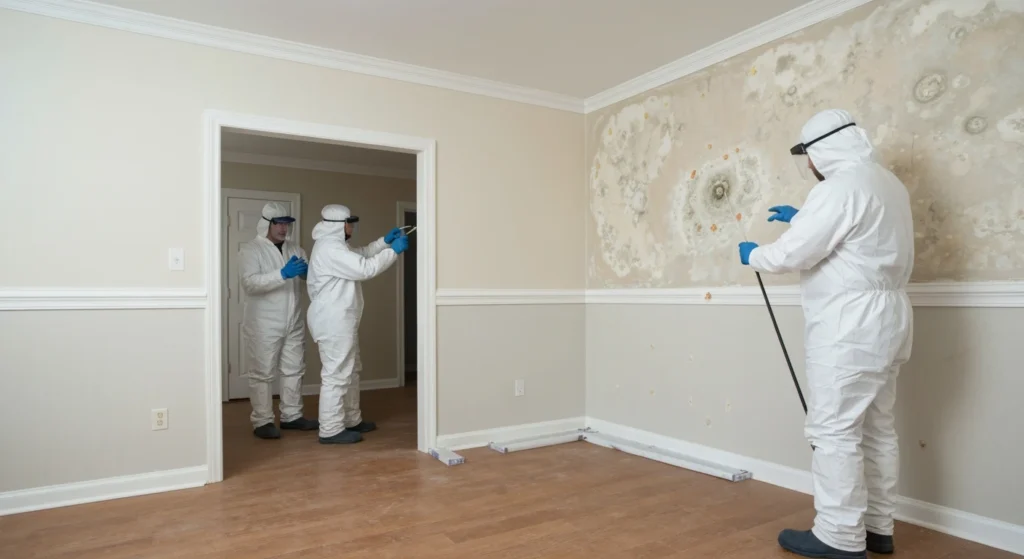
Every mold inspection begins with a thorough visual assessment of the property. A licensed inspector examines areas with known or suspected moisture problems: bathrooms, kitchens, basements, crawl spaces, attic hatch areas, around windows and exterior walls, and anywhere with a history of water intrusion. The inspector looks for visible mold growth, moisture staining, efflorescence, deteriorated materials, and conditions that promote mold — inadequate ventilation, condensation patterns, elevated humidity.
Air Sampling
Air sampling uses calibrated pumps to draw a measured volume of air through a spore trap cassette, which is then analyzed under microscopy at an AIHA-accredited laboratory. Results identify mold genera present and spore concentrations per cubic meter of air. A comparative outdoor sample is taken simultaneously — the indoor-to-outdoor ratio is what determines whether indoor levels are elevated. Air sampling cannot identify hidden mold behind walls; it captures what is currently airborne.
Surface Sampling
Tape lifts and swab samples collect physical mold from visible growth for laboratory identification. Surface sampling confirms mold species — important when the remediation protocol depends on whether you’re dealing with Stachybotrys (black mold), Aspergillus, Cladosporium, or another genus. Surface samples cannot quantify how much mold is present in the space — only air sampling does that.
Moisture Mapping
A thorough mold inspection includes moisture meter readings at suspect locations — wall cavities, subfloor assemblies, around windows. Elevated moisture readings without visible mold indicate active wetting that will produce future mold growth if not addressed. Infrared thermal imaging, an additional service at $150–$400, can detect moisture behind walls without invasive sampling.
New York State Licensing: What It Means for You
Under NYS Labor Law Chapter 32, effective since 2016, two critical regulatory requirements protect property owners during mold assessment and remediation:
- The assessor and remediator must be different companies. The company that inspects and writes your remediation plan cannot be the same company that performs the remediation work. This regulatory separation eliminates conflicts of interest — an assessor cannot inflate the scope to generate remediation revenue for themselves.
- A written remediation plan is required before work begins. Any mold remediation project over 10 square feet must be preceded by a written assessment report and remediation plan from a licensed mold assessor. No licensed remediator should begin work without one.
Be cautious of any company that offers to inspect and remediate without this separation. It is either unlicensed or operating outside the law — and in either case, your remediation is not properly protected.
When Is a Mold Inspection Worth the Cost?
A mold inspection is the right call in these situations:
- You smell mold but don’t see it. Musty odor without visible growth suggests hidden mold behind walls, under flooring, or in HVAC systems. Air sampling can confirm elevated spore levels; infrared imaging or invasive sampling can locate the source.
- You’ve had water damage. Any water intrusion event — burst pipe, flooding, roof leak — that wasn’t dried within 48–72 hours creates mold risk. Post-event inspection confirms whether remediation is needed before reconstruction proceeds.
- Pre-purchase due diligence. A mold inspection before buying a pre-1980 NYC or Long Island home is increasingly standard practice, particularly for basement-heavy properties and buildings with flat or low-slope roofs.
- After remediation. Post-remediation clearance testing by the original licensed assessor is required by New York State and verifies that the space meets acceptable spore levels before reoccupancy.
- Recurring health symptoms. Unexplained respiratory symptoms, chronic sinus issues, or allergic reactions that improve when occupants leave the building are classic indicators of indoor mold exposure warranting professional assessment.
Mold Inspection vs. Mold Testing: What’s the Difference?
These terms are often used interchangeably but describe different scopes. A mold inspection is a professional assessment of the property — visual examination, moisture mapping, identification of problem areas, and written report. Mold testing refers specifically to the laboratory analysis component — air samples, surface samples, or ERMI dust samples sent to an accredited lab.
A mold inspection without testing is faster and cheaper but cannot confirm whether airborne spore levels are elevated or identify mold behind walls. Testing without a professional inspection can miss visible mold sources and moisture conditions that sampling alone won’t reveal. A full assessment combining both provides the most actionable results.
Upper Restoration’s licensed mold assessors serve NYC and Long Island with full assessment services — visual inspection, air and surface sampling, laboratory analysis through AIHA-accredited labs, and written remediation plans compliant with NYS Chapter 32. We never perform remediation on properties we have assessed, ensuring full compliance with New York’s conflict-of-interest regulations.
Frequently Asked Questions About Mold Inspection Cost
How much does a mold inspection cost in NYC?
A professional mold inspection in New York City costs $300–$600 for a visual assessment only, $500–$900 with air sampling, and $700–$1,500 for a full assessment with both air and surface samples. Post-remediation clearance testing costs an additional $400–$900. NYC costs run 20–35% above national averages due to licensing requirements and local lab costs.
Do I need a licensed mold inspector in New York?
For commercial buildings and for assessments that will produce a formal remediation plan, New York State requires a licensed mold assessor under Labor Law Chapter 32. Homeowners are not legally required to hire a licensed inspector for their own residence, but using a licensed professional ensures the assessment will be accepted by remediation contractors and insurance companies and that the regulatory separation requirement is met.
How long does a mold inspection take?
A visual inspection of a typical NYC apartment or Long Island home takes 1–2 hours. Adding air sampling extends the visit by 30–60 minutes for pump setup and sample collection. Laboratory results from air and surface samples typically take 24–72 hours. The full process from inspection to written report with lab results generally runs 3–5 business days.
What’s included in a mold inspection report?
A complete mold assessment report from a licensed NYS assessor includes: observations from the visual inspection, moisture meter readings, photograph documentation, sample locations and chain of custody, laboratory results, interpretation of results relative to outdoor baseline levels, identified moisture sources, and a written remediation plan if mold is confirmed above acceptable thresholds. The remediation plan specifies scope, containment requirements, and clearance criteria.
Is mold testing the same as mold inspection?
No. A mold inspection is a professional assessment of the property — visual examination, moisture mapping, report. Mold testing refers to laboratory analysis of air or surface samples. A full mold assessment combines both. Testing-only services without professional inspection miss visible mold sources and moisture conditions that sampling alone cannot detect.
Can the same company inspect and remediate mold in New York?
No. NYS Labor Law Chapter 32 requires the mold assessor who writes the remediation plan and the contractor who performs remediation to be different companies. This regulatory separation protects property owners from conflicts of interest. Any company that offers to both assess and remediate without this separation is operating outside New York law.