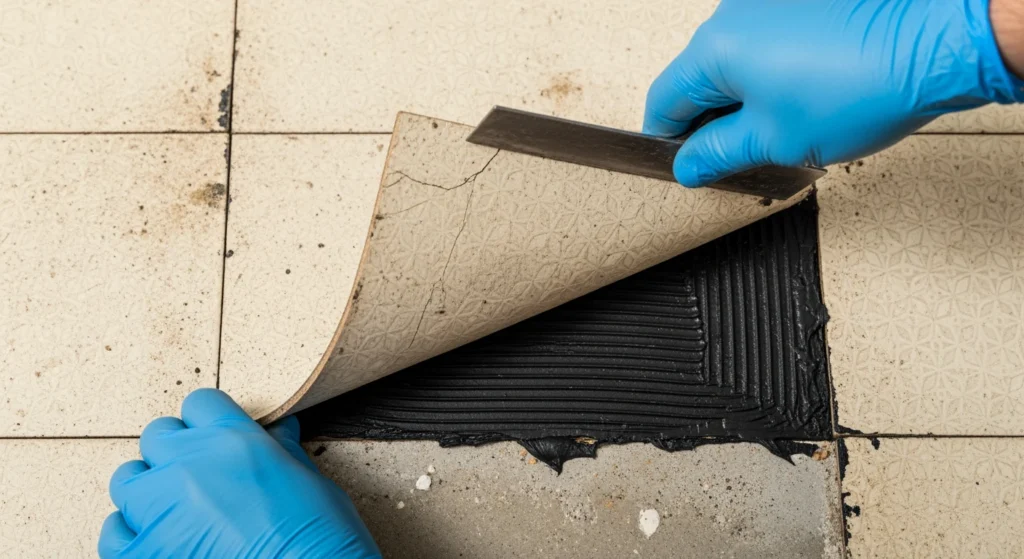
The 9×9-inch vinyl asbestos floor tile is arguably the most widespread asbestos-containing material in Long Island commercial buildings. Installed in millions of square feet of office space, retail areas, and institutional buildings from the 1940s through the 1980s, these tiles present building owners with a recurring decision: encapsulate, cover, or remove?
Understanding Your Options
Option 1: Leave in place with new flooring overlay. The simplest and most common approach. New carpet, luxury vinyl plank, or commercial tile is installed directly over existing asbestos tiles. The original tiles act as a substrate. This is permitted under New York regulations provided the existing tiles are intact and the installation method does not damage them. Cost: standard flooring installation pricing. Limitation: asbestos remains and must be documented; future renovation may trigger removal.
Option 2: Encapsulation. A penetrating or bridging encapsulant is applied directly to the tile surface, creating a fiber-locking barrier. This approach is appropriate when tiles will remain exposed (in mechanical rooms or utility spaces) or when a protective layer is needed before overlay. Cost: $2 to $5 per square foot on Long Island. Limitation: requires periodic inspection; does not eliminate the material.
Option 3: Full removal (abatement). Licensed abatement workers remove tiles and underlying mastic under wet methods and containment. This permanently eliminates the asbestos. Required for building demolition, extensive renovation, or when tiles are damaged beyond encapsulation. Cost: $5 to $15 per square foot on Long Island.
Decision Framework for Long Island Building Owners
Choose overlay or encapsulation when: tiles are intact with no cracking, chipping, or missing pieces; no renovation will disturb the floor system; the building will continue operating without structural changes; and budget constraints favor management over removal.
Choose removal when: tiles are damaged, crumbling, or have been previously abraded; building demolition or gut renovation is planned; the owner wants to permanently resolve the asbestos liability; or insurance or lending requirements mandate removal.
The Mastic Problem
Removing asbestos floor tiles is only half the job. The black cutback adhesive (mastic) beneath the tiles frequently contains asbestos as well. Mastic removal adds significant cost and complexity because it requires chemical stripping agents or mechanical methods under containment. Building owners who budget only for tile removal often face unexpected mastic abatement costs of $3 to $8 per square foot additional. Always confirm whether mastic testing is included in the asbestos survey before planning a removal project.
Regulatory Considerations
New York State classifies intact vinyl asbestos tiles as non-friable ACM — they do not release fibers under normal conditions. However, tiles become friable when broken, ground, or sanded, which triggers full abatement regulations. Any removal project involving more than 10 square feet of asbestos floor tiles requires a NYS DOL-licensed contractor, advance notification, and third-party air monitoring.
Upper Restoration’s Floor Tile Abatement Services
Upper Restoration provides commercial asbestos floor tile removal across Long Island, handling both tile and mastic abatement under full containment with NYS DOL compliance. We also consult on encapsulation and overlay strategies when removal is not immediately necessary, helping building owners in Nassau and Suffolk Counties make cost-effective decisions about their asbestos floor tile management.