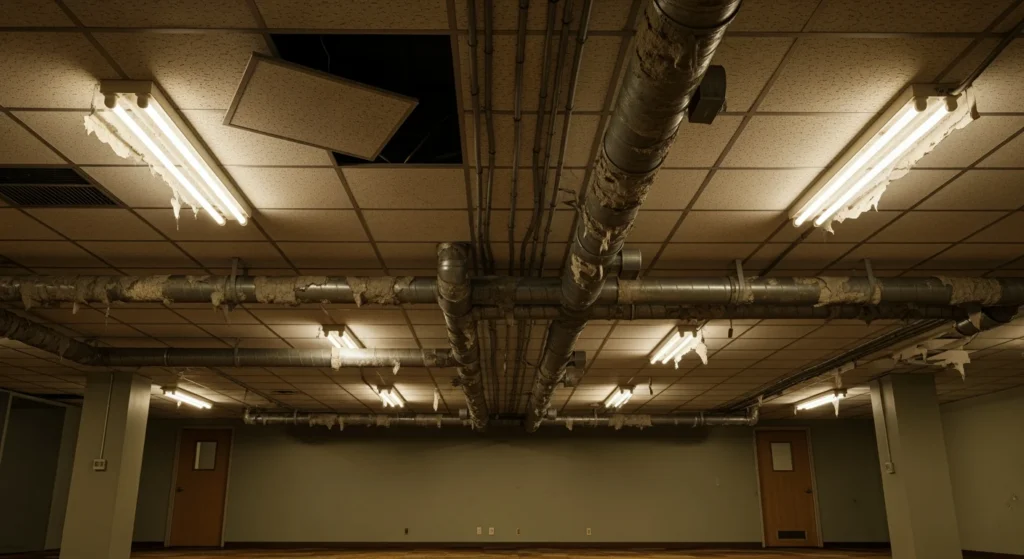
If your office building on Long Island was built before 1985, it almost certainly contains asbestos-containing materials (ACMs) somewhere in its construction. The commercial building boom across Nassau and Suffolk Counties from the 1950s through the early 1980s coincided with peak asbestos use in American construction — and those materials remain in thousands of Long Island office buildings today.
Where Asbestos Hides in Long Island Office Buildings
Asbestos was valued as a fireproofing, insulation, and binding agent throughout commercial construction. In Long Island office buildings, it appears in predictable locations:
Mechanical rooms and boiler areas. Pipe insulation wrapping hot water, steam, and HVAC lines is the most common source of friable asbestos in commercial buildings. These rooms are particularly concerning because maintenance workers access them regularly, and insulation deteriorates over time.
Above drop ceilings. The space between drop ceilings and structural decks in Long Island office buildings often conceals asbestos pipe insulation, spray-applied fireproofing on steel beams, and original ceiling tile adhesive. This hidden asbestos becomes a concern during any above-ceiling work — IT cable installation, HVAC modification, or lighting upgrades.
Floor tiles and mastic. The 9×9-inch vinyl asbestos floor tile is ubiquitous in Long Island commercial buildings from this era. The black mastic adhesive beneath these tiles frequently contains asbestos as well. Many buildings have simply installed new flooring over original VAT rather than removing it.
Spray-applied fireproofing. Structural steel in office buildings often received spray-applied asbestos fireproofing during construction. This friable material is the highest-risk ACM in commercial settings because it releases fibers when disturbed, damaged by water leaks, or degraded by age.
Ceiling tiles and acoustic materials. Older acoustic ceiling tiles manufactured before 1981 may contain chrysotile asbestos. These tiles are present in virtually every office building on Long Island from this construction period.
Window caulking and glazing compounds. Exterior window systems in commercial buildings frequently used asbestos-containing caulk and glazing — a material often overlooked during building surveys focused on interior materials.
Testing for Asbestos in Your Office Building
Testing requires a NYS DOH-certified asbestos inspector to collect bulk samples and submit them to a NVLAP-accredited laboratory. Building owners should understand the process:
Identify suspect materials. Any building material installed before 1981 should be treated as potentially asbestos-containing unless tested. Materials from 1981-1990 may also contain asbestos, as the phase-out was gradual.
Do not collect samples yourself. Improper sampling can release asbestos fibers and violates New York State regulations. Only certified inspectors should collect bulk samples from suspect materials.
Expect comprehensive results. The survey report will identify each material tested, provide lab results showing asbestos type and percentage (material is considered ACM if it contains greater than 1% asbestos by weight), and map locations on building drawings.
Managing Asbestos in Place vs. Removing It
Not all asbestos requires immediate removal. Building owners on Long Island have options based on material condition and building plans:
Asbestos management plan (operations and maintenance). When ACMs are intact, in good condition, and unlikely to be disturbed, building owners can implement a management plan that includes regular inspections, maintenance worker awareness training, labeling, and repair protocols for minor damage. This approach is common for pipe insulation in mechanical spaces and floor tiles beneath newer flooring.
Encapsulation. Applying a sealant over intact ACMs prevents fiber release. This is a lower-cost alternative to removal for materials like pipe insulation and ceiling surfaces, though it requires ongoing monitoring and limits future renovation flexibility.
Licensed abatement (removal). Required when ACMs are damaged, deteriorating, or will be disturbed by planned renovation. All commercial abatement in New York must be performed by a NYS DOL-licensed asbestos abatement contractor with proper notification and third-party air monitoring.
Building Owner and Tenant Responsibilities
Long Island building owners have a legal duty to manage known asbestos safely. This includes informing tenants about known or presumed ACMs, providing asbestos awareness information to maintenance and custodial staff per OSHA 29 CFR 1926.1101, and ensuring any building work that could disturb ACMs follows proper procedures. Tenants should request documentation of asbestos surveys and management plans from their landlord, particularly before undertaking tenant improvement projects.
How Upper Restoration Helps Long Island Office Building Owners
Upper Restoration provides licensed commercial asbestos services across Long Island, from initial survey coordination through full abatement and clearance. Whether you need a management plan for asbestos you intend to leave in place or complete removal before an office renovation, our team handles the entire process in compliance with NYS DOL and OSHA requirements throughout Nassau and Suffolk Counties.