When a Long Island mold assessor’s laboratory report returns from the testing facility, it lists mold species by genus and species along with spore counts. For homeowners receiving these reports for the first time, the scientific nomenclature is unfamiliar. In practice, three mold genera — Cladosporium, Penicillium, and Aspergillus — account for the vast majority of residential mold findings in Long Island homes. Understanding what each genus indicates about the moisture conditions in your home is more actionable than the species names alone.
Cladosporium: The Universal Long Island Attic Mold
Cladosporium is the most commonly found mold in Long Island residential settings and arguably the most predictable. It is the dark olive-green to black mold that colonizes roof sheathing and rafter surfaces in inadequately ventilated Cape Cod attics throughout Nassau County. Cladosporium is a relatively xerophilic (dry-tolerant) mold — it can initiate growth at lower moisture levels than Stachybotrys or Penicillium, which is why it is the first mold to colonize surfaces in the high-but-not-saturated humidity conditions of a Long Island attic in summer. Its presence on roof sheathing at significant surface coverage indicates a chronic humidity condition, not a one-time moisture event. Elevated Cladosporium spore counts in air samples from any room in the house suggest an attic source, since Cladosporium spores settle from the attic into living space through ceiling penetrations and recessed lights.
Penicillium/Aspergillus: The Basement and Wall Cavity Group
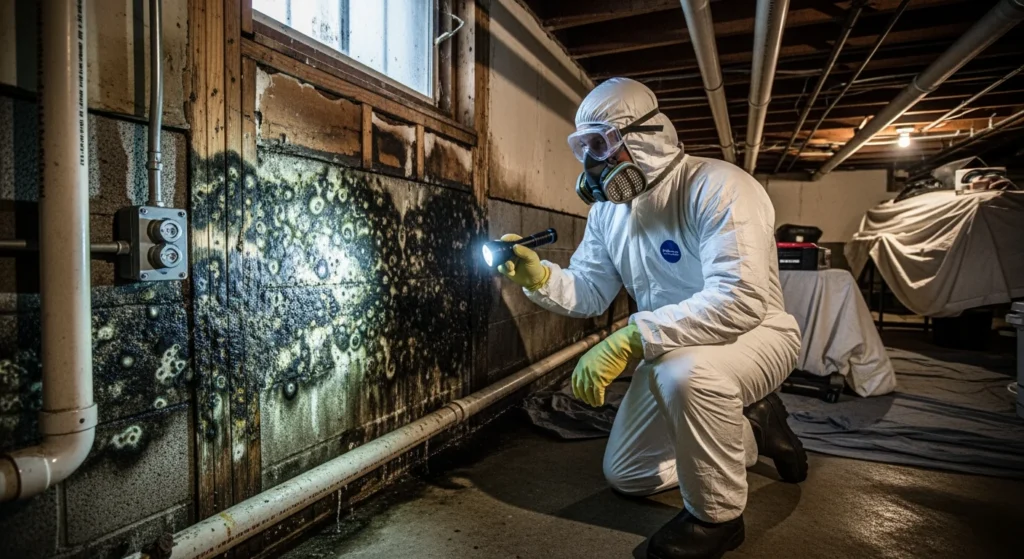
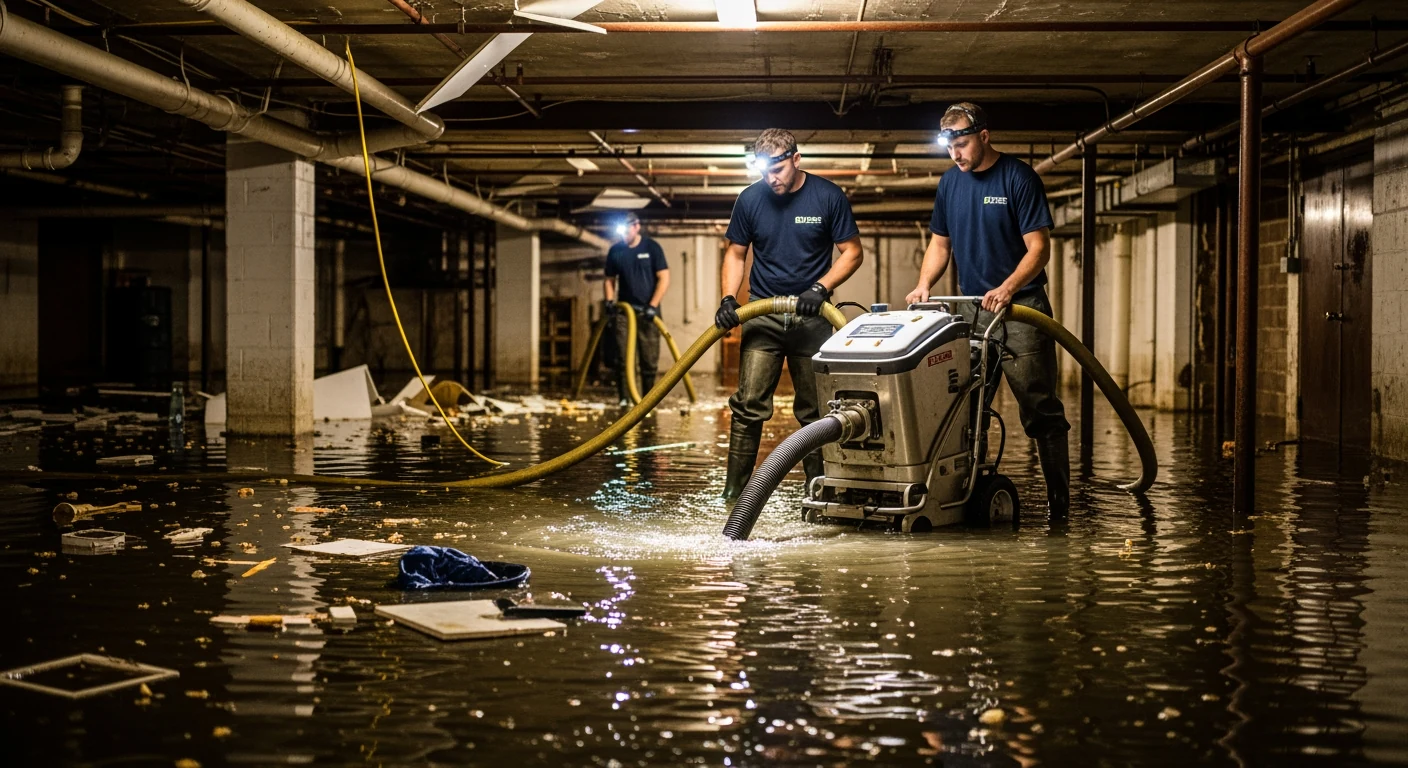
Penicillium and Aspergillus species are reported together in standard laboratory analysis because spore morphology makes genus-level identification reliable but species-level identification requires additional culturing that is not part of standard residential sampling. This Pen/Asp group is the dominant finding in Long Island below-grade assemblies — split-level family room wall cavities, finished basement walls with insulation against block, and in the fibrous insulation backing itself. Pen/Asp species thrive at higher moisture levels than Cladosporium and indicate either sustained condensation (the below-grade assembly pattern) or direct water contact from pipe failure or flooding. Elevated Pen/Asp in air samples from below-grade living spaces almost always indicates an active moisture source in the wall assembly — not just ambient summer humidity.
When Laboratory Identification Matters Most
Species identification at the genus level — Cladosporium versus Pen/Asp versus Stachybotrys — changes the moisture source interpretation and potentially the remediation approach, but does not change the fundamental requirement that mold of 10 square feet or more requires Article 32 remediation. Species identification becomes most important in property transactions (where disclosed species affects buyer response), in insurance claims (where species documentation supports the remediation scope), and in health-sensitive situations where the assessor and the occupant’s physician should coordinate on exposure risk communication.