NYS Article 32 creates a structural separation between mold assessment and mold remediation: the same individual or company cannot perform both functions on the same project. This separation exists specifically to ensure that post-remediation clearance is performed by an independent party with no financial interest in the clearance outcome. Understanding what clearance testing actually involves — what samples are collected, what the passing standards are, and what a failed clearance means for the project — helps Long Island homeowners verify that their Article 32 project is being executed with genuine independence.
Who Performs Clearance Testing
Clearance testing must be performed by a licensed NYS DOL Mold Assessor — the same license type that wrote the initial work plan. The assessor who conducted the initial assessment and wrote the remediation work plan is the natural choice to perform clearance, because they know the original conditions and can confirm that the remediation scope fully addressed the documented contamination. Upper Restoration maintains strict Article 32 separation on every Long Island mold project: our assessment function operates independently from our remediation function.
What Clearance Testing Involves
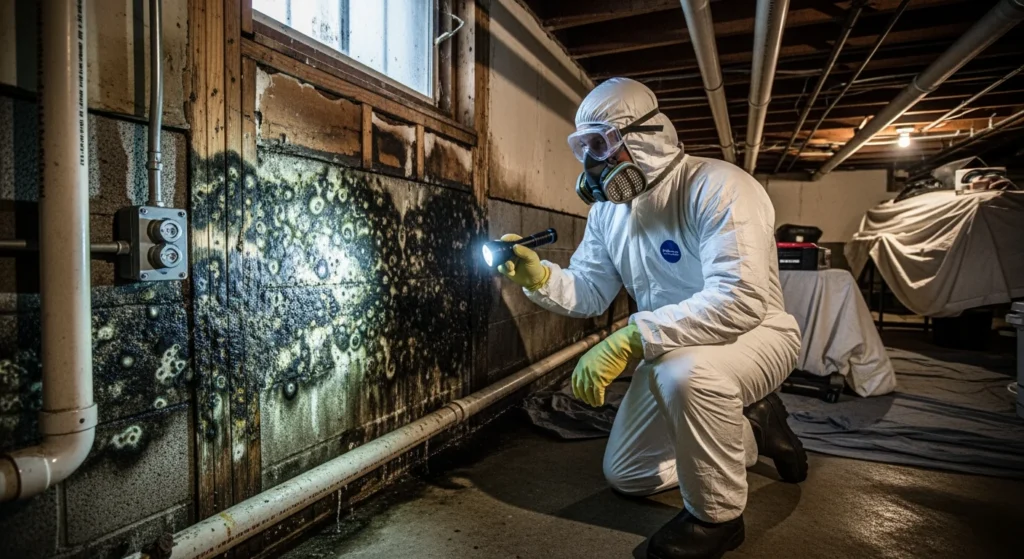
Post-remediation verification typically includes visual inspection and air sampling, with bulk or tape-lift samples collected from specific surfaces if visual concerns are identified during inspection. Air sampling uses a calibrated spore trap or viable culture cassette to collect a defined volume of air from within the remediation containment zone and from an outdoor reference location. The indoor sample is compared to the outdoor reference — passing clearance requires that the indoor spore concentration is not significantly elevated above outdoor levels for the species that were remediated, and that no grossly elevated concentrations of any species are present.
What Failing Clearance Means
A failed clearance test — elevated spore counts inside the containment relative to outdoor reference — means the remediation was incomplete. The remediator must re-enter the containment, identify the source of continued spore release, perform additional remediation, and request a new clearance test. The remediator bears the cost of the failed clearance test and all additional remediation required to achieve passing clearance. This is why Article 32’s structural separation matters: a remediator who performs their own clearance has a direct financial incentive to declare clearance achieved regardless of the actual sample results.
Clearance Documentation for Long Island Property Transactions
Passing clearance documentation from a licensed NYS Article 32 assessor is the standard disclosure document for Long Island property transactions involving disclosed mold history. Real estate attorneys in Nassau and Suffolk counties routinely require Article 32 clearance certificates in transactions where mold disclosure has been made. Upper Restoration provides complete clearance documentation — assessor license number, sample chain of custody, laboratory report, and assessor clearance letter — formatted for real estate transaction use.