Ice dams are a direct product of the Long Island Cape Cod’s original design — and that design is everywhere. The original Levittown Cape Cod and its thousands of variations built throughout Nassau County and western Suffolk between 1947 and 1975 share a roof profile that is essentially an ice dam factory: steep pitch, low eaves, minimal soffit ventilation, and an attic space heated by conduction from the living area below. When snow accumulates on this roof and the attic is warm enough to melt the lower layers, the meltwater runs down to the cold eaves and refreezes, building the ice dam that forces subsequent meltwater back under the shingles.
The Physics of Ice Dam Formation
Heat loss through the roof deck warms the snow on the roof surface above the heated living area. The snow melts from the bottom, and the meltwater flows toward the eaves. At the eaves, the roof deck is cold because it is not directly above heated space — the eave overhangs beyond the insulated exterior wall. The meltwater freezes at the cold eave, beginning the dam. As the dam builds, subsequent meltwater has nowhere to go and backs up under the shingles, which are designed to shed water flowing downhill but not to block water flowing uphill under hydrostatic pressure from behind the dam.
What Ice Dam Water Damage Looks Like
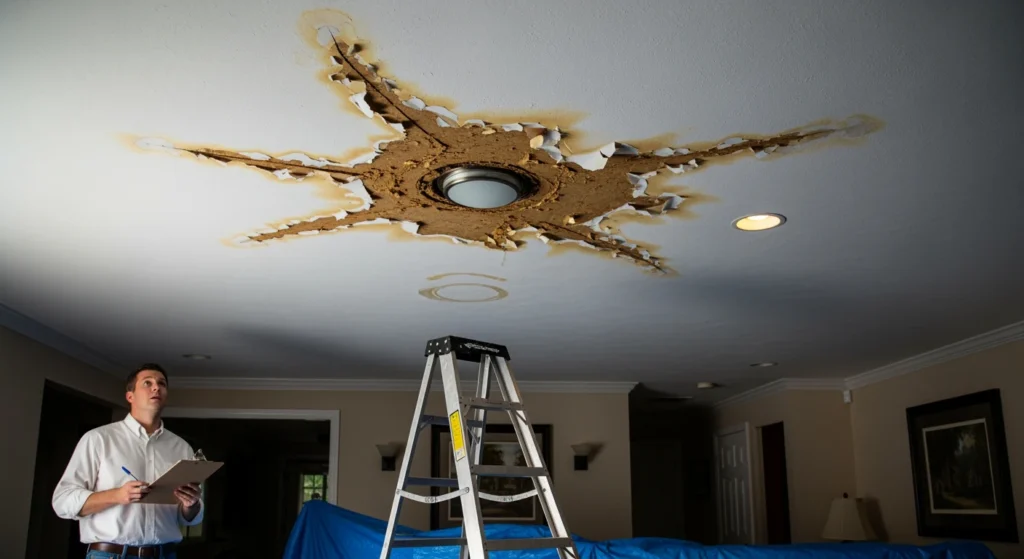
The first visible sign is usually ceiling staining or paint bubbling in the rooms directly below the eaves — the water has penetrated under shingles, through the roof deck, through any insulation, and into the ceiling assembly. In original Cape Cods with board-and-batten decking rather than plywood, the water travels between boards and can appear at multiple ceiling locations simultaneously. By the time the staining is visible, the water has typically been infiltrating for days — ceiling assemblies, insulation, and in some cases wall assemblies are wet throughout their depth.
Prevention
The permanent solution to ice dam formation is improving attic insulation and ventilation to keep the roof deck uniformly cold — eliminating the temperature differential that drives melting. This means air-sealing all penetrations from living space into the attic (electrical boxes, HVAC runs, plumbing vents), increasing insulation depth to current code standards at the attic floor, and ensuring continuous soffit-to-ridge ventilation. In an original 1950s Levittown Cape Cod, this involves corrections that were simply not part of the original design.
Emergency Response to Active Ice Dam Water Damage
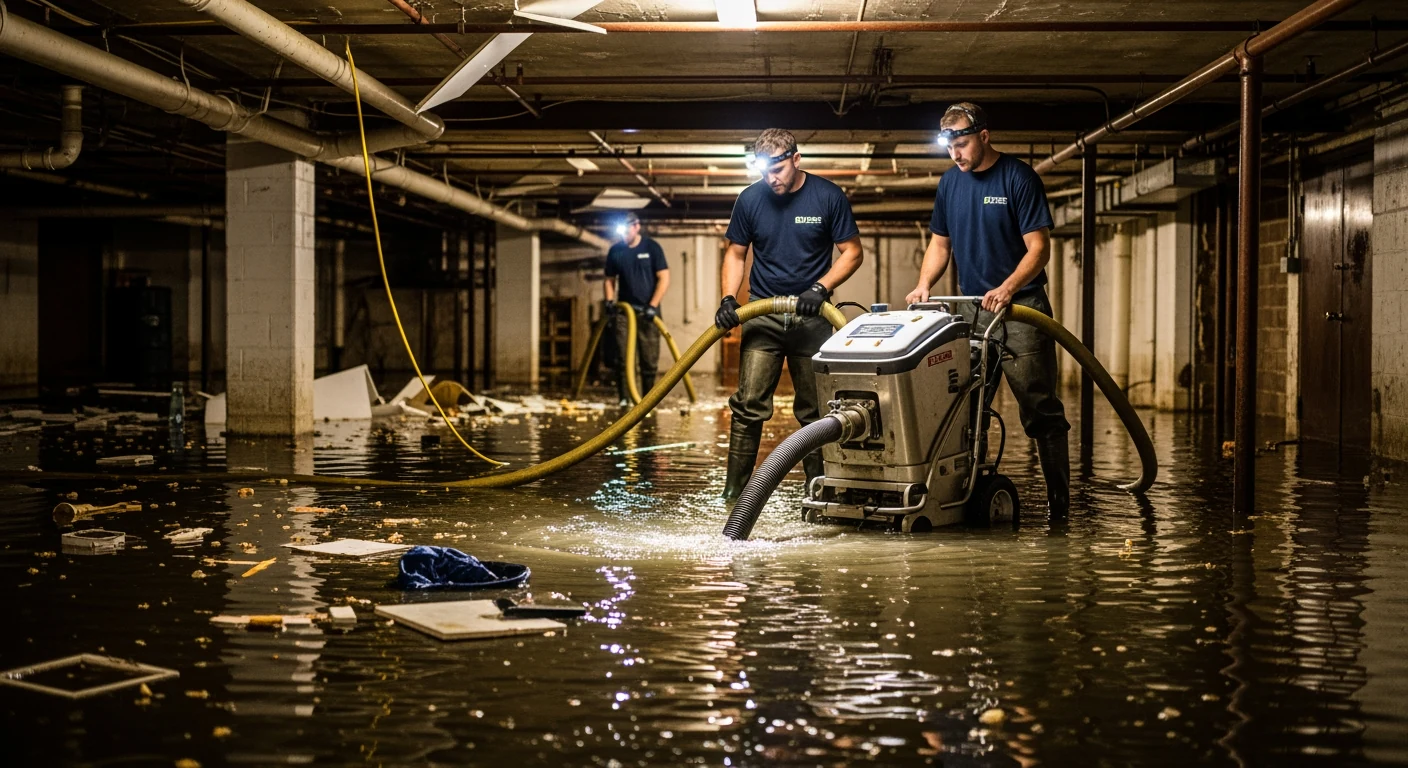
When water is actively infiltrating from an ice dam, the priority is stopping the source and beginning extraction. Upper Restoration’s winter emergency response includes roof ice removal with calcium chloride applications (not ice picks or chipping, which damages shingles and creates new leak paths) followed by interior extraction and drying. The water involved is Category 1 — clean rainwater — so drying-in-place may be possible if the response is rapid enough.