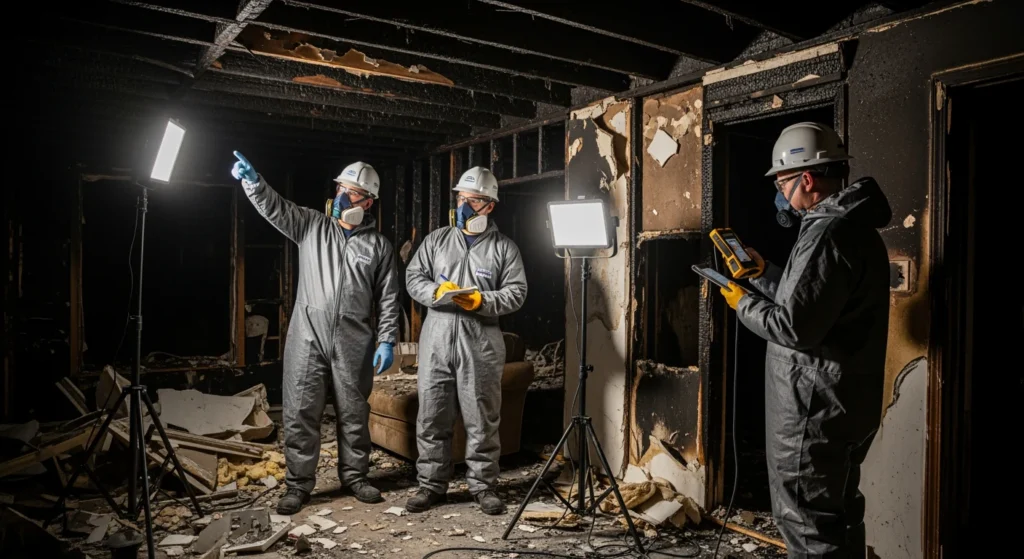
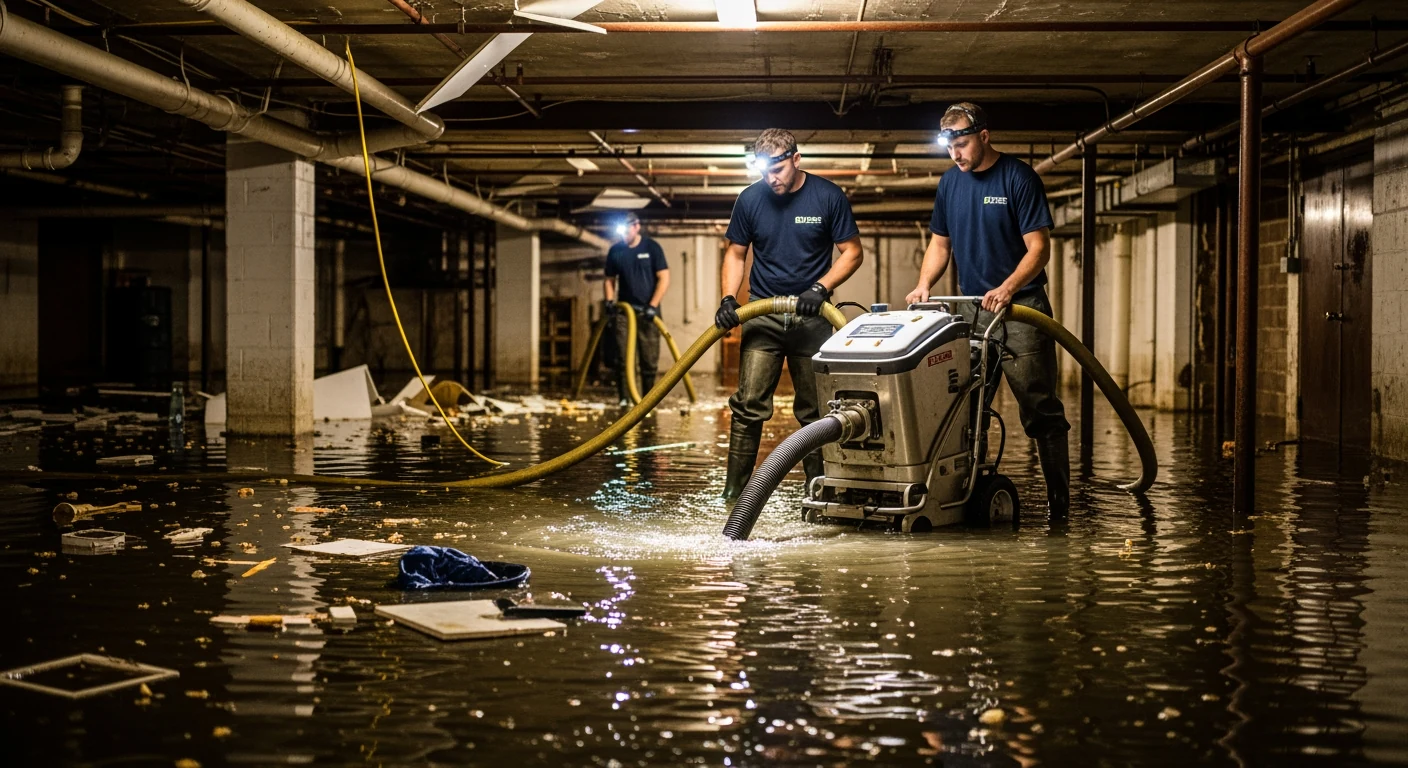
Babylon’s fire restoration profile is anchored by the township’s density and its aging housing stock — the same post-war Cape Cods and split-levels that define its water damage risk also shape its fire risk. The puffback pattern from aging oil heat is active throughout Lindenhurst, West Babylon, and Amityville, where original 1950s–1970s oil burners are in wide use. The township’s south shore density creates the same fire spread risk as Nassau’s most compact communities. And Babylon occupies a unique place in Long Island fire history: during Sandy, two homes burned while simultaneously submerged — one in West Babylon, one in Lindenhurst — demonstrating that Babylon’s south shore communities face compound disaster scenarios where fire and flood converge. For the county-level framework, see the Long Island Fire & Smoke Damage Restoration Master Guide.
The Sandy Fire-Flood Event: A Defining Babylon Scenario
The West Babylon and Lindenhurst fires during Sandy are documented in Wikipedia’s Effects of Hurricane Sandy in New York article: “One home in West Babylon and another in Lindenhurst were burning continuously, and both had to be knocked down with payloaders.” Fire apparatus could not reach the burning structures because the surrounding streets were impassable with storm surge water. The fires burned until the structures were destroyed. This compound scenario — electrical fire igniting in a structure whose ground floor is submerged, with no fire suppression possible — illustrates the practical challenge of fire restoration in Babylon’s south shore flood zone communities: post-fire assessment and restoration must account for simultaneous water and fire damage in structures that may still be in FEMA flood zone Substantial Damage territory.
Puffback in Babylon’s South Shore Oil-Heat Stock
Lindenhurst, Amityville, and Copiague’s south shore communities have high concentrations of original oil-fired heating systems from the 1950s and 1960s. Puffback events in these communities follow the same pattern as Nassau County’s older suburbs — fall heating season startup, oily soot distributed through ductwork — with the added consideration that Babylon’s south shore homes are frequently in flood zones. Puffback cleanup in a flood zone property requires the same Substantial Damage tracking as any other restoration scope: if the puffback-triggered restoration work, combined with previous Sandy-era repairs, pushes cumulative repairs above 50 percent of market value, flood zone compliance requirements may be triggered.
Deer Park and North Babylon: Interior Fire Profile
The interior communities of Deer Park and North Babylon carry a standard interior Suffolk fire profile: puffback from oil heat, kitchen fires in aging construction, and occasional electrical fires in 1960s–1980s panel boxes. The pre-1980 asbestos protocol applies to all demolition work in Deer Park and North Babylon’s older stock — joint compound asbestos is the most common trigger in the township’s 1960s–1970s drywall construction.
Cost Benchmarks
- South shore puffback (Lindenhurst, Amityville south shore Cape Cod): $6,000–$15,000 for whole-house oily soot cleanup with HVAC duct cleaning and deodorization.
- Compound fire-flood loss (south shore flood zone): $35,000–$100,000+ for fire restoration combined with Category 3 water damage remediation in a structure that experienced simultaneous fire and storm surge flooding.
- Interior Babylon structural fire with pre-1980 asbestos: $18,000–$65,000 including asbestos abatement and full restoration scope.