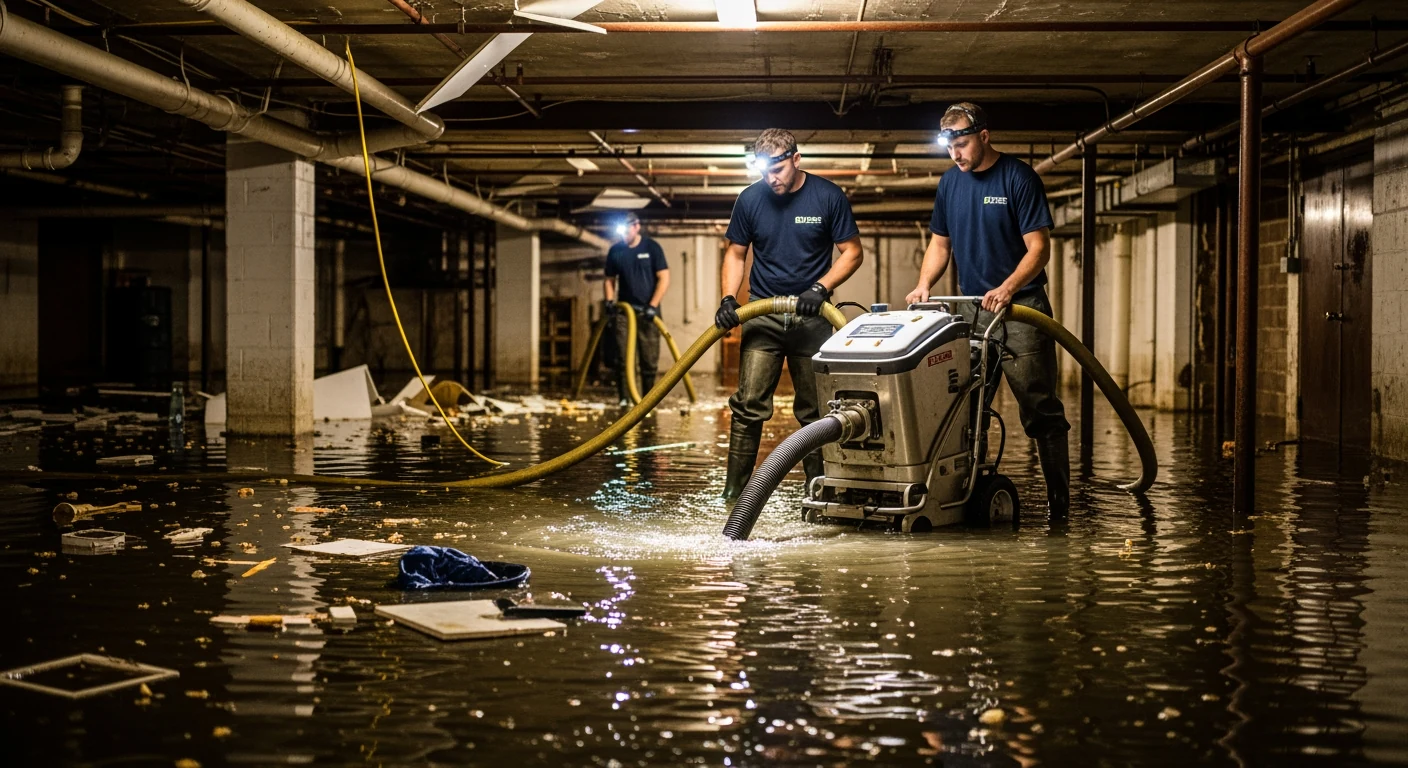
The Town of Babylon’s mold remediation demand is concentrated on its south shore, where the recurring flood pattern the town’s own DPW acknowledges — low-level marsh land at one to two feet above sea level, drainage systems that backflow during any significant rain event — creates the conditions for mold establishment and reestablishment season after season. Sandy produced the defining mold event for Babylon’s south shore in 2012, but the subsequent storm events in 2016, 2018, 2021, and 2024 have each contributed new moisture to assemblies that may never have fully dried to below mold-initiation thresholds. For the regulatory framework, see the Long Island Mold Remediation Master Guide.
The Recurring Flood Mold Cycle in Lindenhurst and West Babylon
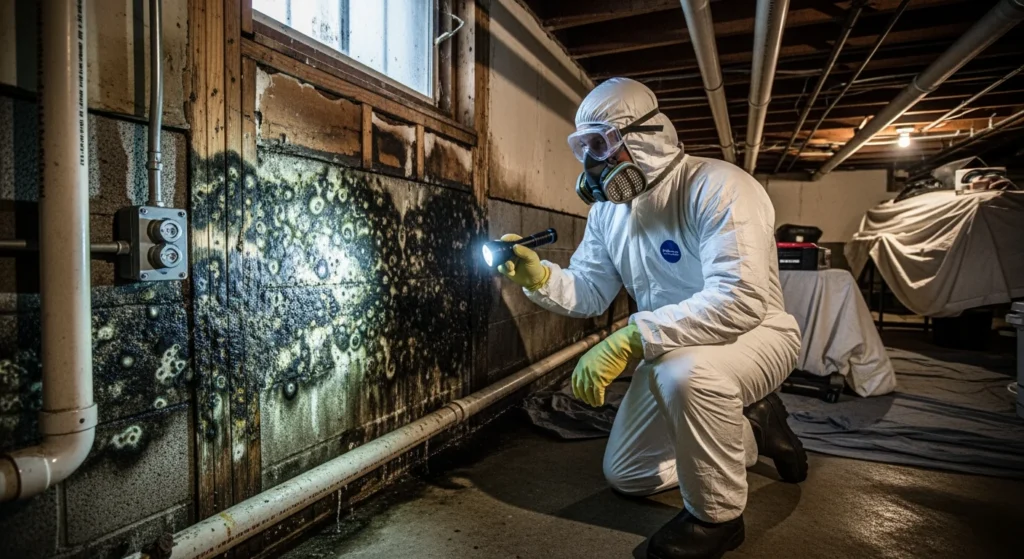
Lindenhurst’s canal community — the Venetian Boulevard and bay-side neighborhoods that experienced some of Suffolk County’s most severe Sandy flooding — represents the archetype of Babylon’s recurring flood mold problem. Residents describe flooding two to three times per year as a normal condition. Each flooding event wets basement assemblies that were dried after the previous event, but never fully remediated. Over multiple flood cycles, mold colonizes progressively deeper into structural assemblies — moving from paper-faced drywall surfaces (the first substrate to mold) into the kraft paper facing on fiberglass batt insulation, into the wood framing behind it, and eventually into the sill plate and floor joist system at the base of the wall. By the time Upper Restoration encounters these assemblies during a comprehensive remediation, the mold scope is not a single event — it is the accumulated result of years of incomplete response.
West Babylon’s interior communities carry a different mold profile: the split-level below-grade family rooms common in the township’s 1960s–1970s housing stock develop mold from chronic foundation wall condensation during summer, not from flooding events. The split-level’s partially below-grade room, with its original fiberglass batts installed against an uninsulated concrete block wall, creates a surface temperature differential that causes condensation on the cold block face throughout the summer humidity season. This assembly is as reliable a mold producer as the south shore flood legacy — just slower and quieter.
Deer Park and North Babylon: Interior Suburban Pattern
Deer Park and North Babylon carry the standard interior Suffolk mold risk: Cape Cod attic mold from inadequate ventilation, basement ambient mold from summer humidity without mechanical dehumidification, and aging plumbing leaks in 1960s–1980s construction that produce hidden wall cavity mold. The mold species are unremarkable — Cladosporium and Penicillium/Aspergillus — but the building stock age means that whenever walls are opened for renovation in these communities, pre-existing mold from previous undetected moisture events is frequently discovered.
Cost Benchmarks
- Lindenhurst south shore recurring flood mold (full basement, multiple-cycle history): $12,000–$35,000 for comprehensive remediation of assemblies with multiple seasons of accumulated mold, including full drywall demolition, structural surface treatment, and HVAC decontamination if the system has distributed mold spores throughout the structure.
- West Babylon split-level below-grade family room (condensation mold): $6,000–$15,000 for mold remediation and assembly correction — replacing the original fiberglass-against-block assembly with a properly detailed exterior-side moisture management system to prevent recurrence.
- Deer Park or North Babylon attic mold: $3,000–$8,000 for standard Cape Cod attic scope.