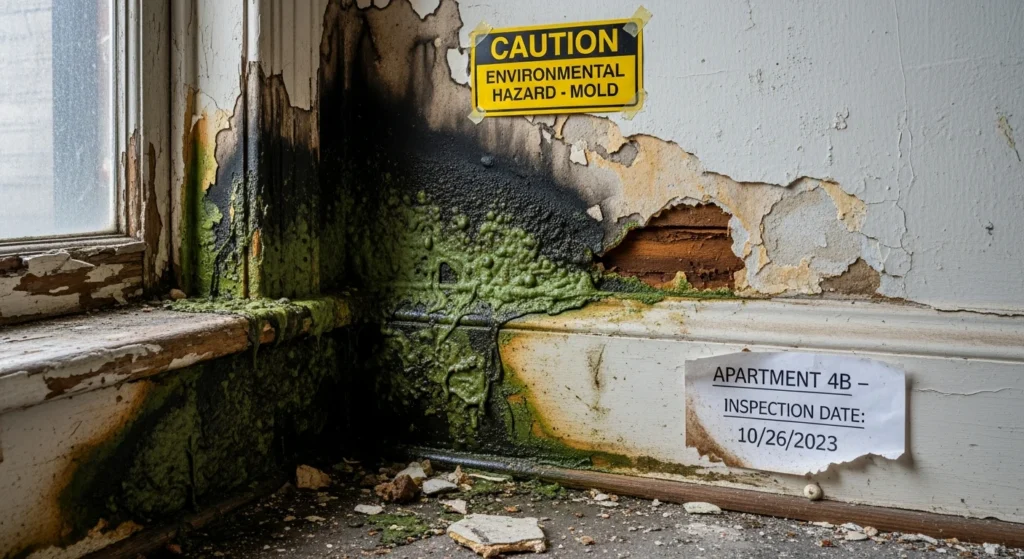
The Town of Hempstead’s mold remediation demand is driven by three converging forces that no other Long Island township replicates at the same scale: the sheer density of post-war Cape Cod construction vulnerable to hidden moisture, the post-Sandy legacy of 74,736 damaged structures many of which were imperfectly dried, and a summer humidity window that provides ideal mold growth conditions for five months every year. Understanding which of these three forces is driving a specific mold event determines the remediation approach, the documentation required, and whether any insurance coverage applies. For the county-level regulatory framework governing all Long Island mold work, see the Long Island Mold Remediation Master Guide.
The Cape Cod Attic Problem: Hempstead’s Most Common Mold Scenario
The original Levittown Cape Cods built between 1947 and 1951 — and the thousands of nearly identical Cape Cods built throughout central and south Nassau in the decade that followed — share a design feature that creates predictable and recurring mold conditions: a steep-pitched roof with low eaves, limited soffit ventilation, and an attic space directly above conditioned living space with no insulated separation. This configuration produces ice dams in winter that drive moisture under shingles, and in summer, a hot, humid attic that never fully dries between rain events. Bathroom exhaust fans in pre-1990 Capes are frequently vented into the attic rather than through the roof — a code violation in current construction that deposits moisture-laden air directly into the attic cavity with each shower.
The result: attic mold in Hempstead’s Cape Cod stock is not an anomaly, it is endemic. Cladosporium and Penicillium/Aspergillus species — the dominant attic mold types — colonize the roof sheathing and rafter surfaces in a pattern that Upper Restoration crews recognize immediately in Levittown, East Meadow, and Franklin Square attics. The remediation is typically dry-ice or soda blasting of the structural surfaces, HEPA vacuuming, antimicrobial sealant application, and a ventilation correction to prevent recurrence. Article 32 clearance documentation is mandatory for all projects of 10 square feet or more.
Post-Sandy Hidden Mold: The South Shore Legacy
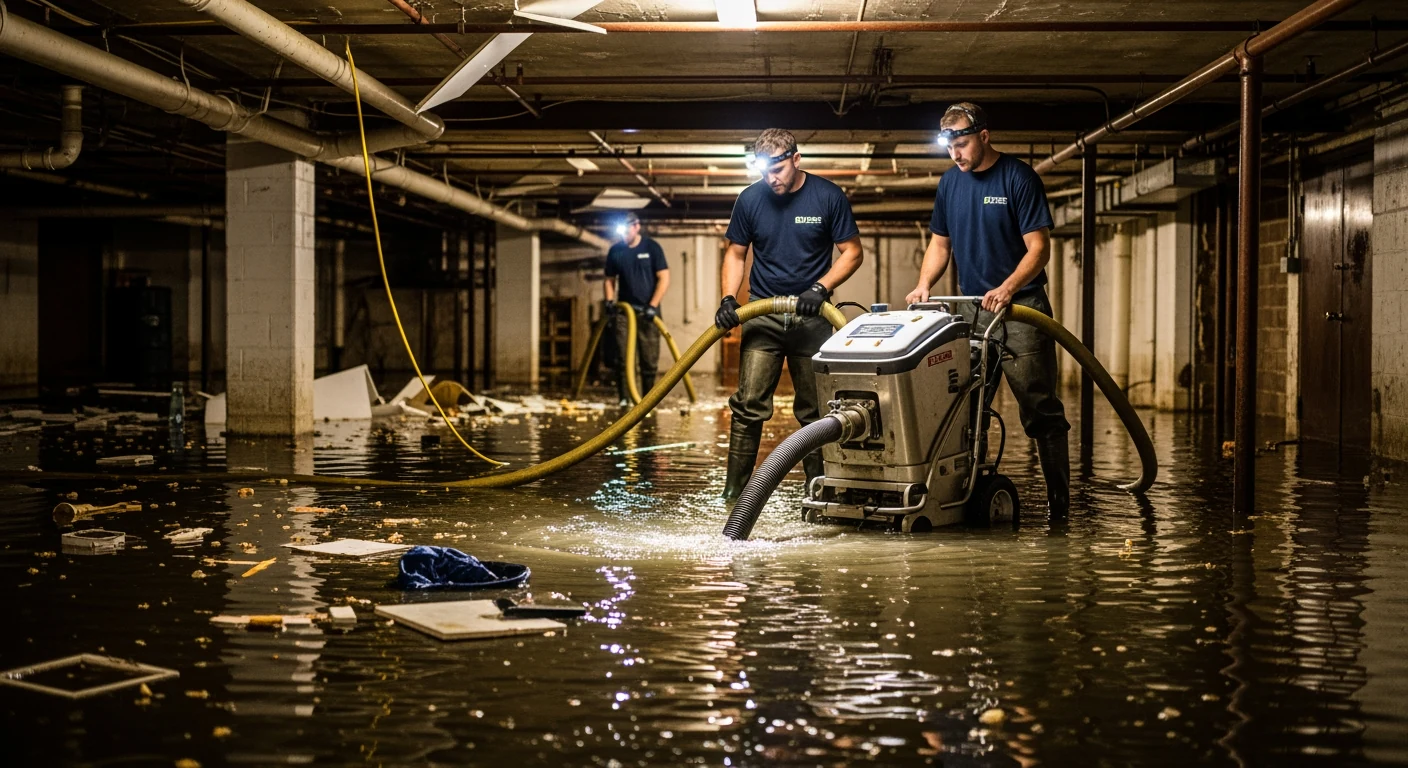
The Town of Hempstead sent letters to 13,000 homeowners in 2018 — six years after Sandy — notifying them that their properties may have sustained damage. Many of those properties were never properly dried or remediated. South shore communities from Long Beach to Wantagh contain homes where original-era 1950s drywall and framing, wetted by Category 3 bay water in October 2012, was surface-cleaned rather than demolished and replaced. In the years since, hidden mold colonies in these wall and floor assemblies have been maturing. Upper Restoration regularly discovers post-Sandy mold during renovation projects that open walls for the first time since 2012 — staining patterns and hyphal growth behind original-era drywall that could only have originated from the Sandy flood event.
This legacy mold creates specific legal and disclosure considerations in Hempstead real estate transactions. Under New York State’s Property Disclosure Statement requirements, sellers must disclose known mold conditions. But mold hidden within wall assemblies that has never been seen is technically unknown — until it is discovered during a renovation. Buyers purchasing south shore Hempstead properties built before 2012 without flood mitigation upgrades should factor potential hidden mold discovery into their renovation planning.
The Humidity Window: Hempstead’s Ambient Mold Season
From June through September, Long Island’s marine climate maintains relative humidity above 70 percent for the majority of each day. In Hempstead’s dense south shore communities, where homes are close together and tree canopies reduce air circulation, ambient humidity in poorly ventilated spaces — unfinished basements, closed crawl spaces, finished basement recreation rooms without mechanical dehumidification — consistently exceeds the 70 percent threshold at which mold colonization initiates on paper-faced drywall and stored organic materials. Homeowners who dehumidify during winter and spring but disconnect equipment in summer when they perceive the risk to be lower are making the opposite of the correct seasonal decision in Hempstead’s climate.
Regulatory Requirements for Hempstead Mold Projects
All mold remediation projects of 10 square feet or more in Hempstead require a licensed NYS DOL mold assessor and a separate licensed mold remediation contractor under Article 32. The assessor writes the work plan; the remediator executes it; the assessor returns for post-remediation clearance. Upper Restoration’s assessor and remediation teams operate independently on every Hempstead project — the legal requirement and the right approach for the homeowner. Nassau County’s EHRP (Environmental Health Rating Program) licensing adds a county-level layer above the state requirement for certain environmental contractors operating in Nassau.
Cost Benchmarks: Mold Remediation in Hempstead
- Cape Cod attic mold (400–800 sq ft, typical Levittown/East Meadow scope): $3,500–$9,000 including dry-ice or soda blasting, HEPA vacuuming, antimicrobial sealant, ventilation correction, and Article 32 assessment and clearance.
- Post-Sandy hidden mold (south shore — wall cavity discovery during renovation): $8,000–$28,000 depending on extent. Hidden mold in Sandy-affected wall assemblies typically requires full drywall demolition in affected bays, structural decontamination, and reconstruction.
- Finished basement ambient mold (humidity-driven, summer discovery): $2,500–$7,000 for surface mold on drywall without structural penetration; $8,000–$20,000 if mold has penetrated behind drywall into framing.
Seasonal Mold Pattern in Hempstead
Attic mold in Hempstead’s Cape Cods is most often discovered in two windows: winter ice dam events that produce visible ceiling staining, and spring home sale inspections when buyers’ inspectors access attic spaces. Summer is when finished basement ambient mold appears as visible colonies and odor, and when the post-Sandy south shore mold that was present but dormant during cooler months becomes actively sporulating. Fall renovation season — October through November — is when wall cavity mold is discovered as homeowners open walls for updates, and when the attic inspection season restarts as the first cold weather approaches.