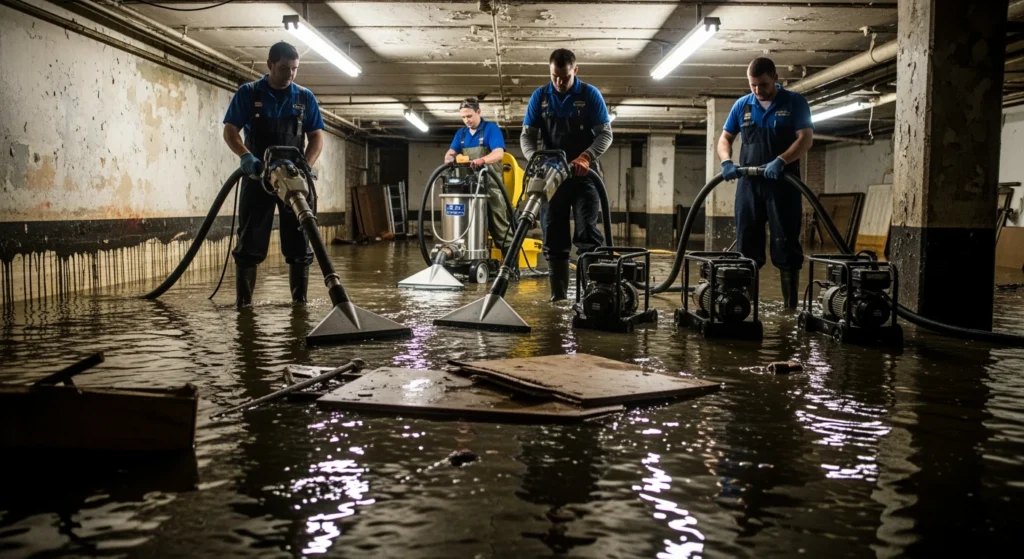
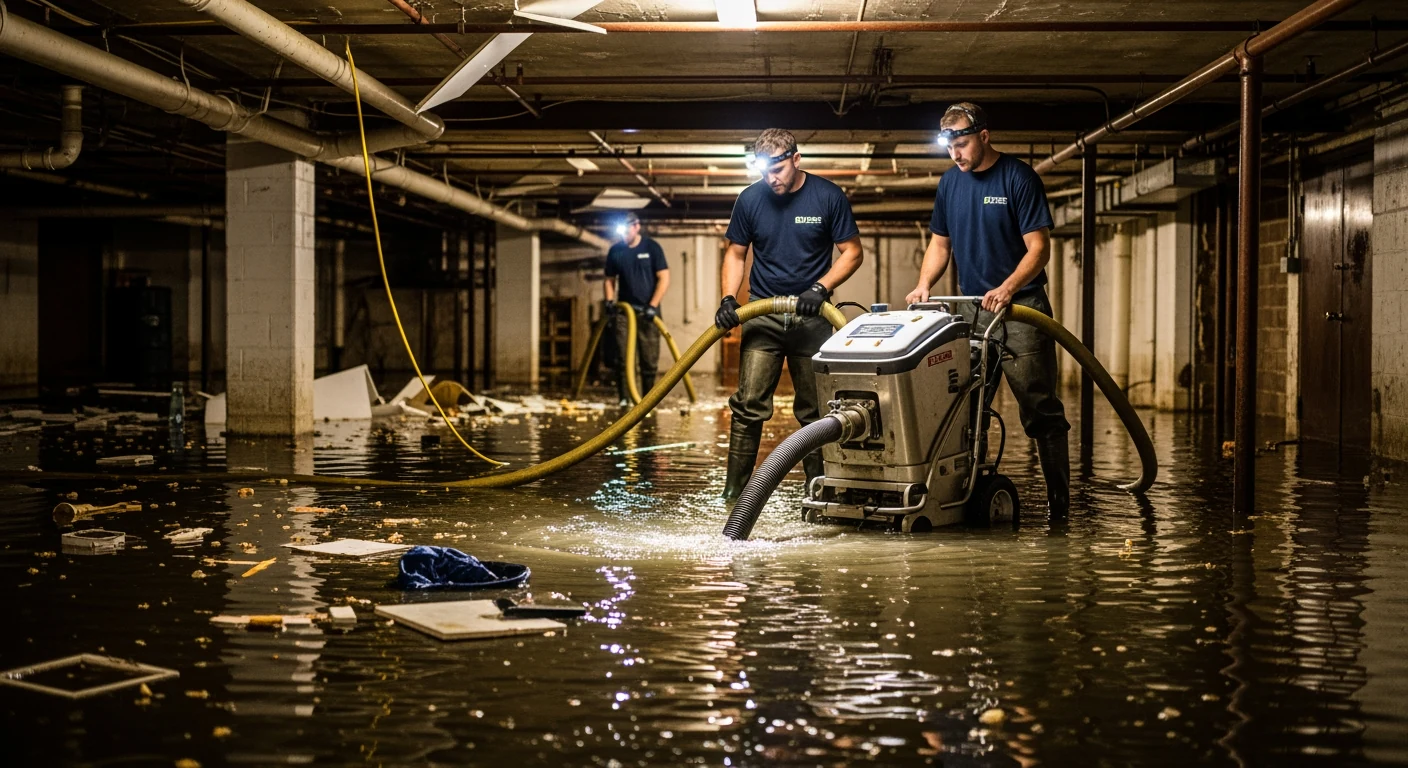
Shelter Island occupies a unique position in the Long Island water damage landscape — not just geographically, but operationally. The island sits entirely within the Peconic Bay system, surrounded on all sides by Gardiner’s Bay to the east, Shelter Island Sound to the north and south, and the west-side passage separating it from North Haven and the North Fork. There is no bridge to Shelter Island. Every person, every vehicle, every contractor, and every piece of restoration equipment must cross by ferry — the North Ferry from Greenport or the South Ferry from North Haven. During and immediately after significant storm events, ferry service may be suspended. The first 24 to 48 hours after a storm — the most critical window for water damage mitigation — may be unavailable to restoration contractors depending on sea conditions. This logistical reality is the defining characteristic of water damage restoration on Shelter Island. For the county-level context, see the Long Island Water Damage Restoration Master Guide.
Building Stock Profile
Shelter Island’s permanent population of approximately 2,400 lives year-round on an island that swells significantly with seasonal residents in summer. The island’s housing stock includes historic structures dating to the 17th and 18th centuries in Shelter Island Heights and the older village areas, 19th and early 20th-century summer cottages throughout the island, and more recent seasonal residential construction. The island has no significant post-war suburban development on the scale of Nassau County or western Suffolk — the ferry barrier prevented the mass residential development that filled the rest of Long Island between 1945 and 1980. The result is a housing stock that skews older, more historic, and more architecturally significant than comparable-size Long Island communities — with the full range of pre-modern building material and structural considerations that older construction implies.
Environmental Risk: 360-Degree Peconic Exposure
Shelter Island’s complete encirclement by Peconic Bay waters means it has no sheltered side in a major storm event. Sandy’s storm surge reached 7 to 9 feet around Peconic Bay — these elevations affected Shelter Island’s shores on all sides simultaneously. The island’s elevation profile — with significant high points in the Mashomack Preserve and the Hills area but low-lying shoreline communities throughout — means that storm surge reaches the lowest-elevation island properties regardless of storm approach direction. Dering Harbor, the island’s main village, sits in a protected harbor that reduces wind exposure but does not eliminate surge from the bay system.
Regulatory Context
Town of Shelter Island Building Department, 38 North Ferry Road, Shelter Island, NY 11964; (631) 749-0070. Shelter Island is a coterminous town-village. The Incorporated Village of Dering Harbor has its own building permit structure. Flood zone permits follow FEMA Substantial Damage rules. The Mashomack Preserve (owned by The Nature Conservancy) covers approximately one-third of the island and has no residential structures but influences the island’s overall drainage and ecological character. The Shelter Island Historical Society maintains records relevant to historic preservation considerations for the island’s older structures.
Cost Benchmarks and the Ferry Premium
- Ferry logistics add-on: Every Shelter Island project carries a mobilization premium reflecting ferry scheduling, vessel capacity for equipment, and potential weather-related delays. Typically $500–$2,000 per mobilization depending on equipment requirements.
- Storm surge flooding (bay-front, any shore direction): $18,000–$50,000 for Category 2 estuarine surge scope, plus ferry logistics add-on.
- Historic cottage or village structure — pipe failure: $12,000–$40,000 for restoration in older construction with ferry mobilization premium.
- Seasonal vacancy — undiscovered water event: $20,000–$80,000+ — Shelter Island has significant seasonal vacancy periods with ferry-delayed discovery and response.