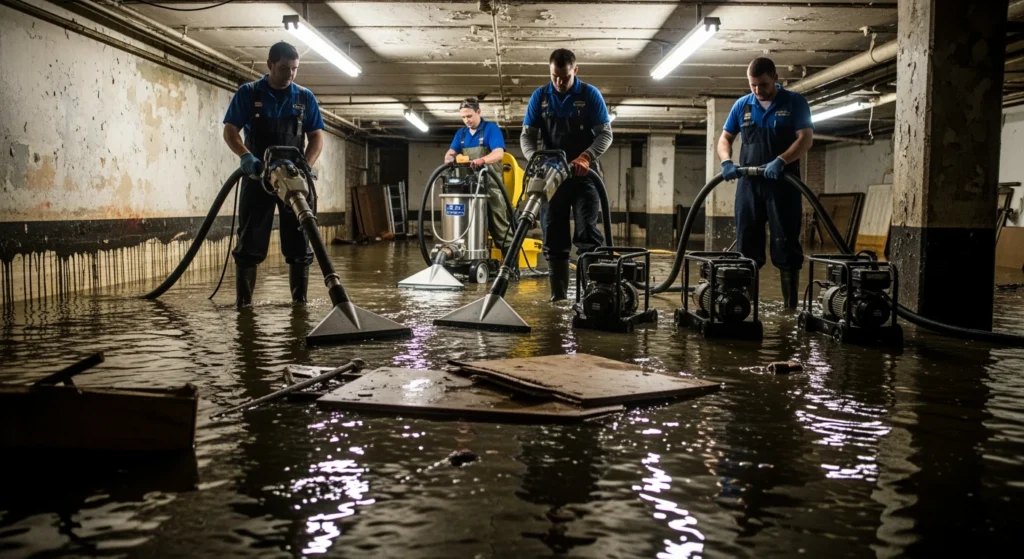
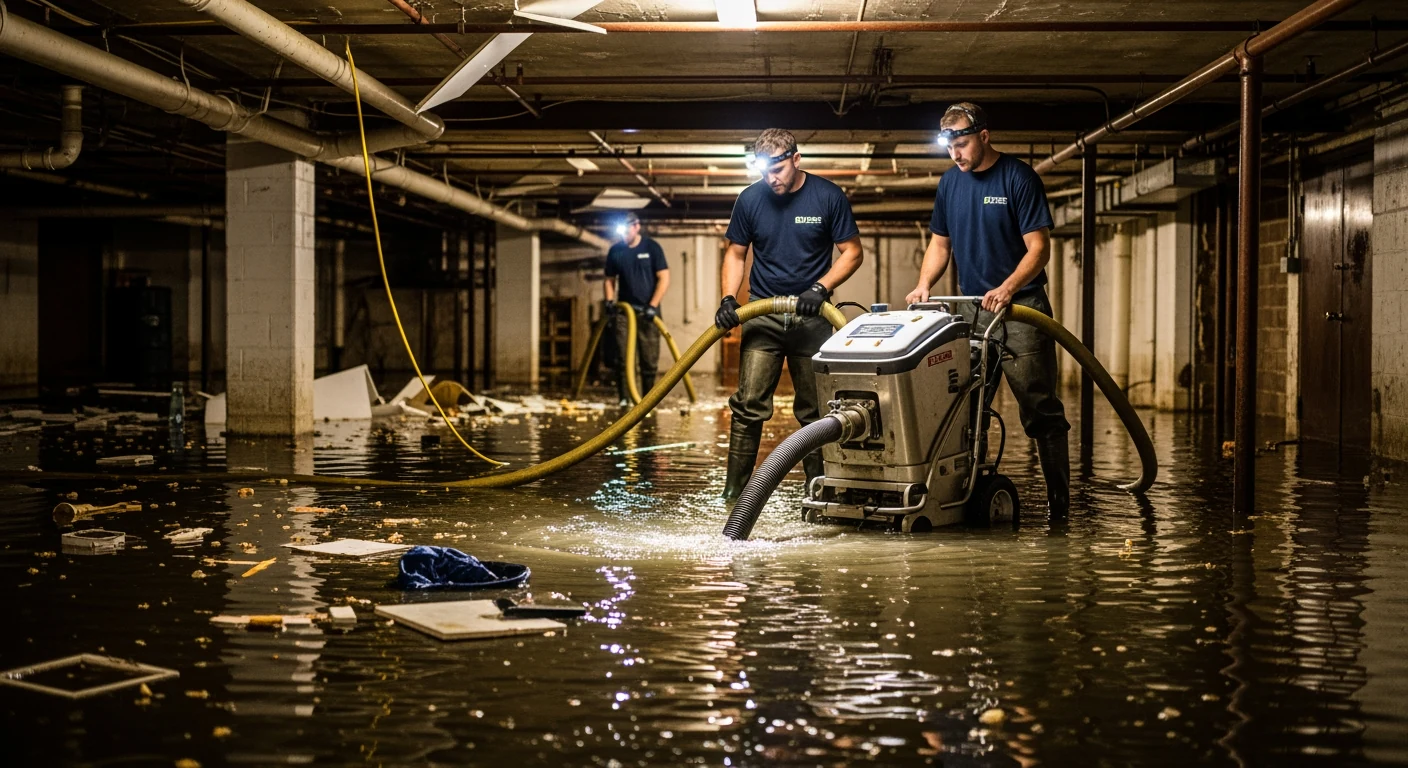
Water damage restoration on Long Island is not the same as water damage restoration anywhere else. The island’s physical geography — a 118-mile barrier between Long Island Sound and the Atlantic Ocean, with a south shore built almost entirely on barrier beach, bay bottom fill, and glacial outwash — creates flood risk conditions that exist nowhere else in New York State. The post-war building stock concentrated between 1945 and 1975 means the majority of Nassau County homes and a large share of western Suffolk homes are 50 to 80 years old, with original plumbing, knob-and-tube wiring in some cases, and building materials that carry their own remediation requirements when water intrudes. Understanding these conditions is the starting point for every serious water damage restoration project on Long Island.
This guide is a structured reference document covering the environmental risk profile, building stock characteristics, regulatory framework, cost benchmarks, insurance landscape, and seasonal risk patterns for water damage across all 13 Long Island townships in Nassau and Suffolk Counties. It is the hub document for Upper Restoration’s Long Island township data files — every township-specific water damage article links back here, and this guide links forward to each of them.
Long Island’s Water Damage Risk Profile: What Makes This Island Different
Long Island sits at the confluence of three distinct flood risk systems: Atlantic coastal surge from the south, Long Island Sound tidal influence from the north, and an interior groundwater system so shallow that basements in much of Nassau County and western Suffolk County effectively sit at or near the water table. These three systems interact during storm events in ways that amplify damage beyond what any single risk factor would predict in isolation.
The FEMA data makes the coastal exposure concrete. According to Suffolk County’s Office of Emergency Management, approximately 220,000 people — roughly 15 percent of Long Island’s 1.5 million residents — live in areas that would flood in a Category 4 hurricane scenario. The south shore from Far Rockaway to Montauk, including the barrier islands and the low-lying communities immediately north of them, sits almost entirely within FEMA Zone AE (high-risk, base flood elevation required) or Zone VE (coastal high-hazard with wave action). The communities that bore the worst of Hurricane Sandy’s impact — Long Beach, Island Park, Lindenhurst, West Babylon, Freeport, Massapequa, and the Fire Island communities — are all Zone AE or VE properties where flood insurance is mandatory for federally backed mortgages.
The north shore faces different but real risk: the Long Island Sound shore of northern Nassau County experienced major coastal flooding during Sandy, with the peak water level at the Kings Point monitoring station exceeding the FEMA 10-year stillwater elevation. Communities in Oyster Bay and North Hempstead townships with waterfront or near-waterfront exposure face repeated nor’easter flooding even in years without major hurricanes.
Hurricane Sandy: The Benchmark Event
Sandy remains the baseline against which all Long Island flood risk is measured. The storm damaged or destroyed 95,534 buildings across Nassau and Suffolk Counties, according to FEMA statistics compiled in January 2013 and reported by Newsday. Nassau County bore the disproportionate share: 74,736 structures in Nassau versus 20,798 in Suffolk were flooded, damaged, or destroyed. The Long Beach city of Long Beach alone sustained $150 million in damage. In the western Nassau south shore communities — the areas that sit to the immediate right of Sandy’s landfall point in New Jersey — the storm arrived as a 300-year event, not the 100-year event that FEMA’s pre-Sandy flood maps modeled.
The federal reconstruction response was substantial: over 4,650 Nassau residents received checks totaling more than $201 million for home reconstruction through the New York Rising program. More than 1,350 Suffolk residents received over $65 million. The state also made buyout offers exceeding $293 million to 709 homeowners whose properties were deemed too vulnerable to rebuild. Island Park’s mayor reported that 99 percent of the village was underwater, and as of 2021, nine years after the storm, reconstruction and resilience investments were still ongoing.
The legacy of Sandy for restoration contractors: Long Island’s homeowners are not naive about flood risk. They have filed claims, fought adjusters, navigated FEMA elevation certificate requirements, and in many cases watched their flood insurance premiums increase year over year under updated Risk Rating 2.0 methodology. Restoration companies operating on Long Island today are working with a client base that has been through the insurance claims process before.
Building Stock Profile: Why Long Island’s Housing Age Drives Restoration Complexity
Long Island’s residential building stock is among the oldest in suburban America, for a specific historical reason: the island absorbed one of the largest migrations in American history between 1945 and 1965. Nassau County’s population more than doubled in that twenty-year period as returning veterans and New York City families purchased homes in the Levittown model communities and similar developments spreading east from Queens into Hempstead, Oyster Bay, and the western townships of Suffolk.
The housing types built during this period define Long Island’s restoration risk profile today:
Cape Cods (1945–1958)
The Cape Cod is the dominant housing type of Nassau County’s post-war expansion. Levittown itself began as Cape Cod ranch houses selling for $7,990 in 1947. These homes feature steep-pitched roofs, low eave lines, and compact footprints typically on quarter-acre lots. Cape Cods built before 1978 carry lead paint risk throughout; those built before 1980 may have asbestos in floor tiles, pipe insulation, and roof underlayment. The compact attic space in original Cape Cods is a known mold cultivation zone when roof leaks or ice dams drive moisture into the unconditioned space. Finished basements — common in Long Island Capes — sit at or near the water table in much of Nassau and create Category 1 water damage situations (clean water intrusion) that escalate to Category 3 (contaminated) when sump pump failures or storm surges introduce ground or bay water.
Split-Level Homes (1960–1980)
Split-level construction dominated Long Island’s second wave of suburban development in the 1960s and 1970s. These homes feature a below-grade family room level that is partially embedded in the ground — a design that creates predictable water intrusion paths at the foundation wall transitions and at the below-grade windows typical of the family room level. The split-level’s below-grade level is not technically a basement, which creates classification challenges during insurance claims: many homeowners discover that their policy excludes basement flooding but does not clearly define whether a below-grade family room qualifies. In Suffolk County’s older suburbs — Babylon, Islip, western Brookhaven — split-levels from the 1960s represent a large share of the existing housing stock and a consistent source of water damage claims during heavy rain events and storm surges.
Colonials and Expanded Capes (1965–1985)
As Long Island’s original Cape Cods aged and families expanded them, and as new Colonial-style construction pushed further east into Suffolk County during the 1970s and 1980s, a generation of two-story homes with full basements became the dominant form. Full-basement colonials carry higher water damage exposure per event than Cape Cods — the basement square footage is greater, the likelihood of finished habitable space is higher, and the structural drying time following a flood event is longer. Colonials built between 1970 and 1985 frequently have original cast-iron plumbing that is now 40 to 55 years old and approaching or past typical replacement thresholds. Pipe failures in these homes are a growing source of Category 1 and Category 2 water damage claims across Nassau and western Suffolk.
Building Materials and Remediation Triggers
Long Island’s housing age creates layered remediation requirements that distinguish water damage work here from newer suburban markets:
- Pre-1978 construction: Lead paint is presumed present on any surface. Water damage that requires drywall removal or painting triggers New York State’s lead-safe work practices under the EPA RRP Rule and NYS DOH requirements.
- Pre-1980 construction: Asbestos-containing materials are potentially present in floor tiles (9-inch and 12-inch vinyl composition tile), pipe insulation, joint compound, roof shingles, and textured ceiling coatings. Water damage that disturbs these materials requires asbestos testing and, if positive, licensed NYS DEC-regulated abatement prior to demolition and restoration.
- Post-1980, pre-2000 construction: Sulfate-resistant drywall is not present. Standard gypsum board that has been wet for more than 48 to 72 hours is a total loss and must be removed. The window is tight on Long Island because summertime humidity levels — the island averages 70 to 75 percent relative humidity in July and August — accelerate mold colonization compared to drier climates.
Environmental Risk Profile by County and Shore
Nassau County
Nassau County’s three townships — Hempstead (the largest township in New York State by population), North Hempstead, and Oyster Bay — present three distinct risk profiles. The Town of Hempstead includes Long Island’s most heavily Sandy-impacted communities: Long Beach, Island Park, Freeport, Merrick, Bellmore, Wantagh, and the Five Towns. The south shore of Hempstead sits on barrier beach and bay fill that offers essentially no natural flood mitigation. Sump pumps are universal in south shore Nassau basements — failure during power outages (which affected 945,000 Long Island customers during Sandy) is the single most common water damage trigger in this zone.
North Hempstead’s north shore communities — Great Neck Peninsula, Port Washington, Manhasset Bay — face Long Island Sound tidal surge during nor’easters and occasional back-bay flooding. The housing stock in Great Neck includes early 20th-century Tudors and Colonials that carry historic building material risk well beyond the typical asbestos and lead thresholds. Oyster Bay’s south shore exposure (Massapequa, Seaford, Wantagh) mirrors Hempstead’s barrier island risk, while the township’s north shore (Oyster Bay Cove, Cold Spring Harbor, Woodbury) carries inland flooding risk from significant stream and creek networks.
Suffolk County
Suffolk’s ten townships span from Babylon at the county’s western boundary to Southold and East Hampton at the eastern tips of the North and South Forks. The risk profile shifts dramatically as you move east:
Western Suffolk (Babylon, Islip, Huntington): These townships carry Nassau-adjacent risk. Babylon’s south shore — West Babylon, Lindenhurst, Amityville — was among the hardest-hit areas during Sandy, with fires burning continuously in West Babylon and Lindenhurst during the storm surge. Great South Bay flooding affects all south shore Babylon and Islip communities. The housing stock in these townships mirrors Nassau’s: predominantly 1950s through 1970s Capes, split-levels, and Colonials on quarter-acre lots, with aging plumbing and the full spectrum of pre-1980 building material risk. Huntington’s north shore (Cold Spring Harbor, Centerport, Northport Bay) faces Sound exposure; its interior and south areas (Dix Hills, Commack, Huntington Station) carry inland flooding and frozen pipe risk.
Central Suffolk (Smithtown, Brookhaven): Smithtown’s interior position offers some protection from coastal surge, but the Nissequogue River watershed creates consistent inland flooding risk in Kings Park, Smithtown, and Commack. Brookhaven is Suffolk’s largest township by area and carries the full range of risk: south shore Sandy-affected communities (Patchogue, Mastic Beach, Shirley), inland areas with shallow groundwater (Coram, Medford), and north shore Sound exposure (Port Jefferson, Mount Sinai, Miller Place). The Brookhaven building stock is more heterogeneous than Nassau’s: more 1970s and 1980s construction alongside older stock, with lower average density.
Eastern Suffolk (Southampton, East Hampton, Riverhead, Southold, Shelter Island): The East End faces hurricane direct-hit exposure that the western island does not. Southampton and East Hampton both issued mandatory evacuation orders during Sandy for their barrier island and surge zone communities. The Hamptons’ high-value residential construction — with median home prices well above $1 million in many villages — means water damage events carry higher per-project dollar values, but they also mean more complex contents protection and reconstruction requirements. The North Fork townships of Riverhead and Southold sit between the Sound and the Peconic Estuary; the Peconic Estuary experienced record coastal flooding during Sandy’s eastern surge.
Regulatory Context: What Long Island Restoration Requires
Water damage restoration on Long Island operates under a layered regulatory framework that contractors and property owners both need to understand:
New York State Requirements
NYS DEC regulates mold remediation under the Mold Remediation in Buildings law (Labor Law Article 32). Projects involving mold remediation on more than 10 square feet require a licensed mold assessor and a licensed mold remediation contractor — these are separate licenses. The assessor writes the work plan; the contractor executes it; a post-remediation assessment must confirm clearance. This framework applies to all Long Island residential and commercial restoration projects once mold is identified during water damage response.
The EPA RRP Rule (Renovation, Repair and Painting) applies to pre-1978 housing. Any disturbance of painted surfaces during water damage restoration — including drywall removal, floor tile removal, or window replacement — in homes built before 1978 requires EPA-certified renovator oversight and lead-safe work practices including HEPA vacuuming, wet-wiping, and plastic containment. Suffolk County has not enacted additional local lead requirements beyond the federal and state baseline; Nassau County likewise follows the state standard.
Township Building Permits
Structural restoration work following water damage typically requires building permits from the applicable town building department. Requirements vary by township. The Town of Hempstead Building Department requires permits for any structural repair, including replacement of water-damaged framing members. The Town of Islip requires permits for electrical work performed during restoration. The Town of Brookhaven requires permits for any work that opens walls or ceilings. Failure to pull required permits is a persistent problem in post-storm restoration, particularly in the emergency period immediately following a major event, and can affect both insurance claim payouts and property resale. Upper Restoration coordinates permit applications for all structural restoration projects as a standard component of the restoration scope.
Flood Insurance and Elevation Certificates
Properties in FEMA Zone AE and Zone VE are required to carry flood insurance under the National Flood Insurance Program (NFIP) if they carry federally backed mortgages. Since Sandy, FEMA has substantially updated its flood maps across Nassau and Suffolk — the post-Sandy inundation map showed the flood line farther inland than on FEMA’s 2009 Nassau map or 2006 Suffolk map in most areas. Elevation certificates are required for properties in high-risk zones and determine flood insurance premiums under FEMA’s Risk Rating 2.0 system. Property owners who experienced water damage during Sandy and subsequently elevated their homes may have outdated elevation certificates that no longer reflect current FEMA map revisions.
Cost Benchmarks: What Water Damage Restoration Costs on Long Island
Long Island’s restoration cost structure reflects three factors that push prices above national averages: a high-cost labor market (tradesperson wages are 20 to 35 percent above national averages due to proximity to New York City labor markets), the density and age of the building stock (which adds demolition complexity and material hazard management costs), and the high volume of restoration work following storm events (which creates equipment and labor competition during peak demand periods).
Benchmark ranges for common Long Island water damage scopes, validated against current Long Island market conditions:
- Water extraction and structural drying only (no demolition): $2,500–$6,500 for a typical Nassau or western Suffolk residential project, depending on affected square footage and the number of LGR dehumidifiers and air movers required.
- Basement flood cleanup (finished basement, 500–800 sq ft): $8,000–$22,000, including extraction, drying, demolition of wet materials, mold prevention treatment, and basic reconstruction of framing and drywall. This range increases significantly if flooring, cabinetry, or mechanical systems require replacement.
- First-floor water damage (supply line or appliance failure, 200–400 sq ft): $5,500–$14,000 for a typical single-room scope with hardwood flooring, drywall, and subfloor involvement.
- Storm surge damage (south shore communities, Category 3 contaminated water): $18,000–$45,000+ for typical residential scopes. Category 3 water — bay water, ground water with sewage influence, or floodwater carrying contaminants — requires the full IICRC S500 Category 3 protocol: containment, demolition of all wet porous materials to 12 inches above the waterline, HEPA air scrubbing, antimicrobial treatment, and clearance testing. Structural drying times are extended for Category 3 because cross-contamination risk prevents the accelerated drying approaches used in Category 1 projects.
- Asbestos testing and abatement add-on (pre-1980 homes): $800–$2,500 for bulk sampling and testing; $3,000–$12,000 for abatement depending on the scope and materials involved. This is a mandatory add-on cost in Long Island’s older housing stock that national cost estimating tools frequently underestimate.
Insurance Landscape on Long Island
Long Island homeowners carry two distinct policies with different coverage triggers for water damage: standard homeowners insurance (HO-3 or HO-5) and flood insurance through either NFIP or a private carrier.
The coverage boundary between the two is the source of most post-event disputes. Standard homeowners policies cover sudden and accidental water discharge (burst pipes, appliance failures, roof leaks from a covered wind event) but exclude flooding — defined as surface water intrusion from any external source. During Sandy, this boundary created thousands of claim disputes across Nassau and Suffolk: homeowners whose properties experienced both storm surge flooding (not covered under HO) and wind-driven rain intrusion (potentially covered) faced carriers arguing that the excluded flood peril caused all damage, while homeowners argued the wind damage was separable. The New York State Department of Financial Services intervened repeatedly following Sandy to require carriers to properly parse coverage.
Long Island’s major residential carriers include Allstate, State Farm, GEICO, and numerous specialty carriers active in the coastal market. Flood insurance through NFIP — the dominant flood coverage vehicle in high-risk Nassau and Suffolk zones — covers up to $250,000 in building damage and $100,000 in contents, with separate deductibles for each. In 2021, FEMA implemented Risk Rating 2.0, which began pricing NFIP premiums based on individual property risk rather than flood zone designations. For many Long Island south shore properties, this has meant significant premium increases as Risk Rating 2.0 more accurately reflects their actual storm surge exposure.
Seasonal Risk Calendar for Long Island Water Damage
Water damage on Long Island follows a seasonal pattern shaped by the island’s climate, its building stock, and the specific failure modes that each season activates:
Winter (December–February): Frozen pipe risk peaks. Long Island’s winters are moderated by the ocean but produce extended cold snaps that freeze supply pipes in insufficiently insulated exterior walls, crawl spaces, and garage-adjacent runs. The Cape Cod’s compact footprint and the split-level’s below-grade transitions are the highest-risk pipe locations. Ice dams — formed when heat loss through the roof melts snow that refreezes at the cold eaves — drive water under shingles and into attic and ceiling assemblies. The resulting water damage is typically Category 1 but escalates rapidly to mold if not dried within 72 hours.
Spring (March–May): Snowmelt and spring rain saturate Long Island’s shallow soils. Sump pump demand peaks; pump failures during spring storms are the leading cause of basement flooding in the March–May window across Nassau and western Suffolk. Nor’easters tracking the coast in March and April produce both rainfall and coastal surge, particularly affecting the south shore from Long Beach to Lindenhurst. The spring event pattern in 2024 included multiple named nor’easters that triggered water damage calls across Nassau and Babylon townships.
Summer (June–August): Hurricane season begins June 1 and peaks in mid-September, but summer convective storms produce flash flooding across Long Island’s impermeable suburban surfaces. The July and August humidity window — when Long Island’s relative humidity consistently exceeds 70 percent — is when existing moisture intrusion that went untreated produces visible mold colonization. Summer is when homeowners discover winter ice dam damage in attics, spring basement flooding that was dried but not fully remediated, and slow roof leaks that have been cycling through wet-and-dry patterns since fall.
Fall (September–November): The peak of the Atlantic hurricane season overlaps with Long Island’s nor’easter season beginning in October. Sandy made landfall October 29, 2012. The storms most likely to produce catastrophic Long Island flooding — late-season Atlantic hurricanes recurving northward — arrive in September and October. The fall window is also when homeowners should be inspecting and servicing sump pumps, clearing gutters, and winterizing exterior plumbing before the freeze risk begins.
Long Island’s 13 Townships: Water Damage Risk Summary
Upper Restoration maintains detailed water damage data files for each of Long Island’s 13 townships. Each file contains the six mandatory data layers — building stock profile, environmental risk profile, regulatory context, cost benchmarks, insurance landscape, and seasonal risk calendar — specific to that township’s conditions. Use the links below to access the township-specific guide for your area:
Nassau County
- Town of Hempstead — Nassau’s largest township and the most Sandy-impacted community on Long Island. Long Beach, Island Park, Freeport, Merrick, Wantagh, and the Five Towns. South shore Zone AE/VE dominates. Coming soon.
- Town of North Hempstead — Great Neck, Port Washington, Manhasset, New Hyde Park. Sound shore and interior suburban stock. Coming soon.
- Town of Oyster Bay — Massapequa, Hicksville, Plainview, Farmingdale, Cold Spring Harbor. South shore storm surge and north shore Sound exposure. Coming soon.
Suffolk County
- Town of Babylon — Lindenhurst, West Babylon, Amityville, Deer Park. Great South Bay flooding and second-most-impacted Sandy zone in Suffolk. Coming soon.
- Town of Brookhaven — Suffolk’s largest township. Patchogue, Coram, Stony Brook, Port Jefferson, Mastic Beach. Range of risk from coastal surge to inland shallow groundwater. Coming soon.
- Town of East Hampton — Amagansett, Montauk, Sag Harbor. Direct Atlantic exposure, high-value residential stock. Coming soon.
- Town of Huntington — Huntington Station, Dix Hills, Commack, Cold Spring Harbor, Centerport. Sound shore and interior risk. Coming soon.
- Town of Islip — Bay Shore, Brentwood, Central Islip, East Islip, Sayville. Great South Bay exposure throughout south shore. Coming soon.
- Town of Riverhead — Riverhead, Calverton, Aquebogue. North Fork with Peconic Estuary exposure. Coming soon.
- Town of Shelter Island — Entirely surrounded by Peconic Bay waters. Unique bi-directional tidal exposure. Coming soon.
- Town of Smithtown — Smithtown, Kings Park, Commack (partial), Hauppauge. Nissequogue River watershed inland flooding. Coming soon.
- Town of Southampton — Southampton Village, Hampton Bays, Quogue, Westhampton Beach. South Fork Atlantic exposure with barrier island vulnerability. Coming soon.
- Town of Southold — Southold, Greenport, Orient, Mattituck. North Fork with both Sound and Peconic exposure. Coming soon.
Frequently Asked Questions: Water Damage Restoration on Long Island
How quickly does mold grow after water damage on Long Island?
Mold colonization begins within 24 to 48 hours of moisture exposure. Long Island’s summer humidity — consistently above 70 percent relative humidity from June through August — accelerates this timeline compared to drier climates. During the summer months, visible mold growth can appear in as few as 24 hours on wet drywall paper facing in an unventilated basement or closet.
Does my Long Island homeowners policy cover basement flooding from a storm?
Standard homeowners insurance (HO-3/HO-5) does not cover flooding from external surface water, including storm surge, bay water, or overland flood flow. This type of flooding is covered exclusively by flood insurance — either through NFIP or a private flood carrier. What standard homeowners policies do cover is internal water discharge (burst pipes, appliance failures, roof leaks from wind-driven rain) that enters the basement through internal pathways rather than external flooding. Many Sandy claims involved disputes at exactly this coverage line.
What is Category 3 water damage and why is it common on Long Island’s south shore?
Category 3 water — also called Black Water — is water that contains sewage, contaminants, or pathogenic microorganisms that pose health risks on contact. On Long Island’s south shore, storm surge from Great South Bay, Reynolds Channel, or Jamaica Bay carries Category 3 classification because bay water in these areas contains treated and untreated sewage discharge from the island’s drainage systems. All wet porous materials (drywall, insulation, carpet, padding) in a Category 3 loss must be demolished and removed — they cannot be dried in place. Category 3 work requires full IICRC S500 protocol with containment and clearance testing.
Do I need a permit for water damage restoration work in Long Island?
Permit requirements vary by township. Structural work (replacing water-damaged framing, floor joists, or load-bearing elements) requires a building permit from your town building department in virtually all Long Island townships. Electrical work performed during restoration requires permit and licensed electrician in all townships. Cosmetic work (drywall replacement, painting, flooring) may or may not require permits depending on your specific town’s code — Hempstead and Islip have stricter requirements than some other townships. Upper Restoration manages permit applications and coordinates with your town building department as part of our standard restoration scope.
How long does structural drying take after a Long Island basement flood?
Standard IICRC S500 drying protocols target three to five days for Category 1 water damage in a typical residential space using appropriate LGR dehumidifier and air mover placement. However, Long Island’s humid summer conditions extend drying time because the ambient air holds more moisture, reducing the vapor pressure differential that drives evaporation from structural materials. In summer basement flood events, five to seven days of aggressive structural drying is more typical than the three-day target achievable in climate-controlled or lower-humidity conditions. Winter freeze-thaw events can extend drying timelines for different reasons — frozen structural materials must thaw before they can dry.
What is the difference between water mitigation and water damage restoration?
Water mitigation is the emergency stabilization phase: stopping the water source, extracting standing water, removing wet materials that cannot be dried in place, and establishing structural drying with commercial dehumidifiers and air movers. Mitigation stops progressive damage. Water damage restoration is the repair and reconstruction phase that follows: replacing demolished materials, rebuilding structural assemblies, reinstalling flooring and finishes, and returning the property to pre-loss condition. Many insurance policies treat mitigation and restoration as separate coverage categories with separate claim processes and documentation requirements.