By: Emergency Services Manager | Construction Safety Specialist
The First Line of Defense
The moments immediately following a structural fire, a severe storm, or a vehicle impact are characterized by chaos. However, for a business owner, this is the most critical window for decision-making. Once the fire department leaves or the winds die down, your property is no longer just a damaged building; it is a massive liability. Emergency board up services represent the essential first line of defense in disaster recovery, acting as the physical barrier between your remaining assets and a host of secondary threats.
An unsecured building is an open invitation. It invites the elements, it invites criminal activity, and perhaps most dangerously, it invites legal scrutiny. When a structure’s envelope—its windows, doors, and roof—is breached, the clock begins ticking on its structural integrity and its insurability. Business continuity depends on how quickly you can stabilize the site. Waiting until the next business morning is rarely an option; by then, the damage may have doubled in scope due to exposure or unauthorized entry.
Professional emergency board up services involve more than just nailing plywood to a frame. It is a strategic structural reinforcement. It requires an understanding of load-bearing points, the use of specialized fasteners that do not cause further damage to the masonry or siding, and the implementation of heavy-duty tarping systems for compromised roofs. As a business owner, your priority is to halt the loss. Our priority is to ensure that the “loss” recorded by your insurance adjuster on day one does not grow into a total “write-off” by day three.
Preventing Secondary Damage
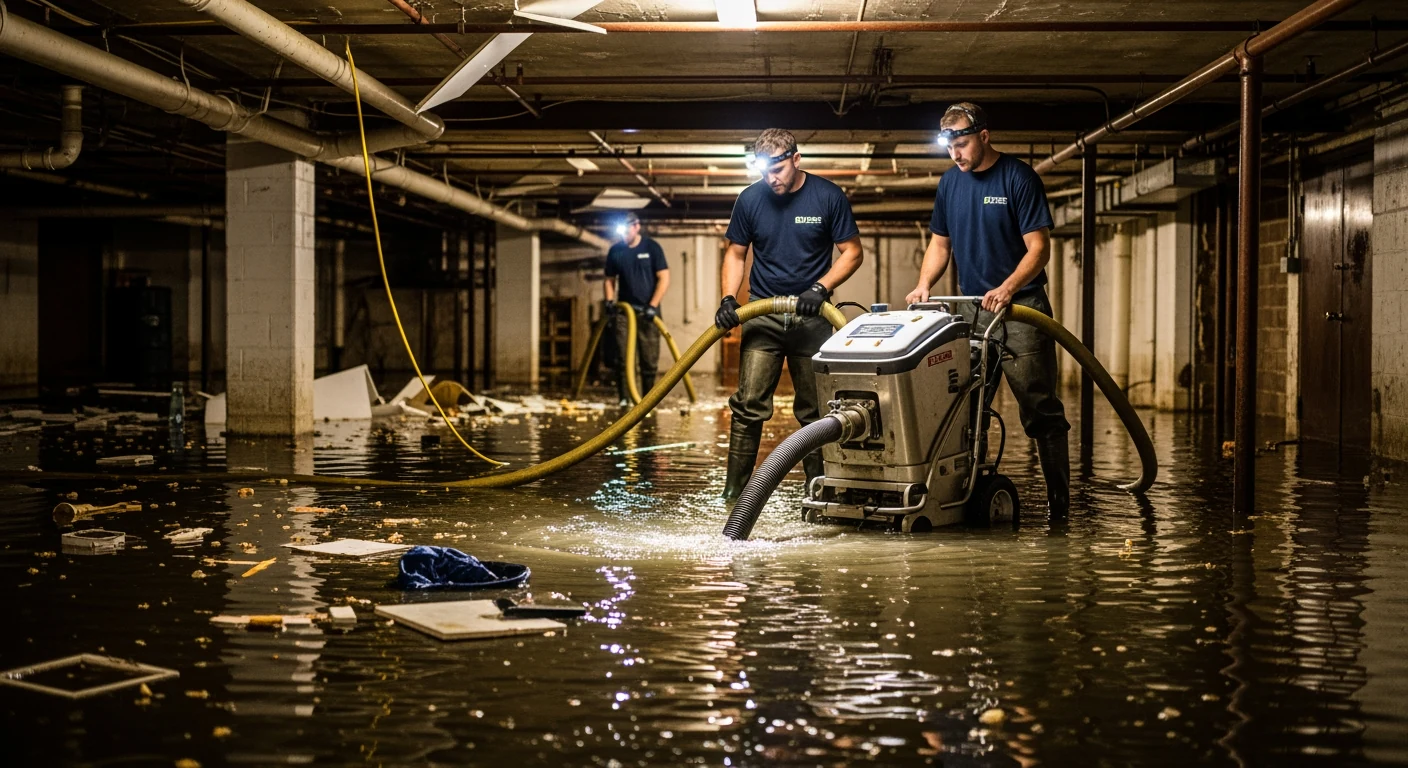
In the restoration industry, we distinguish between primary damage (the fire, the wind, the impact) and secondary damage. Secondary damage is almost always preventable. If a storm blows out your storefront windows and you fail to secure the opening, a subsequent rain shower will saturate your interior drywall, flooring, and electronics. This isn’t just a nuisance; it’s a catalyst for microbial growth. Mold can begin to colonize within 24 to 48 hours in a humid, damp environment.
Furthermore, an exposed building is a magnet for local wildlife and pests. Once birds, rodents, or stray animals enter a compromised facility, they create biohazards that significantly increase the cost of professional cleaning and decontamination. By deploying emergency board up services immediately, you create a controlled environment. This allows for the installation of dehumidifiers and air scrubbers if necessary, ensuring that the restoration process can begin in a stabilized setting.
Consider the “Chain of Loss.” A single broken window leads to water intrusion, which leads to warped subflooring, which leads to mold, which leads to a full-scale environmental remediation project. Each link in that chain adds zeros to your restoration bill. Breaking that chain requires decisive, physical intervention. Securing the perimeter is the only way to “stop the bleed” and preserve what remains of your inventory and infrastructure.
| Hazard | Risk Without Board-Up | Insurance Consequence |
|---|---|---|
| Weather | Rain/Snow intrusion | Denial of secondary damage |
| Vandalism | Theft/Graffiti | Potential coverage gaps |
| Liability | Injury to trespasser | Lawsuits (Attractive Nuisance) |
The ‘Attractive Nuisance’ Doctrine
For a business owner, the physical loss of property is often easier to calculate than the legal exposure of an unsecured site. In the legal world, the “Attractive Nuisance” doctrine suggests that a property owner can be held liable for injuries to children or even trespassers if the property contains a dangerous condition that is likely to attract them. A fire-damaged building is a prime example. To a child, a burnt-out warehouse looks like a playground; to a seasoned litigator, it looks like a multi-million dollar lawsuit.
If you fail to provide adequate boarding and fencing, you are effectively leaving a trap open. If an “urban explorer” or a curious neighbor enters your damaged building and falls through a weakened floorboard or is injured by falling debris, the burden of liability often falls on you. You must demonstrate that you took “reasonable steps” to secure the property. In the eyes of the court and your insurance carrier, a professional board-up is the gold standard for “reasonable care.”
This is not just about keeping people out; it’s about protecting your brand’s reputation. A derelict, open building becomes a blight on the neighborhood and a target for graffiti. By securing the site with professional-grade materials, you signal to the community and your stakeholders that the situation is under control and that the business is in the process of recovery, rather than abandonment.
Roof Tarping vs. Plywood
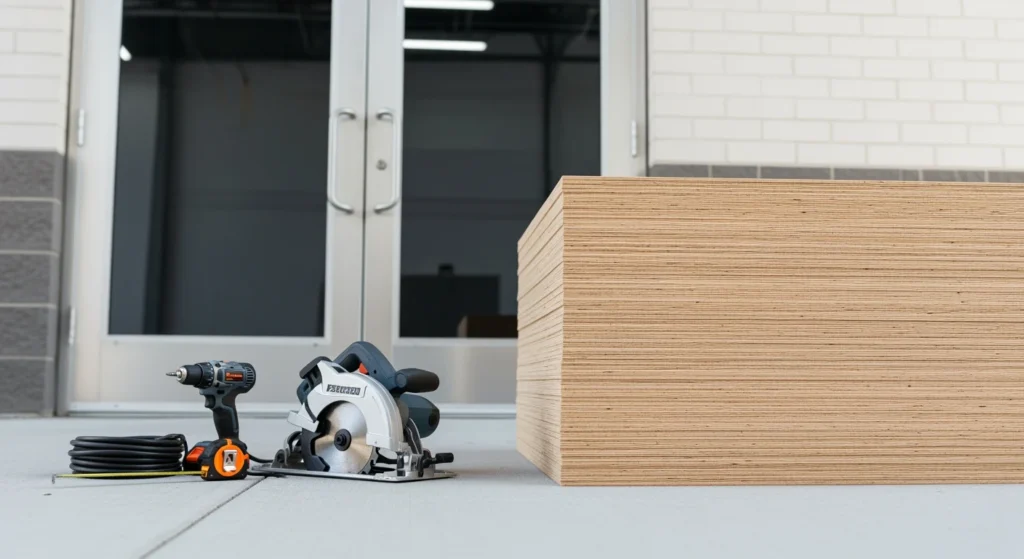
Emergency board-up is a comprehensive term that covers two primary methods of enclosure: vertical boarding and horizontal tarping. Vertical boarding uses CDX-grade plywood (typically 1/2 inch to 5/8 inch thick) to seal windows and doors. This is not simply nailed into the window frame, which can cause more damage. Professional crews often use “tension-fit” or “bolt-through” methods that secure the plywood from the inside, making it nearly impossible to pry off from the exterior.
Roof tarping is a different discipline entirely. When a roof is compromised by fire or falling trees, a standard blue tarp from a hardware store will not suffice. Professional board up and tarping services utilize heavy-duty, UV-resistant structural tarps. These are secured with “furring strips”—wooden lathes that are screwed down over the edges of the tarp to prevent the wind from getting underneath and tearing it away. A properly installed tarp creates a shed-style slope to ensure water runoff, preventing the “pooling” that often leads to roof collapses on already weakened structures.
Choosing the right material and application method is vital. Inadequate tarping can actually trap moisture inside, accelerating rot. Our crews are trained to assess the specific structural damage and apply the method that offers the highest level of protection without compromising the underlying materials further.
Our 24/7 Deployment
Disasters do not follow a 9-to-5 schedule. A pipe burst at 2:00 AM on a Sunday or a windstorm on Christmas Eve requires the same level of response as a mid-day emergency. This is why our 24/7 deployment model is built around a 90-minute response time across the Tri-State area. We maintain a fleet of fully stocked vehicles ready to move at a moment’s notice.
When our crews arrive, they don’t just bring plywood; they bring generators, industrial lighting, and a tactical mindset. We perform a rapid site assessment to identify the most vulnerable entry points and prioritize them. For business owners, this rapid deployment is the difference between a minor disruption and a permanent closure. Our crews are trained in OSHA safety standards, ensuring that the board-up process itself does not introduce new risks to the site. Whether it is a single storefront or a sprawling industrial complex, we have the manpower to secure the entire perimeter before the first light of dawn.
Insurance Obligations
Perhaps the most compelling reason to authorize emergency board up services immediately is your insurance policy. Standard ISO (Insurance Services Office) policy language under the “Duties After Loss” section explicitly states that the policyholder must take “all reasonable steps to protect the property from further damage.” This is often referred to as the mitigation mandate.
If you fail to board up your windows and a subsequent storm causes water damage to your inventory, the insurance company has the legal right to deny the portion of the claim related to that water damage. They will argue that the secondary damage was not caused by the initial peril, but by your negligence in failing to mitigate the loss. Furthermore, many commercial policies include a “Protective Safeguards Endorsement,” which makes the maintenance of certain security measures a condition of coverage.
The cost of professional board-up services is almost always covered as a “reasonable repair” expense under the emergency services provision of your policy. The insurance company wants you to board up the property because it limits their total payout. By hiring a professional service, you are not just protecting your building; you are protecting your right to a full and fair insurance settlement.
Frequently Asked Questions
Q: Will insurance pay for board up?
A: Yes, it is typically covered under “Emergency Services” or “Reasonable Repairs.” Most policies require this action to mitigate further loss and protect the asset from secondary damage.
Q: How long should a board-up stay in place?
A: It should remain until permanent repairs can begin. However, boards should be inspected periodically to ensure they haven’t been tampered with or loosened by weather.
Q: Does boarding up damage my window frames?
A: Professional crews use techniques like “tension-mounting” or “pressure fitting” to minimize damage to the existing structure, unlike DIY methods which often involve nailing directly into finished surfaces.
Secure your property now. 90-minute response. Contact our Emergency Dispatch Team.
Upper Restoration provides professional fire and smoke damage restoration services across Nassau County, Suffolk County, and all five NYC boroughs — available 24/7.