Handling Furnace Puffbacks: Clean Up Protocol for Nassau County Homes
If you have walked into your living room on a cold Long Island morning only to find a fine, velvety layer of black dust covering your white mantle, your family photos, and even the inside of your kitchen cabinets, you are likely experiencing the aftermath of a furnace puffback. For homeowners in Nassau County, where many houses still rely on oil-fired heating systems, this is a stressful and unfortunately common winter emergency.
As a Fire & Smoke Restoration Specialist, I have seen the devastation a puffback causes. It is not just “dust.” It is a sticky, oily, and corrosive residue that penetrates every corner of your home. It smells like a mechanic’s shop, and if handled incorrectly, it can cause permanent damage to your property. This guide will walk you through the specialized furnace puffback cleanup protocol necessary to restore your home and why your first instinct to grab a rag and soapy water is actually the most dangerous thing you can do.
What is a Puffback?
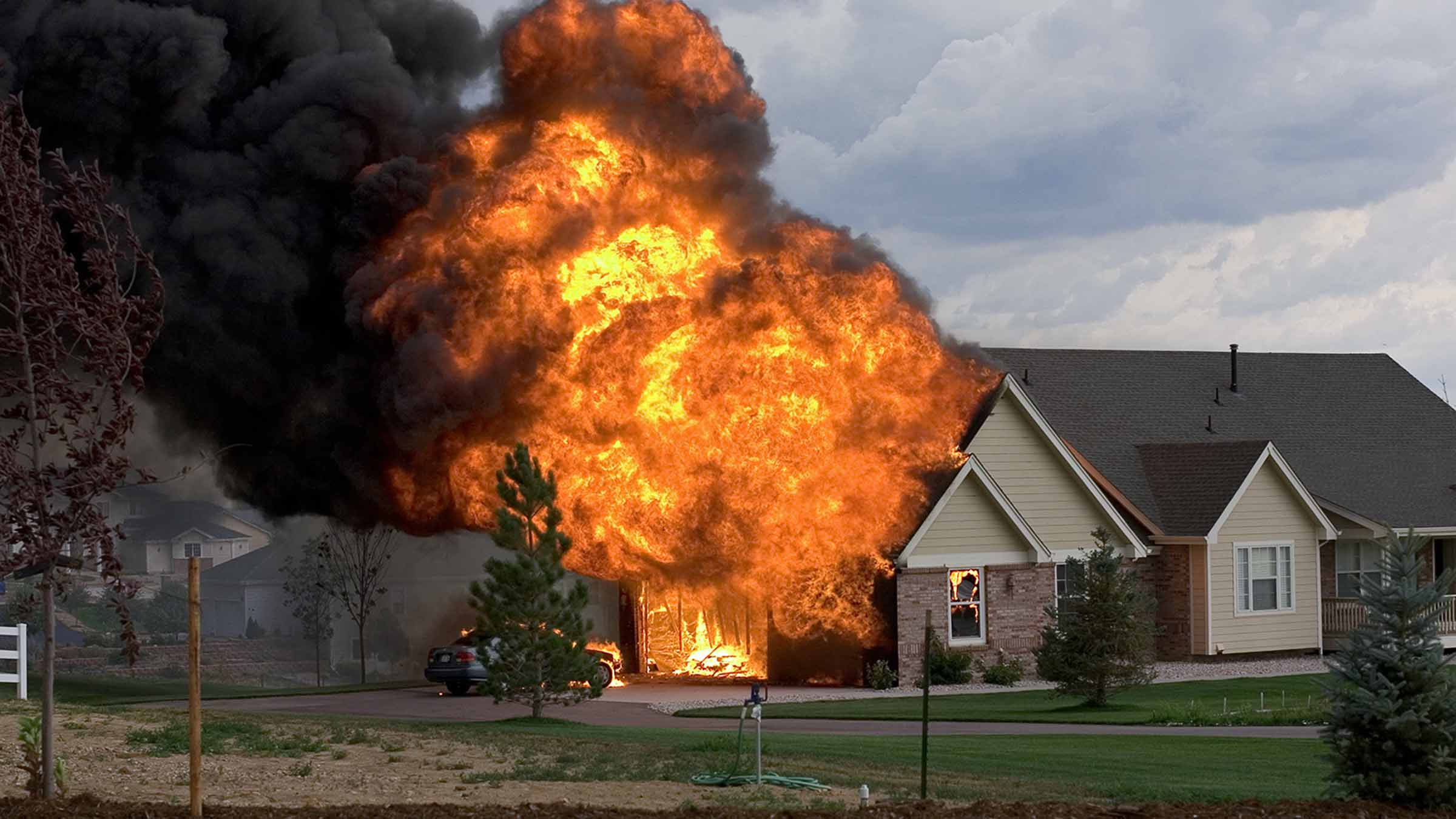
A puffback is essentially a localized explosion within the combustion chamber of your oil burner. According to the National Oilheat Research Alliance (NORA), these events typically occur when an oil burner does not ignite immediately. When the “unburned” oil finally does ignite, the accumulated vapors create a pressure surge that forces soot, smoke, and debris out through the exhaust system, the furnace’s seams, and—most destructively—through your home’s HVAC ductwork.
Unlike a standard wood-burning fire, which produces a dry, ash-based soot, an oil furnace puffback releases petroleum-based soot. This residue is heavy, greasy, and carries a distinct chemical odor. Because it is distributed via the forced-air system, the soot is “puffed” into every room with a vent, coating ceilings, walls, furniture, and even the clothes inside your closets.
The ‘Do Not Touch’ Rule
The most important piece of advice I can give any Nassau County homeowner is this: Do not touch the soot.
It is human nature to want to clean up a mess immediately. However, puffback soot is fundamentally different from household dust. Because it is oil-based, it is extremely “smearable.” If you attempt to wipe a soot-covered wall with a damp cloth or even your bare hand, you will ground the oil into the paint or fabric. This creates a permanent stain that often cannot be removed, requiring expensive priming and repainting or the total replacement of upholstered furniture.
Furthermore, soot particles are microscopic and acidic. Touching them without the proper Personal Protective Equipment (PPE) can lead to skin irritation, and breathing them in can aggravate respiratory issues. Until a professional restoration team arrives, your best course of action is to stay out of the affected rooms and keep the HVAC system turned off to prevent further circulation of the particles.
Our 5-Step Cleanup Protocol
Professional furnace puffback cleanup is a specialized science. We follow a rigorous protocol to ensure the soot is removed without being driven deeper into the home’s surfaces.
1. Assessment and Containment
We begin by identifying the extent of the “plume.” We check areas you might miss, such as the inside of electronics, behind hanging pictures, and inside dresser drawers. We then seal off unaffected areas of the home to prevent cross-contamination during the cleaning process.
2. Dry Soot Removal
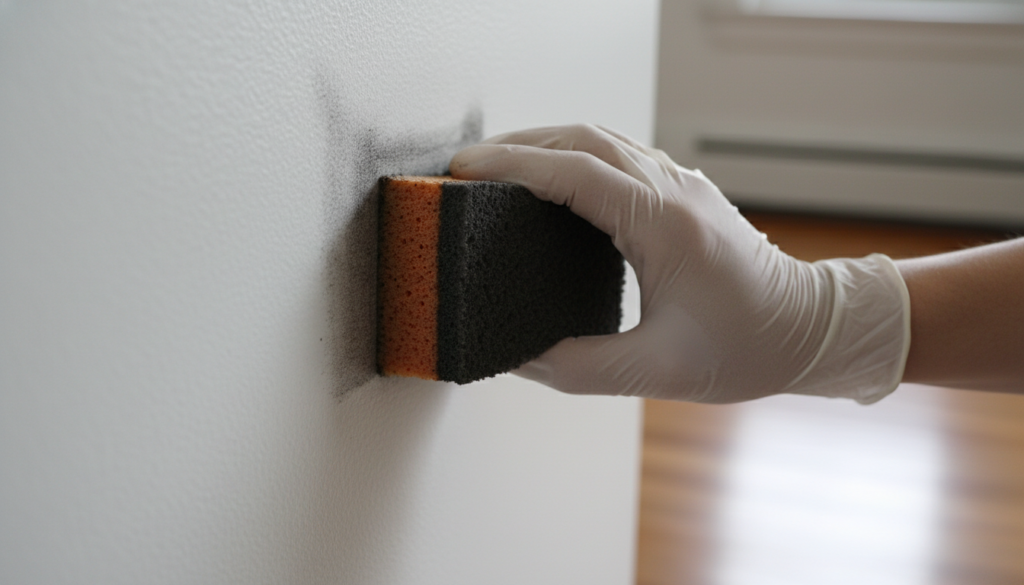
Before any liquids are introduced, we use specialized “chemical sponges” (also known as dry-cleaning sponges). These are made of vulcanized rubber and are designed to lift soot off surfaces through a capillary action rather than wiping it. We also use HEPA-filtered vacuums to capture loose particles from carpets and upholstery without exhausting them back into the air.
3. Degreasing and Wet Cleaning
Once the bulk of the dry soot is removed, we move to wet cleaning. This requires industrial-grade degreasers specifically formulated to break down petroleum bonds. We wash walls, ceilings, and hard surfaces using a “top-down” method, ensuring that no oily residue remains to attract more dust later.
4. Deodorization
The smell of an oil puffback is stubborn. It lingers in porous materials like insulation and wood framing. We utilize hydroxyl generators or ozone machines to break down the odor molecules at a molecular level, rather than just masking them with scents.
5. Content Restoration
Your “contents”—your clothes, curtains, and linens—require specialized laundering. Standard dry cleaning often isn’t enough; we use restoration-grade cleaning processes to remove the oily film and the smell of fuel oil from your fabrics.
Cleaning the HVAC System
If you have a puffback, your ductwork is now a delivery system for soot. Even if you clean every inch of your living room, the moment you turn your heat back on, the system will blow more soot into the air.
The HVAC cleaning phase is critical. We don’t just vacuum the vents; we must clean the blower motor, the heat exchanger, and the interior of the supply and return ducts. Filters must be replaced immediately, and in some cases, the insulation inside the plenum (the box that connects to the furnace) may need to be replaced if it has become saturated with oil smoke.
Insurance Coverage for Puffbacks
The good news for homeowners in Nassau and Suffolk County is that furnace puffbacks are typically covered under standard homeowners insurance policies. Most policies classify a puffback as “Smoke and Soot Damage,” which is a covered peril.
However, navigating the claim can be tricky. Insurance adjusters may try to categorize the event as “gradual soot accumulation” (which might not be covered) rather than a “sudden and accidental” puffback. This is why professional documentation is vital. We provide detailed reports, photo evidence, and itemized cleaning logs to ensure your carrier understands the scope of the damage. We recommend calling a restoration professional before you even call your agent, so we can help you document the scene in its original state.
Data Comparison: Understanding the Mess
To understand why specialized cleaning is necessary, look at the differences between a standard fire and a furnace malfunction:
| Feature | Puffback Soot | Wood Fire Soot | Professional Method |
|---|---|---|---|
| Composition | Oil/Petroleum Based | Carbon/Ash Based | Degreasing Agents |
| Texture | Sticky, heavy, smears | Dry, powdery | Chem Sponges |
| Distribution | Via HVAC Vents | Via Thermal Plume | Duct Cleaning |
Prevention Tips
While we are here to help when disaster strikes, prevention is always the best strategy. Following the National Oilheat Research Alliance (NORA) guidelines can significantly reduce your risk:
- Annual Maintenance: Have a licensed technician clean the burner, replace the nozzle, and check the electrodes every year before the heating season begins.
- Listen to the System: If you hear a “bang” or a “thud” when the burner starts up, call a technician immediately. That sound is a “mini-puffback” and a warning of a larger failure.
- Watch for Odors: If you smell unburned oil or see soot around the furnace base, your system is not combusting properly.
- Keep the Area Clear: Do not store flammable materials or clutter near the oil burner; this restricts airflow and increases the risk of a misfire.
Frequently Asked Questions (FAQ)
Q: What are those spider webs in the corner after a puffback?
A: Those aren’t actually spider webs. They are known as “soot tags.” During a puffback, the carbon particles become ionized (electrically charged) and cling to each other, forming long, black chains that look like cobwebs. They usually form in corners where there is low airflow. Do not try to vacuum them with a household vacuum, as they will smear instantly.
Q: Can I stay in my home during the cleanup?
A: This depends on the severity. If the soot is widespread, the air quality may be poor, and the noise from the air scrubbers and equipment can be disruptive. For small, localized puffbacks, you can often stay in the home while we work.
Q: Will the smell ever go away?
A: Yes, but only if the soot is removed from *every* surface. If the odor persists, it usually means soot is still trapped in the ductwork or behind wall outlets. Our professional deodorization process ensures the smell is eliminated, not just covered up.
Soot everywhere? Don’t wipe it. Call the experts. Contact Upper Restoration for Professional Cleanup