When a small fire starts in your home, a fire extinguisher can be the single most important tool you own, giving you the power to stop a minor incident from becoming a major disaster.
But not all fires are the same, and not all extinguishers work on all fires. Using the wrong type of extinguisher can be ineffective and, in some cases, incredibly dangerous.
Choosing the best home fire extinguisher means understanding the “classes” of fire and placing the right extinguisher in the right locations.
Understanding the “Classes” of Fire
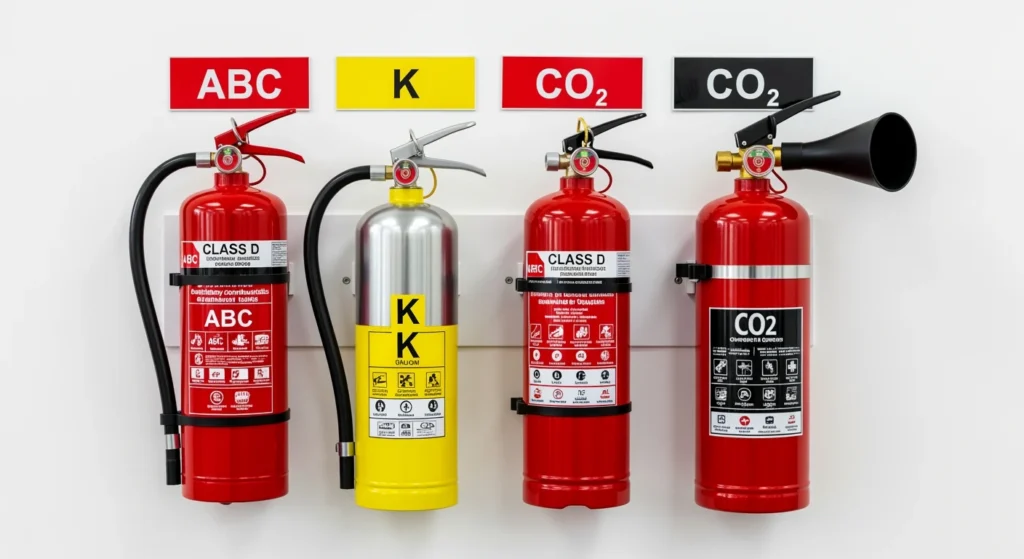
Fire extinguishers are rated with letters (A, B, C, D, or K) that correspond to the type of fire they are designed to put out.
- Class A: For “Ash.” These are fires from common combustibles like wood, paper, cloth, and plastic.
- Class B: For “Boil.” These are fires from flammable liquids like gasoline, oil, grease, and paint.
- Class C: For “Current.” These are fires involving “live” electrical equipment, such as appliances, wiring, and circuit breakers. Using water on a Class C fire can cause a fatal electric shock.
- Class D: For “Din” (an industrial term). These are fires from combustible metals, like magnesium or titanium. You will not find these in a typical home.
- Class K: For “Kitchen.” While kitchen grease fires are technically Class B, a Class K extinguisher is a special type designed to put out fires from cooking oils and fats in modern, high-temperature deep fryers.
The Best All-Purpose Extinguisher for Your Home
For 90% of your home, the best choice is an “A-B-C” multipurpose dry chemical extinguisher.
This one extinguisher can handle the three most common types of residential fires:
- A trash can on fire (Class A)
- A flammable liquid spill in the garage (Class B)
- An electrical short from an appliance (Class C)
Look for a model that is large enough to be effective but light enough for anyone to handle. A 5-lb. A-B-C extinguisher is a good size for general home use. For a garage or workshop, consider a larger 10-lb. unit.
The Best Extinguisher for the Kitchen
The one exception to the “ABC” rule is the kitchen. The kitchen is the #1 location for home fires, and most of them are grease fires (Class B/K).
While an ABC extinguisher will work, its forceful discharge can splash the burning grease, potentially spreading the fire.
The best and safest option for a kitchen fire is to:
- First, try to smother it: Slide a metal lid or a cookie sheet over the burning pan and turn off the heat.
- If that fails, use a fire extinguisher: A Class K extinguisher is ideal as it uses a fine mist to cool and suppress the fire without splashing. However, a standard A-B-C extinguisher is the next best thing. Never use water on a grease fire.
Where to Place Your Fire Extinguishers
An extinguisher does you no good if it’s buried in a closet. Placement is key.
- Main Living Area: Have one A-B-C extinguisher in a central, easily accessible location, such as a hallway or near the main exit.
- Kitchen: Keep a Class K or A-B-C extinguisher mounted on a wall near an exit, away from the stove. You don’t want to have to reach over the fire to get to the extinguisher.
- Garage/Workshop: This is a high-risk area. Mount a larger 10-lb. A-B-C extinguisher near the door.
- Each Additional Floor: Have at least one extinguisher on every level of your home.
How to Maintain Your Extinguisher (P.A.S.S.)
- Maintenance: Check the pressure gauge on your extinguishers once a month. If the needle is not in the “green” zone, it needs to be recharged or replaced. Most disposable extinguishers last 5-12 years; check the date.
- How to Use (P.A.S.S.):
- Pull the pin.
- Aim the nozzle at the base of the fire, not the flames.
- Squeeze the handle slowly and evenly.
- Sweep the nozzle from side to side.
Your first priority in a fire is to get everyone out safely. Only attempt to fight a fire if it is small, contained, and you have a clear exit behind you. If the fire grows, get out immediately and call 911.
Upper restoration provides professional fire and smoke damage restoration services across Nassau County, Suffolk County, and all five NYC boroughs — available 24/7.
If you do use an extinguisher, your home will be filled with dry chemical residue and smoke. This requires professional smoke damage cleanup to ensure your home is properly cleaned and decontaminated.
See also: Fire Damage Restoration — Complete Guide