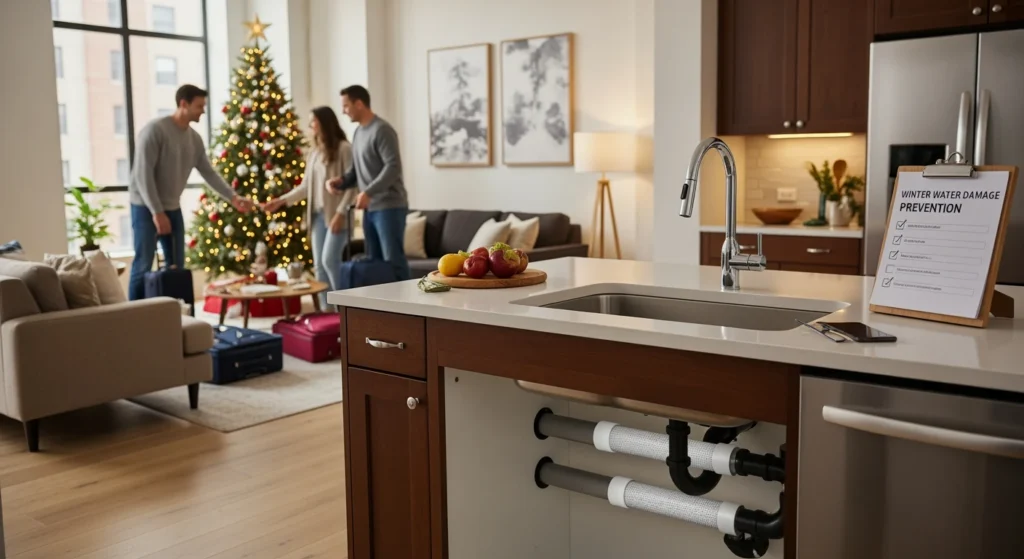
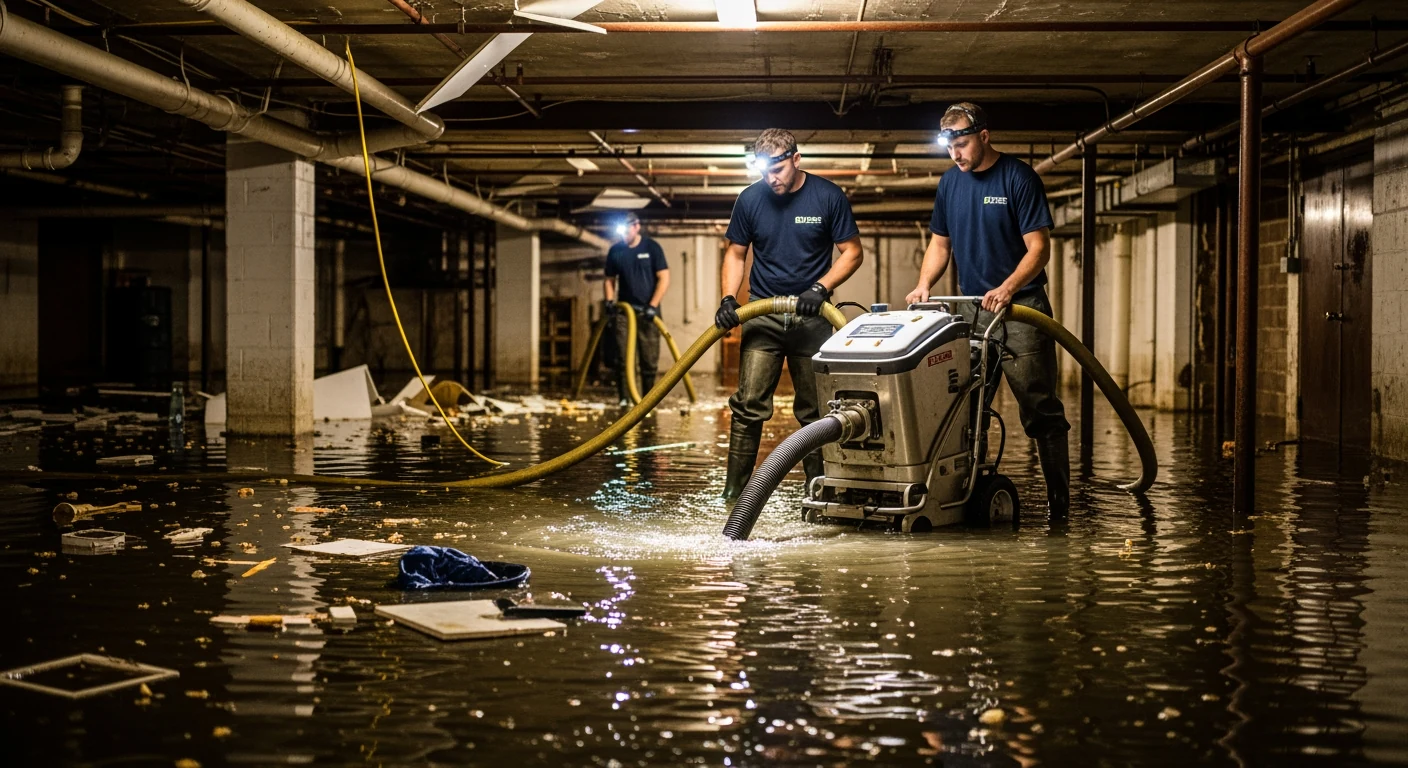
Traveling for the holidays should be a time of relaxation and celebration. The last thing you want is to return home to a devastating surprise: a burst pipe and a flooded house. A water-related disaster is bad enough when you’re home, but when it happens in an empty house, the water can run for days, causing catastrophic structural damage and mold growth.
Before you lock the door and head out, use this essential checklist to prevent water damage while away and protect your home.
Your 5-Step Pre-Travel Prevention Plan
1. The #1 Rule: Turn Off Your Main Water Supply
This is the single most important thing you can do. A pipe can’t burst if there’s no water pressure.
- What to do: Locate your home’s main water shut-off valve. It’s typically found in the basement, a crawl space, or a utility closet where the water line enters your home. Turn the valve to the “off” position.
- After you shut it off: Go to the highest faucet in your house (like an upstairs bathroom) and the lowest (like a basement sink) and turn them on to drain all the remaining water from your pipes. This relieves all pressure in the system.
- Note: If you have a fire sprinkler system, do not turn off the main water. In this case, only turn off the valves to high-risk appliances like your washing machine and dishwasher.
2. Set Your Thermostat (Don’t Turn it Off)
It’s tempting to save money by turning the heat completely off, but this is a critical mistake. Your home’s heat is what protects your indoor plumbing from freezing.
- What to do: Set your thermostat to a consistent temperature, no lower than 55°F (13°C). This is warm enough to protect the pipes, even those in cabinets or on exterior walls.
3. Open Cabinet Doors
Pipes under kitchen and bathroom sinks are often in uninsulated cabinets, making them highly vulnerable.
- What to do: Simply open all the cabinet doors under your sinks. This allows the warm air from your home to circulate freely around the plumbing, keeping the pipe temperature safely above freezing.
4. Consider Smart Home Technology
Peace of mind is priceless. Modern technology offers two excellent ways to monitor your home from afar.
- Smart Water Shut-Off: These devices are installed on your main water line and will automatically shut off the water if they detect a leak or abnormal flow.
- Smart Water Sensors: These are small, battery-powered pucks you can place in high-risk areas: next to the water heater, under the washing machine, or in the basement. If they detect even a small amount of water, they will send an alert directly to your phone.
5. Ask a Neighbor or Friend to Check In
Even with technology, there’s no substitute for a trusted pair of eyes.
- What to do: Give a house key to a trusted neighbor or friend. Ask them to walk through the house at least once while you’re gone, specifically to check for any water issues, make sure the heat is working, and look for any problems.
Don’t Let a Disaster Ruin Your Holiday
Coming home to a water damage emergency is a nightmare. By taking these few simple steps, you can relax on your vacation knowing your home is secure.
If the worst happens and you or your neighbor discover a leak, the first call should be to a 24/7 emergency water restoration company. A rapid response is the key to minimizing damage and saving your property.
2026 Update: New Risks to Add to Your Pre-Travel Checklist
Winter 2025–2026 brought record cold snaps across Long Island and NYC, resulting in a spike in frozen pipe claims. Insurance carriers are increasingly scrutinizing whether homeowners took reasonable precautions before leaving during cold weather events. Here’s what to add to your 2026 checklist.
Pre-Departure Checklist (2026 Edition)
- ☑ Set thermostat no lower than 55°F — minimum threshold for most homeowner policies
- ☑ Open cabinet doors under sinks on exterior walls to allow warm air circulation
- ☑ Shut off main water supply and drain pipes if leaving more than 5 days
- ☑ Install a smart water leak detector — many insurance carriers now offer premium discounts for connected leak sensors
- ☑ Ask a trusted neighbor or property manager to check the home every 48 hours
- ☑ Photograph your thermostat setting and property condition before departure (timestamped)
- ☑ Know your insurance carrier’s cold-weather vacancy clause — most policies void coverage if the home drops below 55°F
If You Return to Water Damage
Do not turn heating back up rapidly — thermal shock can cause additional pipe stress. Call a licensed Water Damage Restoration company before running any drying equipment. If walls or ceilings were saturated while you were away, mold colonization may have already begun and requires professional assessment before any cleanup attempt.