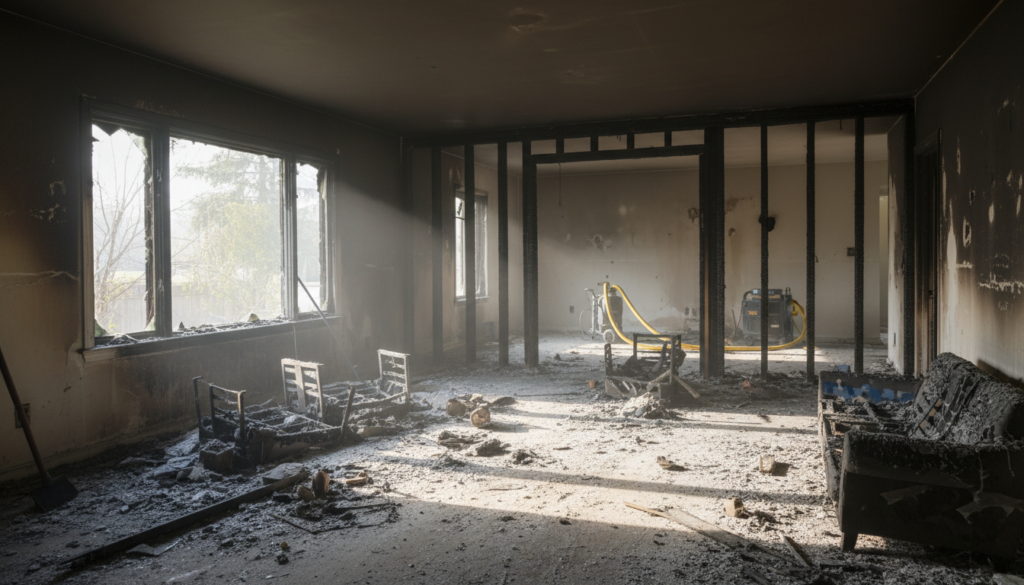
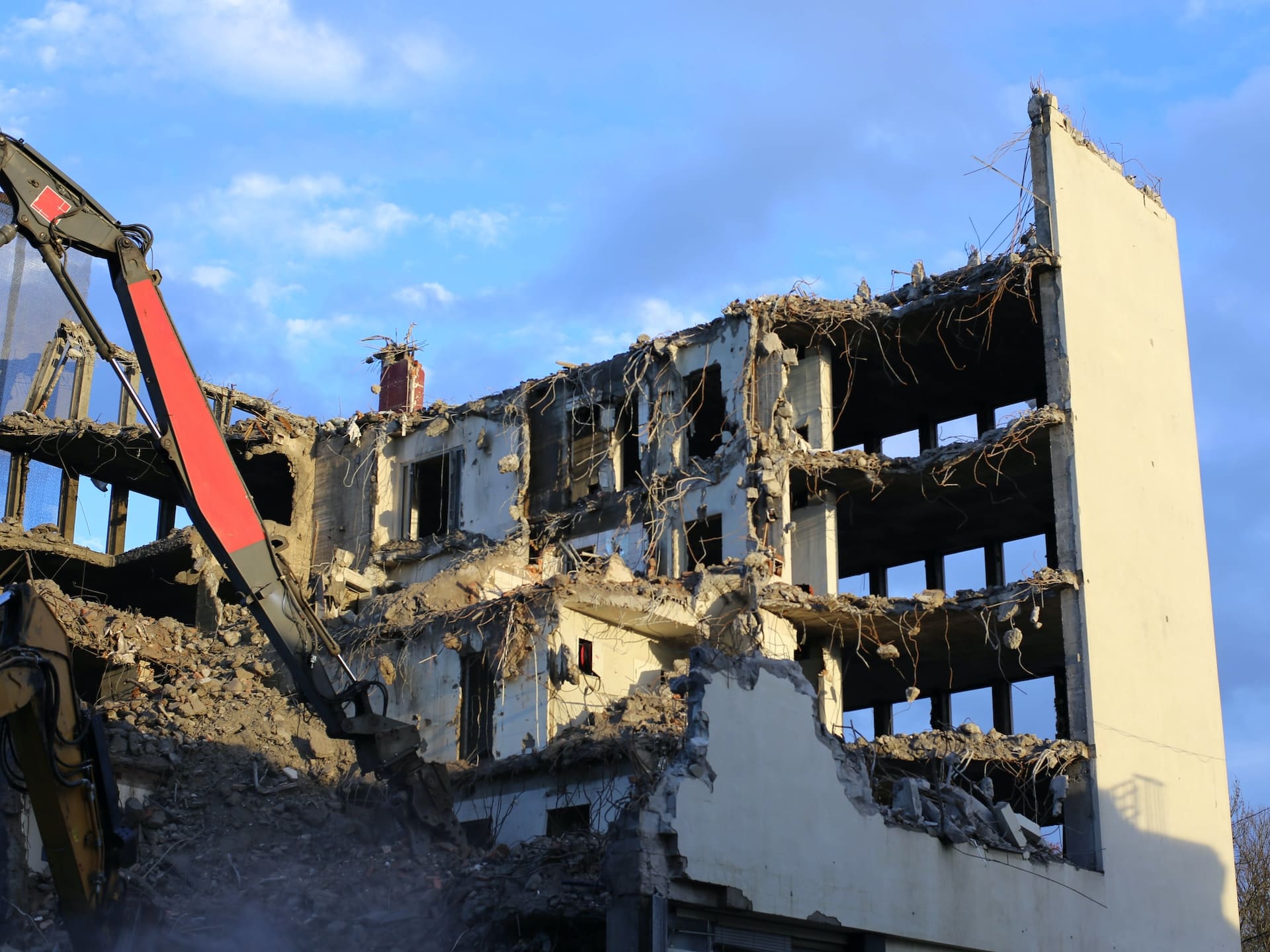
The fire is out, but the ordeal is far from over. Facing the aftermath of a house fire is one of the most overwhelming and traumatic experiences a homeowner can endure. Once the immediate danger has passed, you’re left with a home that may be unrecognizable, damaged not only by flames but also by pervasive smoke, soot, and the water used to extinguish the fire.
Understanding the professional fire damage restoration process is the first step toward recovery. This isn’t just a simple cleanup; it’s a complex, multi-phase process designed to safely and completely return your property to its pre-loss condition. Here is a step-by-step guide to what you can expect.
Step 1: Emergency Contact & Initial Assessment
After calling 911 and ensuring your family is safe, your first call should be to a 24/7 emergency restoration company. Fires don’t wait for business hours, and neither should the response. The “golden hours” after a fire are critical. A rapid response team will arrive quickly to assess the full extent of the fire, smoke, and water damage.
Step 2: Securing the Property (Board-Up & Tarping)
A fire often compromises the security of your home, leaving windows, walls, or the roof open to the elements and intruders. The restoration team’s first physical task is to secure the property. This involves:
- Boarding up any broken windows or damaged walls.
- Tarping the roof to prevent rain or snow from causing further water damage. This step is vital for protecting your home while the restoration is planned.
Step 3: Water Mitigation (Extraction & Drying)
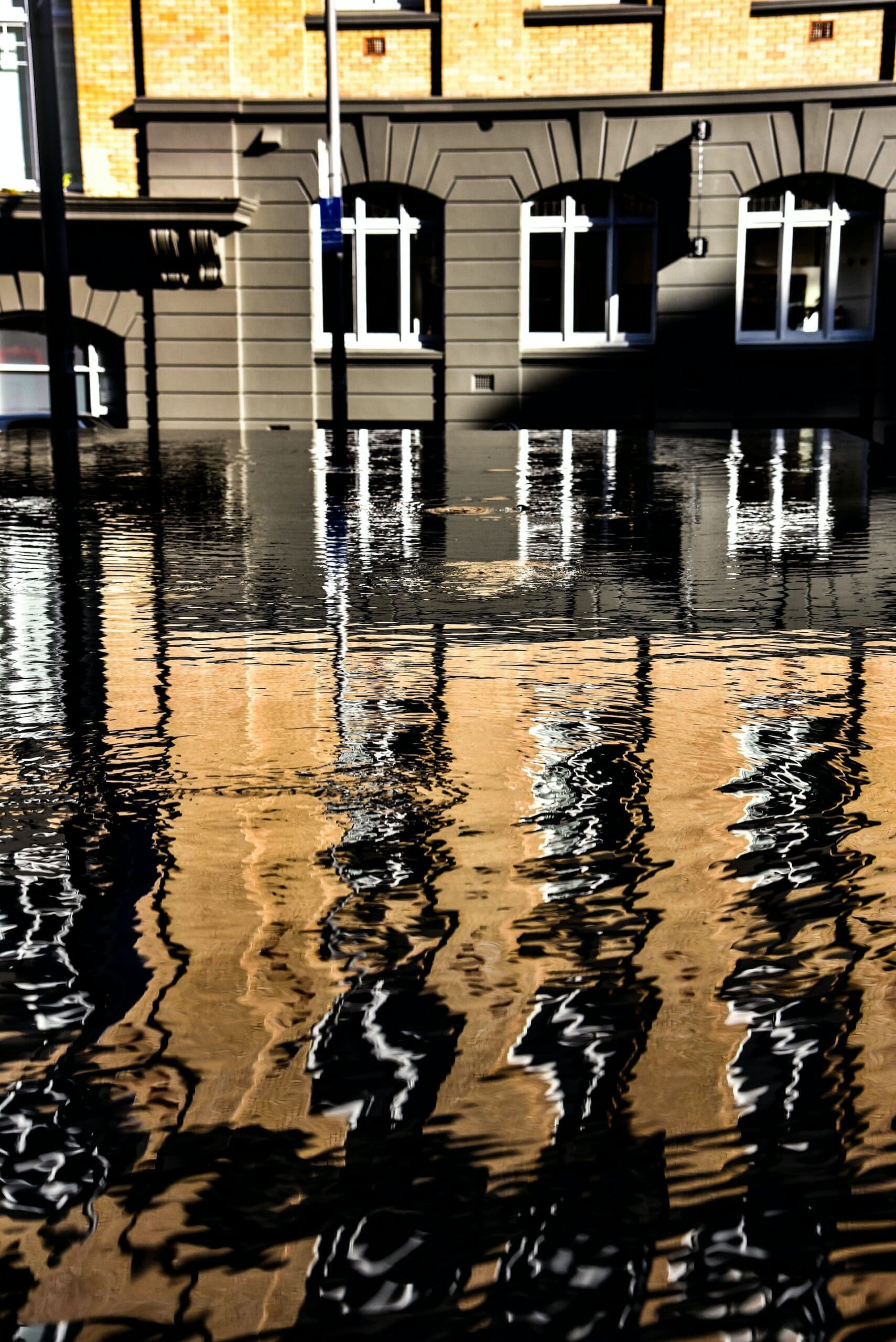
It may seem counterintuitive, but the first part of fire restoration is often water restoration. The water used by the fire department, or from burst pipes, must be removed immediately. If left to sit, this water will lead to mold, structural rot, and further complicate the cleanup.
- Industrial-grade extractors remove standing water.
- High-velocity air movers and dehumidifiers are placed to dry out all affected materials, including drywall, subfloors, and structural wood.
Step 4: Soot & Smoke Damage Cleanup
This is the most intensive phase. Soot is acidic and will “etch” and corrode surfaces if left too long. Smoke particles are microscopic and get everywhere—inside walls, within the HVAC system, and into all porous materials.
- Content Pack-Out: The team will carefully sort, inventory, and remove all your personal belongings. Items that can be saved are taken to a special facility for deep cleaning and deodorization.
- Soot Removal: Technicians use specialized sponges, solutions, and cleaning methods to remove all soot from walls, ceilings, and other surfaces. Different types of smoke (e.g., from a protein fire vs. a synthetic material fire) require different cleaning techniques.
Step 5: Cleaning, Sanitizing, & Deodorization
With the soot gone, every surface in the home must be professionally cleaned and sanitized. This includes carpets, upholstery, and other salvageable items.
- Odor Removal: Simply cleaning won’t remove the pervasive smell of smoke. Professionals use advanced techniques like thermal fogging or ozone generation to find and neutralize odor-causing particles, even those trapped in hidden spaces.
- HVAC & Duct Cleaning: Your home’s air duct system is a primary carrier for smoke and soot. A thorough cleaning of the entire HVAC system is essential to prevent particles from being recirculated when you turn the heat or AC back on.
Step 6: Restoration & Rebuilding
The final step is the “build back.” This is where the home is repaired and restored to its original condition. This can range from minor repairs like replacing drywall, painting, and installing new carpet, to major reconstruction of entire rooms that were structurally damaged by the fire.
Who to Call for Help
- Your Insurance Company: Notify them immediately to start the claims process.
- A Certified Restoration Company: Choose an IICRC-certified firm that can handle all phases of the process, from water and smoke to the final rebuild. They can also work directly with your insurance adjuster to streamline the claim.
- Local Support: The American Red Cross can often provide immediate assistance with housing, food, and clothing.
You don’t have to go through this alone. A professional restoration partner will manage the entire process, guiding you from disaster to recovery and giving you back your home. If you’ve suffered a fire, contact our certified fire restoration specialists 24/7 for an immediate response.