As temperatures drop across Long Island and New York City, the risk of a burst pipe skyrockets. When water freezes, it expands with enormous force — enough to split copper, PVC, or galvanized steel pipe. The resulting water damage can destroy flooring, collapse ceilings, and trigger hazardous mold growth in as little as 24 hours.
According to the Insurance Information Institute, burst pipes are one of the leading causes of property damage claims in the United States, with the average claim exceeding $11,000. On Long Island, where older housing stock and harsh freeze-thaw cycles combine, the risk is especially acute from November through March.
This guide covers every step: how to identify vulnerable pipes, proven prevention methods, how to safely thaw a frozen pipe, and the emergency actions to take if a pipe bursts.
Which Pipes Are Most at Risk?
Not all pipes are equally vulnerable. The pipes most likely to freeze are those exposed to cold air with insufficient insulation or heat. Before any cold snap, inspect these areas:
- Pipes in unheated attics, crawl spaces, and unfinished basements
- Pipes running along or inside exterior walls
- Supply lines under kitchen and bathroom sinks against exterior walls
- Outdoor hose bibs, pool supply lines, and irrigation systems
- Pipes in garages and unheated utility rooms
On Long Island, homes built before 1970 are particularly vulnerable due to uninsulated wall cavities and older plumbing materials. A single cold night below 20°F (-6°C) is enough to freeze an exposed pipe in an unheated space.
Proactive Prevention: How to Winterize Your Pipes
Insulate Vulnerable Pipes
Foam pipe insulation sleeves are available at any hardware store for under $2 per linear foot. They slip directly over the pipe and are secured with tape or zip ties. For maximum protection, use pipe sleeves with a wall thickness of at least 3/8 inch. In crawl spaces and attics, also insulate the surrounding area — a well-insulated space is more effective than insulating the pipe alone.
Install Electric Heat Tape
For pipes that have frozen before or are in extremely exposed locations, self-regulating electric heat tape provides active freeze protection. It plugs into a standard outlet, runs along the pipe, and automatically activates when temperatures approach freezing. Always use a UL-listed product and follow manufacturer instructions precisely to prevent fire hazard.
Pre-Freeze Actions for Extreme Cold Snaps
When National Weather Service forecasts temperatures below 20°F, take these additional steps:
- Disconnect garden hoses from all outdoor spigots. A connected hose traps water in the spigot and supply line, dramatically increasing freeze risk.
- Shut off and drain outdoor spigots using the interior shut-off valve if you don’t have frost-free spigots.
- Let faucets drip on exterior walls — both hot and cold. Moving water freezes much more slowly than standing water.
- Keep your thermostat at 55°F minimum even when away. Never turn heat off entirely during winter months.
- Open cabinet doors under sinks on exterior walls to allow warm air to circulate around pipes.
- Seal drafts and gaps near pipes with caulk or foam — cold air infiltration is a primary freeze trigger.
How to Spot a Frozen Pipe Before It Bursts
The earliest sign of a frozen pipe is reduced or absent water flow from one or more faucets. You may also notice:
- Frost or condensation visible on exposed pipe sections
- Unusual odors from drains (trapped gases from a frozen drain line)
- Bulging or deformation of a pipe’s exterior
- Banging or cracking sounds from inside walls during cold weather
If you suspect a frozen pipe, act immediately. A frozen pipe that has not yet burst can be thawed safely. Once it bursts, you are in emergency response mode.
How to Safely Thaw a Frozen Pipe
Time matters, but safe thawing is critical. An improperly thawed pipe can burst during the process.
DO: Keep the faucet open throughout the thawing process. Apply gentle, even heat with a hair dryer on low, a heating pad, or warm towels wrapped around the pipe. Start near the faucet end and work back toward the frozen section — this allows steam and melting water to escape.
NEVER: Use an open flame — blowtorch, propane heater, or lighter — near any pipe. This is a serious fire hazard and can damage or destroy the pipe. Do not use high-heat devices that concentrate heat in one spot.
If the frozen section is inside a wall or otherwise inaccessible, call a licensed plumber immediately rather than attempting to access the pipe yourself.
Emergency Response: What to Do If a Pipe Bursts
A burst pipe requires calm, fast action. Every minute of delay increases the scope of water damage and the risk of secondary mold growth.
Step 1: Shut Off the Main Water Supply Immediately
Every homeowner on Long Island should know exactly where their main water shut-off valve is located before an emergency. It is typically found where the main water line enters the house — in the basement, crawl space, or a utility closet near the front of the home. Turn it clockwise to close. This stops all water flow and prevents further flooding.
Step 2: Cut Power to the Affected Area
Water and electricity are a lethal combination. If the burst pipe has flooded any space with electrical outlets, appliances, or wiring — do not enter the standing water. Go directly to your breaker box and shut off power to the affected circuit or the entire floor if necessary.
Step 3: Document Everything for Your Insurance Claim
Once the immediate safety hazards are controlled, document thoroughly. Take photos and videos of the burst pipe, all areas of standing water, damaged walls, flooring, ceilings, and affected personal property. Note the time and date. This documentation is essential for your homeowner’s insurance claim — do not skip this step even under stress.
Step 4: Begin Water Extraction Immediately
Use mops, wet-dry vacuums, and towels to remove as much standing water as possible while you wait for professionals. Open windows if weather permits. Move undamaged belongings out of wet areas. Every gallon of water you remove reduces the drying time and mold risk.
Step 5: Call a Professional Water Damage Restoration Company
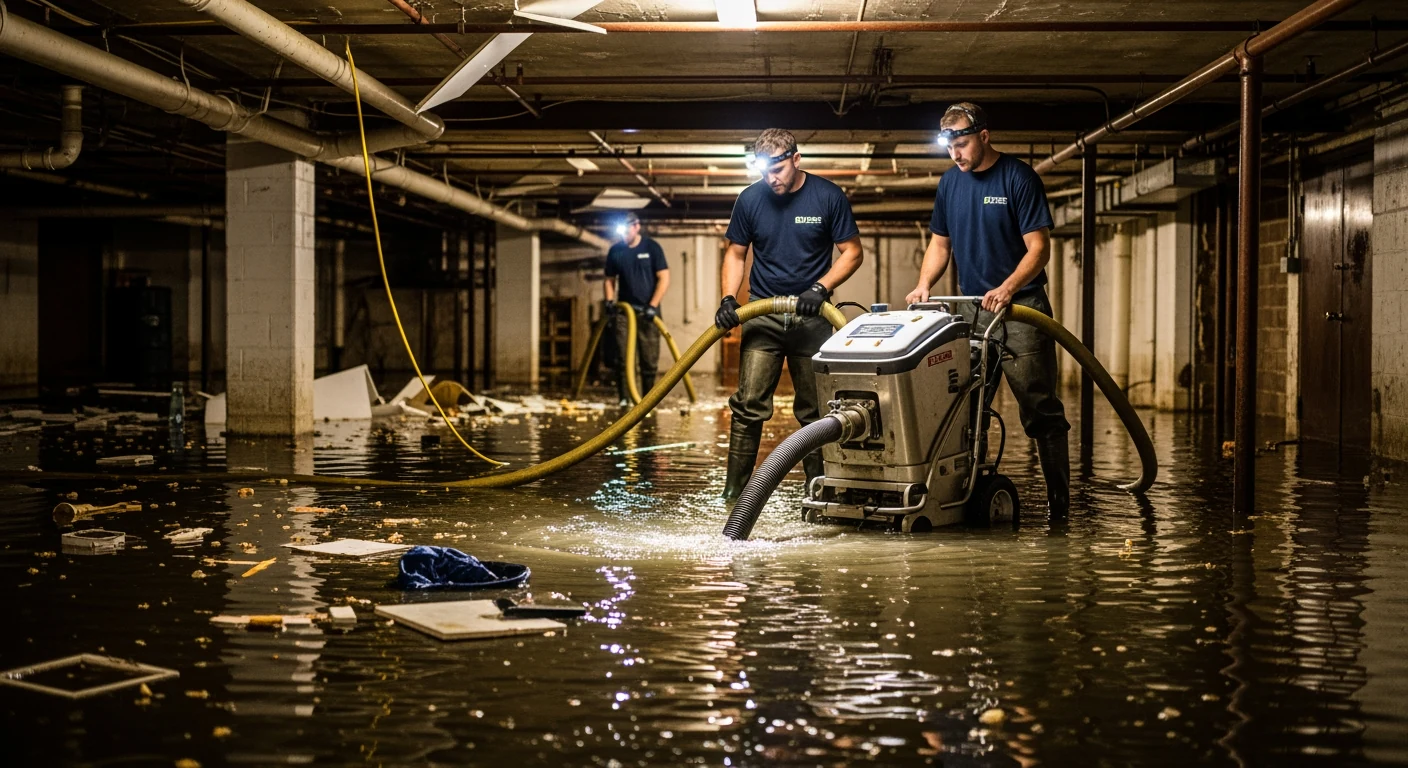
A burst pipe is not a DIY cleanup. Hundreds of gallons of water penetrate wall cavities, subfloors, and insulation — areas you cannot reach with consumer equipment. Professional restoration companies use industrial extraction equipment, high-velocity air movers, and commercial-grade dehumidifiers to achieve complete structural drying.
Upper Restoration provides 24/7 emergency water damage response across Long Island, Nassau County, Suffolk County, and New York City. Our team can typically mobilize within 90 minutes. We work directly with all major insurance carriers and handle the documentation process to support your claim.
What Happens If You Don’t Act Fast Enough?
Delayed response after a burst pipe dramatically amplifies the damage:
- Within 24 hours: Mold spores begin to colonize wet surfaces, particularly drywall and wood framing
- Within 48-72 hours: Visible mold growth appears; structural materials begin to warp and swell
- After one week: Structural damage to framing, subfloor, and wall assemblies — what was a water damage claim becomes a partial reconstruction
Fast professional response is the single most important factor in limiting damage and controlling restoration costs.
Upper Restoration — 24/7 Emergency Response
Serving Long Island (Nassau & Suffolk Counties), Queens, Brooklyn, and NYC.
Water damage, burst pipes, and flood cleanup — we mobilize within 90 minutes.
We work directly with your insurance carrier.
Frequently Asked Questions About Frozen and Burst Pipes
At what temperature do pipes freeze?
Pipes can begin to freeze when outdoor temperatures drop below 20°F (-6°C), especially if the pipes are in unheated spaces or along exterior walls with poor insulation. However, pipes exposed to cold air infiltration can freeze even at temperatures slightly above freezing if air movement is continuous.
How long does it take for pipes to freeze?
In ideal conditions — a pipe in an unheated space during sustained temperatures below 20°F — pipes can freeze within 6 to 8 hours. During extreme cold snaps with wind chill, that timeline can shorten to 4 to 6 hours. Pipes with flowing water take significantly longer to freeze than standing water.
How do I know if my pipe has burst but I can’t see it?
Signs of a hidden burst pipe include: water stains appearing on ceilings or walls, sudden drops in water pressure throughout the home, unexplained increases in your water bill, the sound of running water when all fixtures are off, or soft spots or buckling in flooring. If you suspect a hidden burst, shut off the main supply and call a professional immediately.
Does homeowner’s insurance cover burst pipes?
Most standard homeowner’s insurance policies cover sudden and accidental water damage from a burst pipe. However, coverage typically does not extend to damage caused by gradual leaks, lack of maintenance, or pipes that froze because the heat was turned off. Always document thoroughly and contact your insurer before beginning any major cleanup or repairs.
Can I claim water damage from a burst pipe on insurance?
Yes, in most cases burst pipe damage is a covered peril under standard HO-3 homeowner’s policies. Your insurer will want documentation of the damage, a professional assessment, and evidence the damage was sudden and accidental. Upper Restoration works directly with insurance adjusters and can assist with the claims documentation process.
How much does water damage from a burst pipe cost to repair?
The Insurance Information Institute reports the average water damage claim from a burst pipe exceeds $11,000. Costs vary widely based on how quickly water was stopped, how many rooms were affected, and whether mold remediation is required. Fast professional response is the most effective way to control costs.