For many homeowners in Nassau and Suffolk counties, the attic is an out-of-sight, out-of-mind space. However, this unseen area is highly susceptible to mold growth, thanks to a unique combination of environmental factors specific to Long Island. Understanding why your attic is at risk is the first step toward preventing a costly and unhealthy problem.
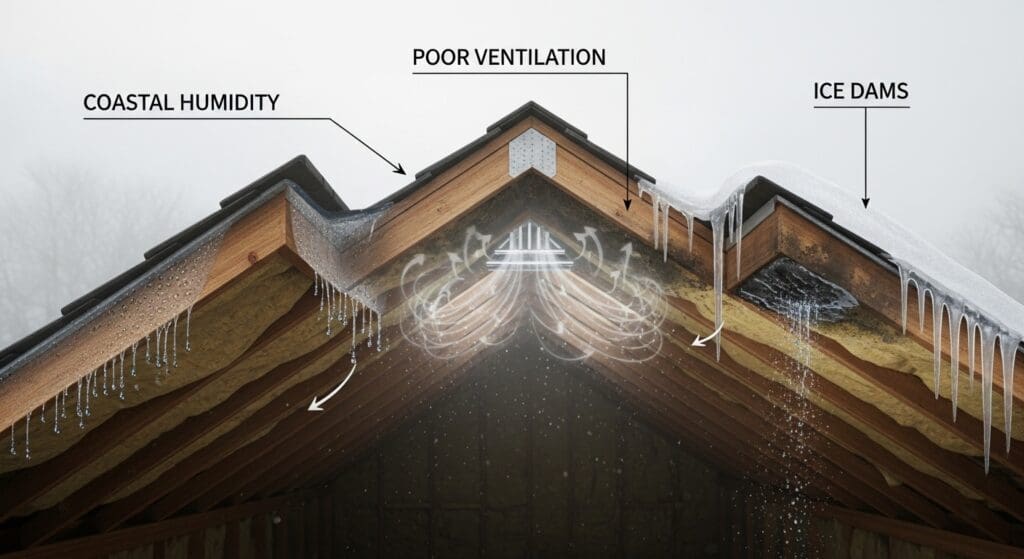
There are three primary culprits that work together to turn Long Island attics into ideal breeding grounds for mold: coastal humidity, poor ventilation, and winter ice dams.
1. The Coastal Humidity Factor
Living on an island means we are constantly surrounded by moisture. During the warm, humid summer months, the air is saturated with water vapor. This moisture-laden air easily makes its way into your attic through vents and small gaps. When this warm, wet air comes into contact with the cooler surfaces inside your attic, condensation occurs. This process, often called “attic sweat,” provides the consistent dampness that mold spores need to activate and grow on surfaces like roof sheathing, rafters, and insulation.
2. The Ventilation Problem
Proper attic ventilation is designed to create a continuous flow of air, pulling in cool, dry air from the lower vents (soffits) and pushing out warm, moist air through the upper vents (ridge or gable vents). Unfortunately, many Long Island homes, both old and new, have inadequate or improperly installed ventilation systems.
When ventilation is poor, the moist air that enters the attic becomes trapped. The temperature rises, humidity levels skyrocket, and the trapped moisture has nowhere to go but onto the wood surfaces of your attic structure. This turns the entire space into a petri dish, perfect for widespread mold colonization.
3. The Winter Threat: Ice Dams
While humidity is a summer concern, winter brings its own threat: ice dams. An ice dam forms when heat from your living space escapes into the attic, warming the underside of the roof and melting the snow on top. This meltwater runs down the roof until it reaches the cold eaves (the edge of the roof), where it refreezes.
This process creates a dam of ice that blocks water from draining properly. The water then backs up underneath the shingles, soaking the roof sheathing, insulation, and wooden rafters. This prolonged water intrusion creates a severe moisture problem that can lead to aggressive mold growth long before you ever notice a leak in your ceiling.
Upper Restoration provides professional mold removal and remediation services across Nassau County, Suffolk County, and all five NYC boroughs — available 24/7.
These three factors often work in combination, creating a year-round threat to the health of your attic. If you are concerned about the conditions in your attic, the best course of action is to schedule a professional attic mold inspection. An expert can assess your ventilation, identify moisture sources, and determine if mold is present, helping you protect your home and your family’s health.