As winter approaches on Long Island, homeowners in Nassau and Suffolk counties fire up their heating systems for the first time in months. While most furnaces run without a hitch, oil-fired systems can sometimes experience a messy and alarming event known as a “furnace puffback.” This isn’t a fire, but it can leave your home coated in a sticky, oily soot that requires specialized professional cleaning.
What Exactly Is a Furnace Puffback?
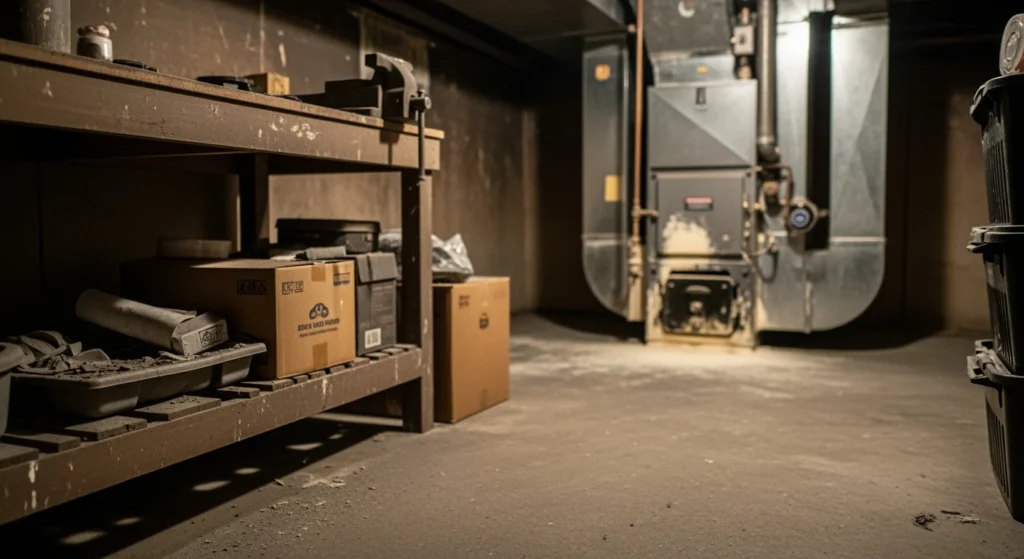
A furnace puffback occurs in an oil-fired furnace or boiler when the ignition doesn’t happen right away. Oil builds up in the combustion chamber, and when it finally does ignite, it does so with a small explosion or “puff.” This explosion forces soot, smoke, and unburned fuel particles back through the exhaust system and into your home through the vents.
The result is not the dry, powdery soot you might associate with a wood fire. Puffback soot is a thick, greasy, petroleum-based residue that clings to every surface it touches.
The Telltale Signs: More Than Just a Bad Smell
A furnace puffback leaves behind very distinct evidence. If you notice any of the following, you’ve likely experienced one:
- Oily Soot on Surfaces: A black or grey film that feels greasy to the touch will cover walls, ceilings, furniture, and personal belongings.
- “Soot Webs”: Often mistaken for cobwebs, these are strings of soot that form in the corners of rooms and ceilings as charged soot particles clump together.
- Strong Odor: A pungent, oily smell will permeate the entire house, often seeming to come from the vents.
- Visible Soot Around Registers: You will likely see black streaks or stains on the walls and ceilings around your heating vents.
Why You Can’t Just Wipe It Clean
Attempting to clean up puffback damage with household cleaners and a sponge is one of the biggest mistakes a homeowner can make. The oily nature of the soot will cause it to smear, driving the particles deeper into porous surfaces like drywall and upholstery, making the problem significantly worse.
Professional cleaning is not just recommended; it’s essential. Certified restoration technicians use:
- Specialized Degreasing Agents: These chemical solutions are formulated to break down the petroleum base of the soot without damaging the underlying surfaces.
- HEPA Vacuums: High-Efficiency Particulate Air (HEPA) vacuums are used to capture the fine soot particles and prevent them from becoming airborne again.
- Odor Removal Technology: Advanced techniques like thermal fogging or ozone generation are needed to neutralize the deeply embedded oily odors.
Upper Restoration provides professional fire and smoke damage restoration services across Nassau County, Suffolk County, and all five NYC boroughs — available 24/7.
A furnace puffback can be a shocking discovery. If you find your home covered in a greasy layer of soot this winter, resist the urge to clean it yourself. Contact a professional smoke damage restoration company that has experience with Furnace Puffbacks to ensure your home is safely, effectively, and completely returned to a clean condition.