Mold isn’t just a basement problem. It can spread through wood, hide in your clothes, affect your breathing, and linger in the air long after a leak. For homeowners across New York City and Long Island — where dense buildings, high humidity, and older materials are common — these concerns come up often.
Here are six of the most frequently asked mold questions right now, along with clear, expert-backed answers to help you spot, clean, and control mold more effectively.
1. How long does it take for mold to grow?
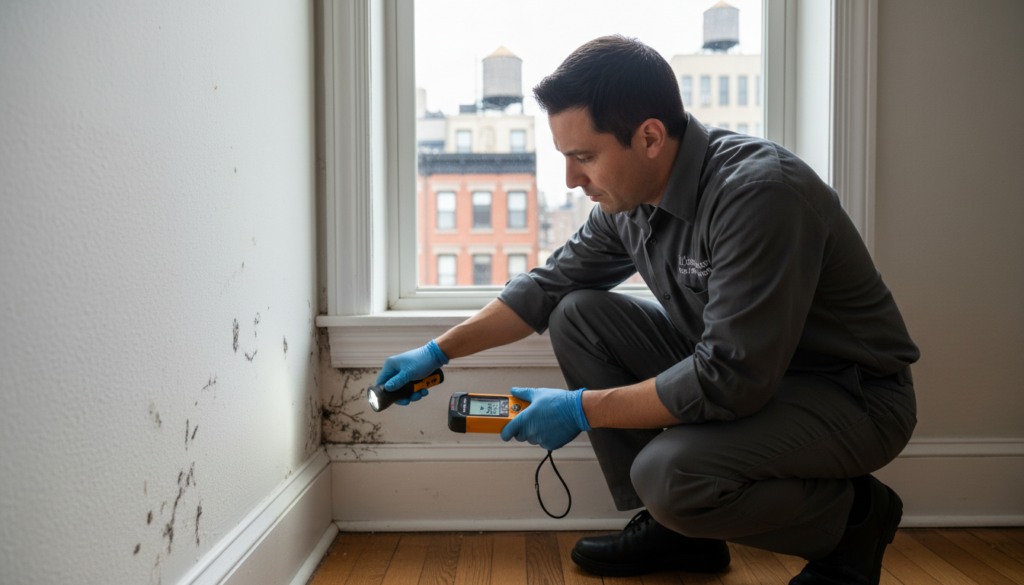
Mold can begin growing within 24 to 48 hours of exposure to moisture. That’s fast — especially in areas with high humidity or poor ventilation. In NYC apartments and homes, mold often develops behind furniture, around windows, or beneath flooring after even minor water intrusion. The right conditions include warmth, dampness, and organic material like drywall or wood. Once established, mold can spread quickly and silently unless addressed.
2. What kills mold on wood?
Mold on wood can be removed using white vinegar or hydrogen peroxide:
- Spray the affected area.
- Let it sit for 10–15 minutes.
- Scrub gently with a soft brush and allow to dry completely.
Avoid bleach — it won’t reach into porous surfaces like wood. In pre-war buildings or brownstones, mold may hide in trim, beams, or floorboards. If it returns after cleaning, it could indicate deeper saturation or trapped moisture, which often requires professional drying and remediation.
3. What does black mold smell like?
Black mold gives off a musty, earthy, or sharp odor, often compared to wet wood, rotting leaves, or dirty socks. Some people describe the scent as metallic or sour. In city buildings, this smell often shows up in back rooms, closets, near radiators, or behind kitchen cabinets — anywhere moisture lingers unnoticed. If you smell mold but can’t see it, it may be growing behind walls or under flooring.
4. What kills mold?
Several products can kill mold effectively:
- White vinegar – kills many species on hard surfaces
- Hydrogen peroxide – disinfects and lightens stains
- Baking soda – helpful in removing musty odors
- EPA-registered fungicides – used by professionals for complete remediation
Surface-level cleaning only addresses visible mold. Spores may still circulate through air ducts or remain hidden inside porous materials. In NYC buildings, where moisture often lingers behind walls or under floors, professional-grade air filtration and removal are often necessary for long-term results.
5. How can you tell if you have mold in your lungs?
While you can’t directly detect mold in your lungs without medical testing, you may experience symptoms like:
- Ongoing coughing or wheezing
- Shortness of breath
- Sinus issues or congestion
- Chronic fatigue
- Skin irritation or headaches
People with asthma or mold allergies are especially sensitive. If these symptoms worsen at home and improve elsewhere, mold exposure could be the cause. NYC homes with poor airflow or hidden mold (such as behind old drywall or under flooring) can silently affect your indoor air quality over time.
6. How to get mold out of clothes
To remove mold from clothing:
- Soak items in white vinegar or baking soda solution for 1 hour.
- Wash in hot water with detergent.
- Dry in direct sunlight or a hot dryer if possible.
Avoid storing clothes while damp or in airtight plastic bins. In NYC apartments where space is tight and airflow limited, mold can grow on garments left in closets, basements, or laundry areas — especially during humid summer months.
Think mold might be affecting your space?
Learn more about mold detection, remediation, and indoor air safety by contacting our certified team. We serve NYC, Long Island, and the surrounding area with same-day assessments.