The Small-Job Exception: When DIY Might Be Reasonable
DIY cleanup is genuinely appropriate only for a narrow set of conditions: mold coverage under roughly 10 square feet (about a 3-foot by 3-foot patch), a clean water source, and no vulnerable occupants in the home. Outside that narrow band, EPA and CDC guidance shifts toward professional remediation.
The EPA’s “Mold Cleanup in Your Home” guidance is specific about scale. Areas of mold smaller than approximately 10 square feet are typically reasonable for a property owner to handle without a contractor, provided the moisture source is clean (a burst supply line, an overflowing sink, rainwater through a window) and has already been stopped. That’s it. That’s the entire exception.
Even inside that exception, the EPA is explicit that you cannot simply paint or caulk over mold. Surfaces need to be scrubbed with detergent and water, and you still need to protect yourself while doing it. A lot of property owners read “small job, DIY okay” and stop there. The federal guidance doesn’t stop there, and neither should you.
Everything past that threshold, larger surface area, a water source that touched soil or sewage, a basement that sat wet for days, an occupant with asthma, moves the job into territory the EPA and CDC no longer describe as homeowner-appropriate. The rest of this article is about recognizing that line before you’re standing on the wrong side of it.
Health Risks DIY Cleanup Often Underestimates
Mold cleanup carries real respiratory exposure risk even on jobs that look small. The CDC recommends at minimum an N95 respirator, goggles, and protective gloves for any mold cleanup, and advises that people with asthma, allergies, or weakened immune systems avoid the work entirely.
Most homeowners attempting a weekend cleanup don’t own a properly fitted N95, and even fewer own the half-face or full-face respirator the CDC says becomes necessary once you’re ripping out moldy drywall rather than wiping a countertop. That’s not a minor gap in preparedness. It’s the difference between the equipment federal guidance requires and what’s sitting in a garage.
Occupant vulnerability matters just as much as gear. A landlord who handles a mold patch himself might be fine; a tenant with asthma exposed to disturbed mold spores during that same cleanup may not be. The CDC’s after-disaster guidance flags this directly: people in these categories should step back from heavy cleanup work, not push through it.
If anyone in the building has a respiratory condition, or if you don’t have properly fitted PPE on hand right now, that’s your signal to bring in a licensed remediation team rather than start scrubbing. Upper Restoration crews arrive with the respirators, containment, and air filtration this work actually calls for.
The 24 to 48 Hour Window and Why Missing It Changes Everything
EPA and FEMA guidance agree that wet materials must be dried within 24 to 48 hours to prevent mold colonization; the CDC extends that window to 48 to 72 hours for some wet items before they must be discarded entirely. Miss that window and the job usually stops being a drying problem and becomes a demolition and disposal problem.
The 24-48 Hour Rule: The EPA, CDC, and FEMA converge on the same basic timeline: materials that stay wet longer than 24 to 48 hours are at serious risk of mold growth, and some soft materials (carpet padding, upholstery, drywall insulation) that stay wet 48 to 72 hours often can’t be salvaged at all. A wet vac and a box fan running Saturday afternoon, after water sat since Thursday night, is usually too late to prevent the problem it’s meant to solve.
This is where a lot of DIY attempts fail quietly. The homeowner does clean the visible water on day one, but doesn’t have commercial-grade dehumidifiers or moisture meters to confirm the wall cavity, subfloor, or insulation actually dried out underneath. Surface-dry and structurally-dry are not the same thing, and the gap between them is exactly where mold takes hold weeks later, invisible until it isn’t.
Hidden Damage: What Homeowners Can’t See and Can’t Fix Themselves
Water travels along framing, insulation, and subfloor far beyond the visible wet stain, and a wet vac or fan cannot detect or reach that hidden moisture. Professional restoration relies on moisture meters and thermal imaging to confirm drying at the structural level, not just the surface level.
A ceiling stain the size of a dinner plate can represent moisture that’s traveled three feet in every direction inside the wall cavity. Without a moisture meter, there’s no way to know where the wet insulation actually ends. Dry the visible drywall, leave the insulation behind it saturated, and you’ve addressed the symptom while leaving the cause intact.
The CDC’s “Guidelines for Cleaning Safely After a Disaster” makes a point that surprises most property owners: items that can’t be cleaned and dried quickly, mattresses, carpeting and padding, upholstered furniture, certain building materials, need to be thrown away entirely, not dried and reused. What feels like “cleanup” in the federal guidance is frequently demolition and disposal work, which is a very different skill set and toolkit than what most homeowners have on hand.
Structural and Electrical Hazards Behind the Walls
Water damage frequently compromises electrical systems and structural framing in ways that aren’t visible from the room. FEMA and CDC guidance both recommend PPE for re-entry and advise waiting for professional confirmation that a structure is free of electrical and structural hazards before resuming normal use.
Standing water that reached outlets, junction boxes, or panels creates shock and fire risk that doesn’t announce itself with a spark. It sits quiet until someone flips a switch. Saturated subflooring and joists lose load-bearing capacity gradually, which means a floor that feels solid today can be significantly weaker than it was a week ago, especially in older multi-family buildings common across the boroughs and Long Island where original wood framing has already absorbed decades of minor leaks.
CDC after-disaster guidance is direct about the sequence here: confirm floodwaters have drained and hazards have been cleared by professionals before treating a space as safe to occupy. That confirmation isn’t something a homeowner can self-certify with a flashlight and a hunch.
Any water damage near an electrical panel, in a basement with structural framing exposure, or in a building older than a few decades warrants a professional structural and electrical check before any cleanup begins, DIY or otherwise.
Why Contaminated Water (Category 2/3) Is Not a DIY Job
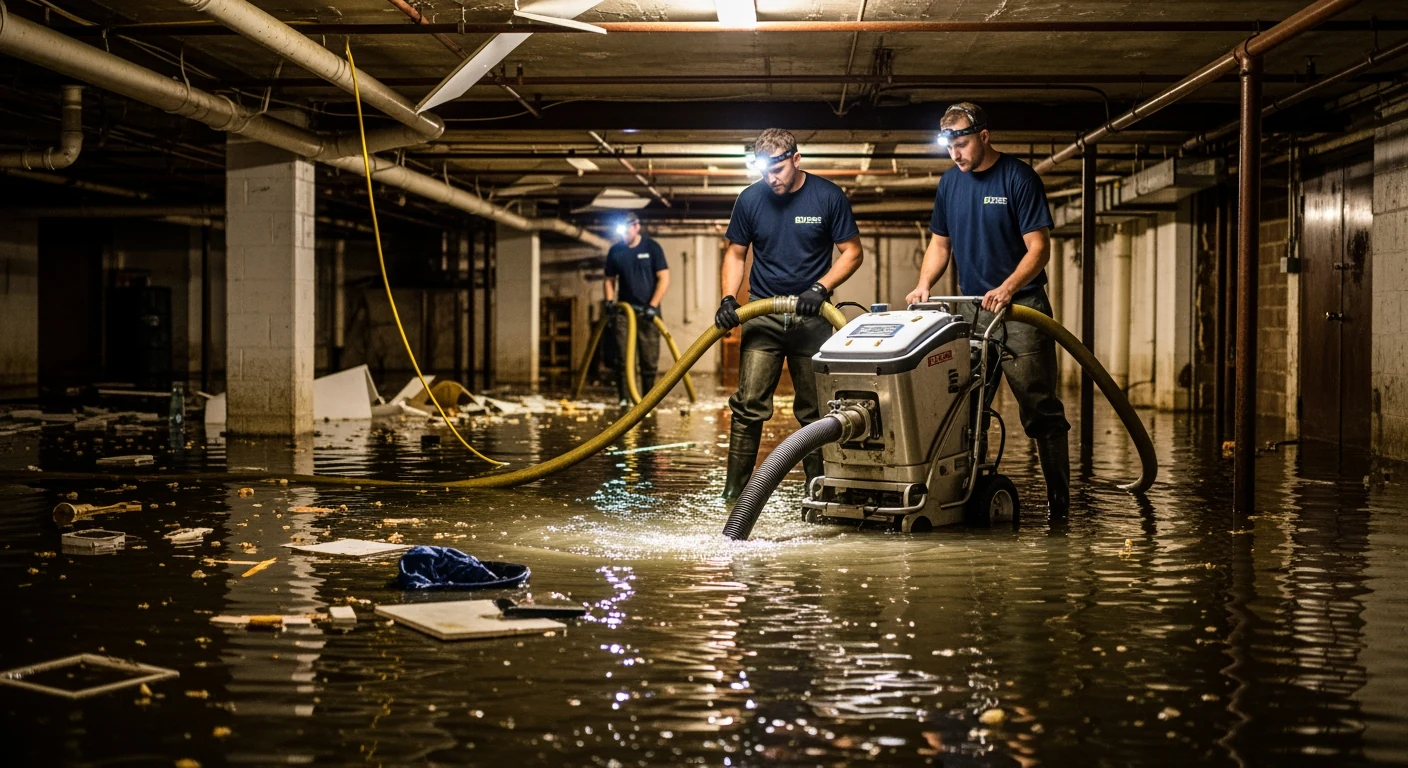
The IICRC S500 standard classifies water damage by contamination level, Category 1 (clean), Category 2 (significantly contaminated, such as washing machine overflow), and Category 3 (grossly contaminated, including sewage backups and floodwater). Categories 2 and 3 require controlled demolition, PPE, and disposal protocols that fall outside typical homeowner capability.
Sewage backups, floodwater intrusion, and water that’s been standing long enough to become septic all fall into Category 2 or 3 under IICRC S500, the standard restoration professionals, insurers, and courts actually use to evaluate whether a job was done correctly. This classification exists because contaminated water carries bacteria, viruses, and chemical hazards that clean water simply doesn’t.
FEMA’s guidance on cleaning products reinforces how easy it is to make a contaminated-water situation worse: mixing bleach and ammonia-based cleaners produces toxic fumes, a mistake that happens more often than you’d expect when someone is improvising a disinfection plan under stress in a basement with poor ventilation.
If the water that damaged your property came from a toilet, a sewer line, a flood, or any source you wouldn’t want on your skin, treat it as a Category 2 or 3 situation and call a licensed remediation company. This isn’t a job to learn on the fly.
| DIY-Appropriate | Call a Professional |
|---|---|
| Mold area under ~10 sq ft (EPA threshold) | Mold visible beyond 10 sq ft or of unknown extent |
| Clean water source, already stopped | Sewage, floodwater, or Category 2/3 contamination |
| No occupants with asthma, allergies, or immune conditions | Any vulnerable occupant in the affected space |
| Drying completed within 24-48 hours | Water has stood longer than 48 hours |
| No electrical panels, wiring, or structural framing exposed | Electrical or structural elements contacted water |
| Small, surface-level cleanup with detergent and water | Wet insulation, drywall, or subfloor requiring removal |
The Insurance Trap: How Incomplete DIY Work Can Complicate Claims
FEMA guidance recommends documenting damage with photos before discarding any items, since undocumented disposal can weaken an insurance claim. DIY cleanup that removes materials, paints over stains, or partially dries a space without professional documentation can leave a property owner with less evidence than they need when filing.
Here’s the practical trap: FEMA’s mold fact sheet notes that anything wet with floodwater and not cleaned or dried within 24 to 48 hours often needs to be discarded, including structural materials and personal property, but that disposal should happen only after photographing the damage. A property owner in a hurry to clean up, understandably wanting the mess gone, can throw out damaged carpet or drywall before an adjuster or restoration professional ever documents its condition. At that point, there’s no way to prove what was lost.
IICRC S500 exists partly to solve this problem. Professional restoration companies follow a documented protocol, inspection, moisture readings, photos, a written scope of work, that insurers recognize as evidence a claim was handled correctly. A homeowner working alone with a shop vac generates none of that paper trail.
Before you clean up, throw out, or repair anything, photograph every affected area and contact your insurance carrier. This content isn’t insurance advice and can’t predict how any specific carrier will handle a claim, but documentation before cleanup is a near-universal recommendation across FEMA and CDC guidance for a reason.
Not sure if your situation still qualifies as a DIY job? Get a professional read on it before you start tearing anything out.
Red Flags That Mean It’s Time to Call a Professional
Certain conditions reliably signal that a water damage situation has moved past DIY scope: mold beyond 10 square feet, sewage or floodwater involvement, water standing more than 48 hours, exposed electrical or structural elements, recurring leaks from an unknown source, and any vulnerable occupant in the building.
Recurring leaks deserve special attention because they’re easy to dismiss as minor. A ceiling stain that reappears after you’ve “fixed” it once usually means the source was never actually resolved, just the visible symptom. That pattern, treat and reappear, is one of the clearest signs that the underlying moisture path needs a professional inspection with actual moisture-mapping tools, not another round of paint.
Odor is another underrated signal. A musty smell that persists after visible drying often means moisture is still present somewhere you can’t see, frequently behind walls or under flooring. The CDC’s mold cleanup guidance treats persistent odor as a legitimate reason to escalate, not something to mask with air freshener and move on from.
When two or more of these red flags are present, the safest and most cost-effective move is a professional assessment before you spend a weekend on cleanup that may need to be redone, or worse, disguised, a hazard later.
Frequently Asked Questions
Can I clean up small water damage myself?
The EPA states that mold areas under approximately 10 square feet, caused by a clean water source that has already been stopped, are typically reasonable for a property owner to handle. This exception does not apply to contaminated water, larger areas, or homes with vulnerable occupants such as those with asthma or weakened immune systems.
What happens if water damage isn’t dried within 48 hours?
EPA and FEMA guidance indicate that materials not dried within 24 to 48 hours are at significant risk of mold growth. The CDC notes some wet items must be cleaned within 48 to 72 hours or discarded entirely. Missing this window often converts a drying job into a demolition and disposal job.
Is sewage backup water safe to clean up myself?
No. Under the IICRC S500 standard, sewage and floodwater are classified as Category 3, grossly contaminated water that requires PPE, controlled demolition, and disposal protocols beyond typical homeowner capability. This category of water damage should be handled by a licensed remediation professional.
Will DIY cleanup hurt my insurance claim?
Incomplete documentation is the main risk. FEMA guidance recommends photographing all damage before discarding any materials. Disposing of damaged items or altering a space before documentation can leave a property owner without evidence needed for a claim. This is not insurance advice; contact your carrier directly regarding your specific policy.
What protective equipment does mold cleanup actually require?
The CDC recommends at minimum an N95 respirator, goggles, and protective gloves for mold cleanup, upgrading to a half-face or full-face respirator for more extensive work such as removing moldy drywall. Most households do not have this equipment readily available or properly fitted.
How do I know if water damage is worse than it looks?
Signs include musty odor that persists after visible drying, recurring stains after a previous repair, mold visible beyond 10 square feet, and any water contact with electrical or structural components. These indicate hidden moisture that surface cleaning cannot address and generally require professional moisture detection.
Who should avoid doing water damage cleanup themselves?
The CDC advises that people with asthma, allergies, or weakened immune systems avoid heavy mold and water damage cleanup work due to elevated health risk. Property owners with vulnerable occupants in the affected building should arrange for professional remediation rather than performing the work themselves.
Not Sure Which Side of the Line You’re On?
Upper Restoration provides free same-day assessments across NYC, Long Island, NJ, PA, and CT, 24/7.
- EPA, “Mold Cleanup in Your Home” (EPA)
- EPA, “A Brief Guide to Mold, Moisture and Your Home” (EPA)
- CDC, “Homeowners and Renters Guide to Mold Cleanup After Disasters” (CDC)
- CDC, “Preventing Mold” (CDC)
- CDC, “After the Storm – Mold and Moisture” (CDC)
- CDC, “Guidelines for Cleaning Safely After a Disaster” (CDC)
- CDC, “Mold Clean Up Guidelines and Recommendations” (CDC)
- FEMA, “Don’t Wait to Clean Up or Make Repairs” (FEMA)
- FEMA, “Mold After a Disaster” fact sheet (FEMA)
- IICRC, S500 Standard for Professional Water Damage Restoration (IICRC)
- Flood.Repair, “How to Clean Mold After Water Damage” (Flood.Repair)
This content is for general informational purposes only and is not legal, medical, or insurance advice. Remediation scope, timelines, and costs vary by site conditions. Contact Upper Restoration for a professional assessment. Licensing and certifications apply per jurisdiction.